IEC 60076-11 cast-resin encapsulated dry-type transformers from 30 kVA to 2,500 kVA — CE certified, ISO 9001 / ISO 14001 / ISO 45001 audited, routine tested unit by unit and delivered DDP to Bristol and the wider South West of England.
Product Range
Transformer Lines Supplied to Bristol Projects
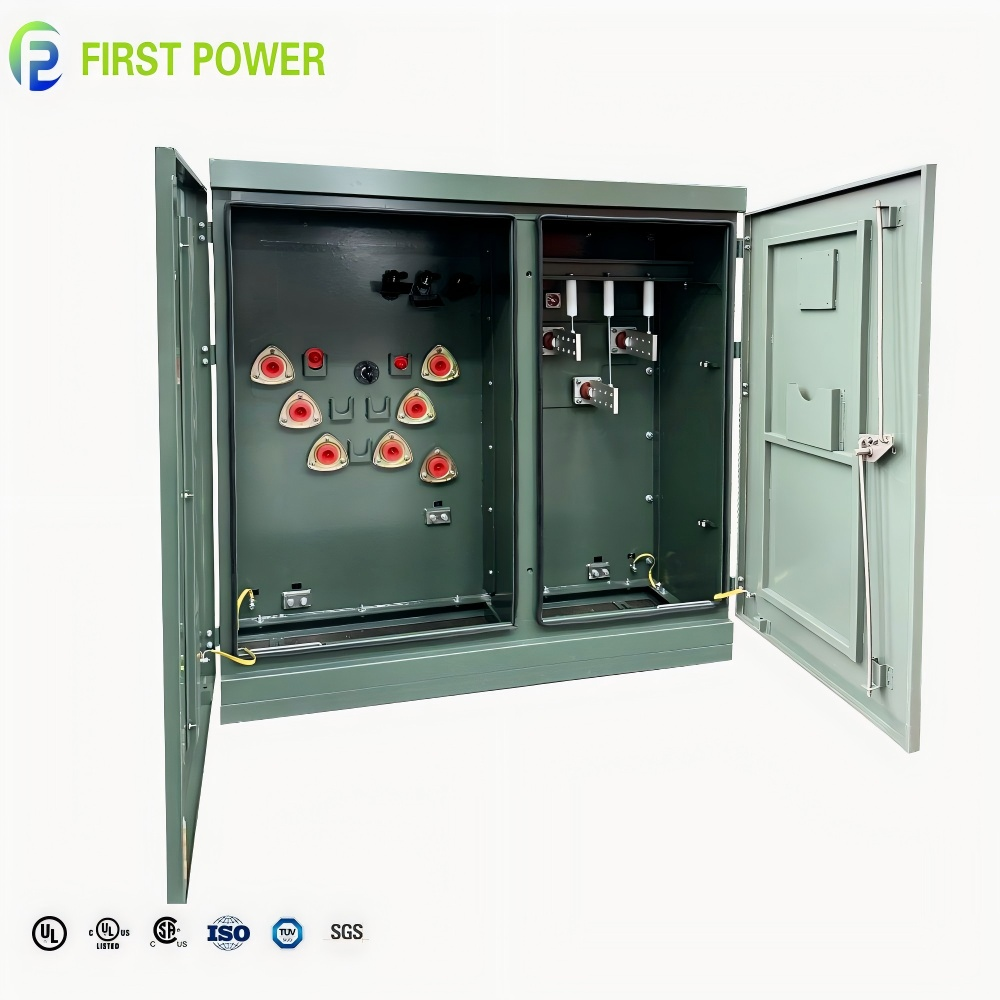
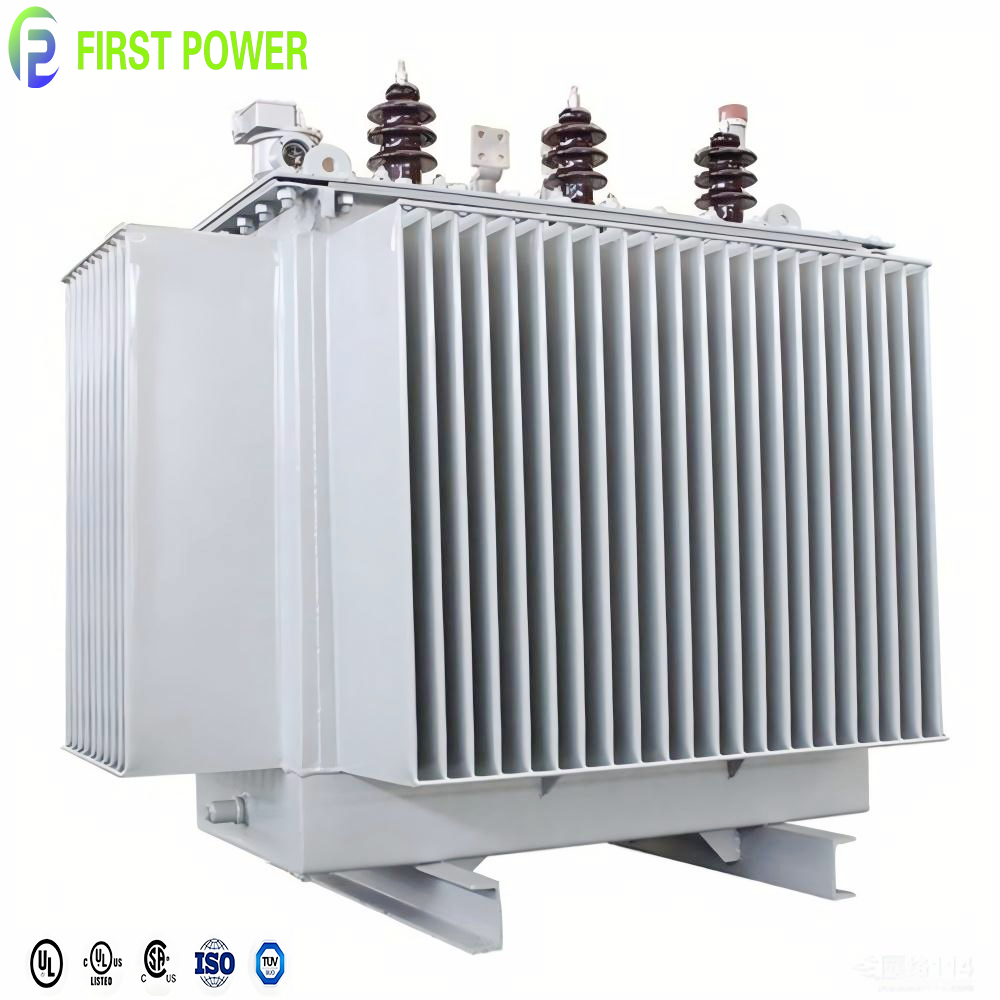
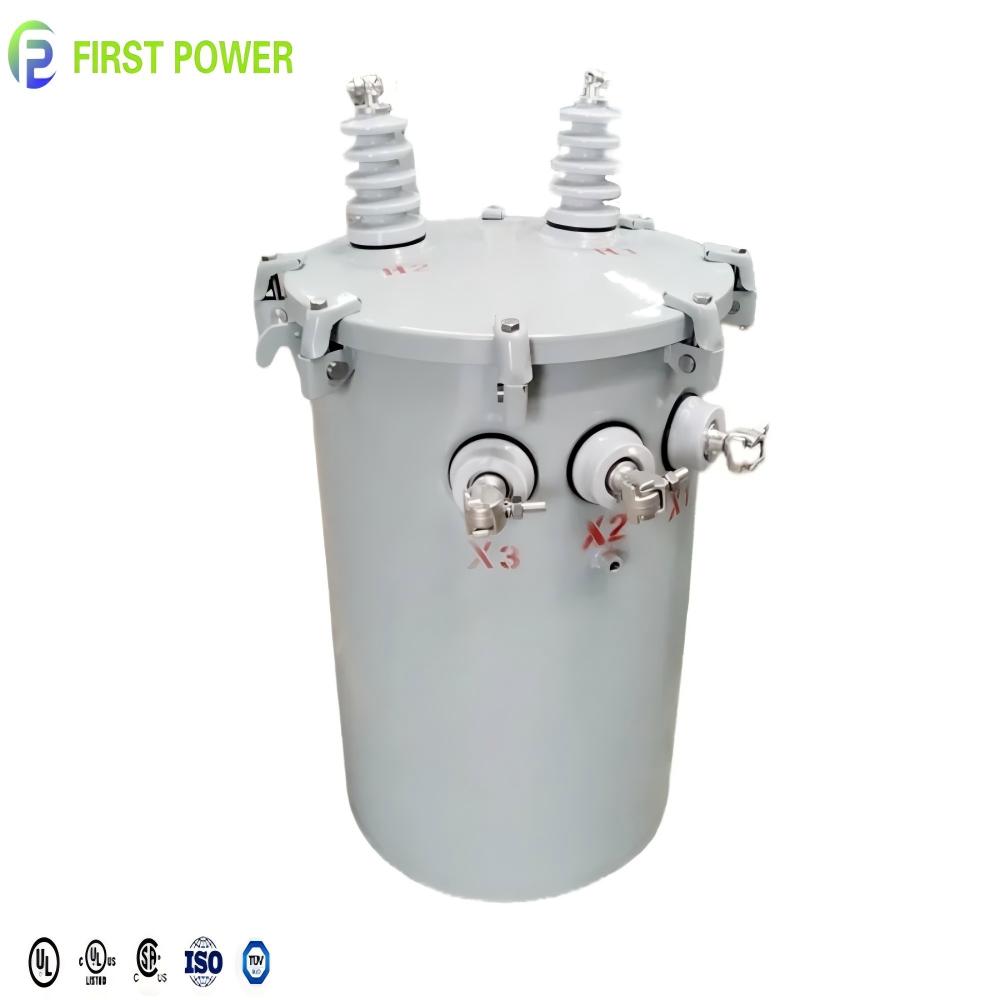
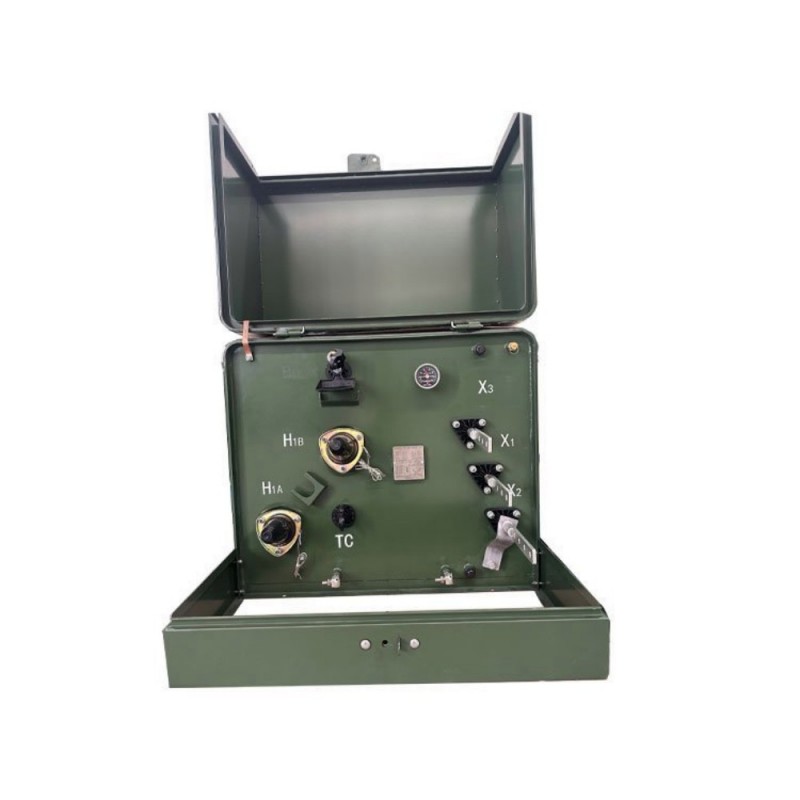
Eight engineered families covering the encapsulated dry-type platforms this page focuses on, plus the pad mounted, pole mounted and oil immersed units that support mixed developments, embedded generation and utility distribution across the Bristol area. Every rating below is built to order and verified by routine factory testing before dispatch.
Every figure below is backed by third-party inspection, certification or documentation that we release to your QA team before purchase order.
20+
Years of transformer engineering experience in the founding team
500 kV
Maximum voltage class engineered and supplied
6,847 m²
Production floorspace verified on site by TÜV Rheinland
50+
R&D and technical engineers supporting quotations
211
Qualified supply-chain partners securing material lead times
4.9 / 5
Average buyer rating across verified transactions
Technical Briefing
What an Encapsulated Dry Transformer Actually Is — and Why Bristol Specifiers Keep Choosing It
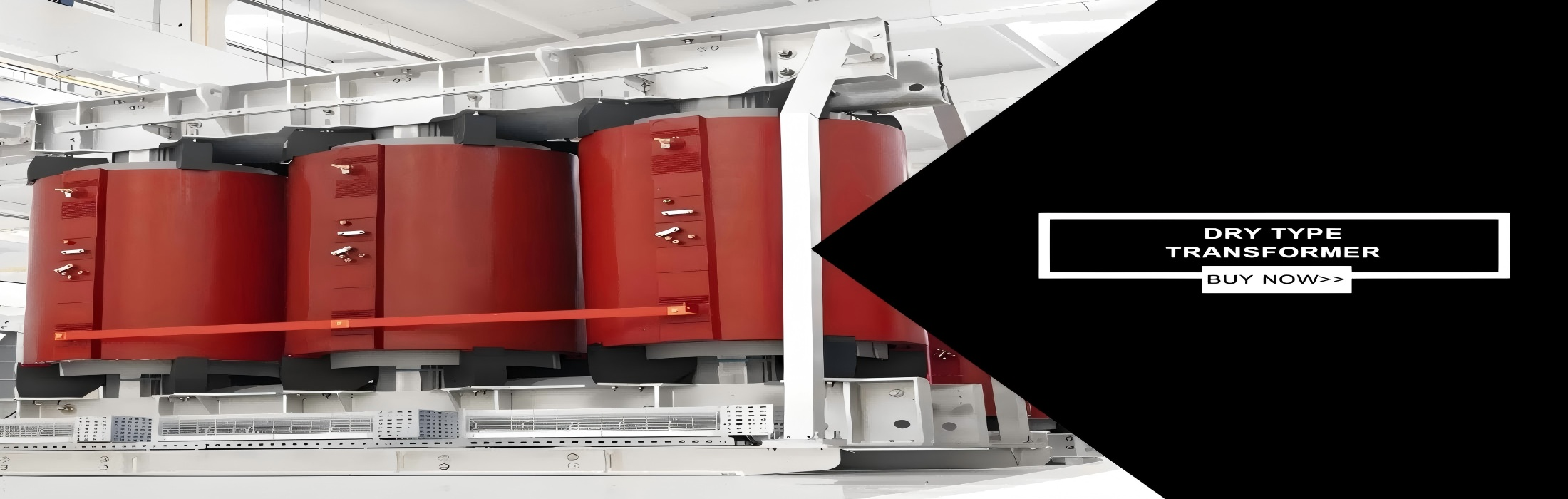
An encapsulated dry-type transformer houses its high-voltage winding inside a vacuum-cast epoxy resin body. Instead of relying on insulating oil for dielectric strength and heat transfer, the winding is encapsulated in a filled resin system that provides insulation, mechanical rigidity and a defined thermal path to the surface of the casting. Casting is performed under vacuum so that voids and partial discharges are controlled at the point of manufacture rather than at commissioning.
The practical consequence for a Bristol project is simple. No liquid means no oil containment bund, no periodic oil sampling regime, no oil regeneration budget and no flammable liquid inventory sitting beneath an occupied building. For basements, rooftop plant rooms, railway arches and heritage conversions — all common in Bristol — that single difference frequently decides the specification.
IEC 60076-11 sets the baseline a competent dry-type unit must meet: an E-class environmental rating for condensation and humidity cycling, a C-class climatic rating for low-temperature operation, and an F-class fire rating for behaviour in a sustained fire. Bristol projects in healthcare, education and transport corridors typically write all three into the technical specification rather than accepting a partial claim.
Partial discharge held at or below 10 pC on units up to 12 kV, and within IEC limits above that level.
Insulation class F or H with 100 K / 125 K temperature rise, plus forced-air options for short-term overload.
Vector group Dyn11 as standard for UK distribution practice, with custom vector groups on request.
Loss performance specified against UK Ecodesign Tier 2 load and no-load limits, evidenced by a per-unit test report.
Local Application
Where Encapsulated Dry Transformers Are Specified in Bristol
Bristol's development pipeline concentrates load growth in dense, occupied and often flood-conscious locations. These are the six site types where our dry-type units are most frequently quoted.
Hospitals, Clinics & Life Sciences
Southmead, the Bristol Royal Infirmary estate and the laboratories clustered around Aztec West and Emersons Green cannot host a flammable liquid beneath occupied ward or cleanroom space. Oil-free castings remove that risk, and low noise output suits plant rooms adjacent to clinical areas.
Offices & Tech Campuses
Temple Quarter, Bedminster Green and the Brabazon redevelopment are all delivering dense commercial floorplates with substations pushed into basements. Cast-resin units need no bunding, no fire-separated oil chamber and no drainage strategy, which simplifies the whole substation design.
Universities & Research Estates
University of Bristol and UWE Bristol estates are upgrading laboratory and data-heavy buildings where power density has risen sharply. Dry-type units placed close to the load reduce cable runs and cut secondary losses, which matters when a building is being refurbished rather than rebuilt.
Transport & Port Infrastructure
Around Bristol Temple Meads, the Avonmouth and Royal Portbury dock estates and the M4 / M5 interchange, equipment faces vibration, salt-laden air and continuous duty cycles. Enclosures rated IP31 to IP54 with anti-corrosion finishes protect the casting in these conditions.
Solar, Storage & Embedded Generation
Rooftop PV arrays and battery storage cabinets across the Bristol Enterprise Zone need a step-up interface to the 11 kV network. Dry-type units paired with the right inverter duty rating avoid the maintenance burden of liquid systems on unmanned sites.
Retail, Hotels & Mixed Use
Cabot Circus, Broadmead and the city-centre hotel pipeline all place plant rooms next to guest rooms or sales floors. Selecting a unit with a verified sound pressure level at one metre — typically 55 to 65 dB(A) — prevents a noise complaint turning into a planning condition later.
Local Trends
Six Trends Reshaping Transformer Demand Across the Bristol Region
Understanding what is driving specifications locally is the fastest way to avoid buying equipment that is technically compliant but commercially wrong for the site.
1. Building Electrification Is Compressing Load Growth
Heat pump retrofits, induction catering and EV charge points are stacking new demand onto buildings that were designed around gas. The result is that a transformer sized for the original shell is frequently undersized for the refurbished one, and reinforcement lead times now drive project programmes more than construction does.
Connection queues across the distribution network mean that requesting an overstated capacity can cost months. Specifying a unit with a realistic rating, a defined tap range and genuinely low losses is now a programme decision, not just a capital one. We support that with guaranteed loss figures at quotation stage.
3. Brownfield Plots Force Compact Geometry
Bristol's available land is largely constrained, infill or former industrial. Plant rooms are smaller, access routes are tighter and lifting plans are harder. Cast-resin units usually occupy less footprint per kVA than an equivalent liquid-filled assembly because no fire separation distance or bunded compound is required.
4. Fire Safety Regulation Steers Material Choice
Approved Document B and BS 9999 assessments increasingly push designers away from combustible liquids in basements and means-of-escape routes. An F-class rated encapsulated unit gives the fire engineer a defensible position without the cost of a dedicated oil containment strategy.
5. Noise Is Now a Planning Condition, Not an Afterthought
As residential schemes move closer to commercial plant, background noise limits at the nearest façade become contractual. Buying on kVA alone and checking dB(A) later is how projects end up paying for acoustic enclosures. Ask for the sound pressure level at one metre before you compare prices.
6. Lifetime Cost Is Replacing Lowest Purchase Price
Clients with net-zero commitments now model no-load loss across a twenty-five year service life. On a continuously energised unit, one loss tier can outweigh the difference in capital cost several times over. Buying on the price of the box alone is a false economy on any asset that runs all day.
Buyer's Guide
Transformer Selection Comparison for Bristol Projects
A positioning table our application engineers use with EPC contractors and building services consultants when shortlisting equipment for a specific site.
Ratings shown are typical production ranges. Values outside these limits can be engineered to order. Loss tiers, impedance, tap range and enclosure protection are confirmed on the general arrangement drawing before manufacture begins.
Why Wisegj
A Specialist Transformer Manufacturer Based in Suzhou, Exporting to the UK
Jiangsu Wisegj Power Co., Ltd. designs, assembles and exports medium and high voltage equipment from 220 V to 500 kV — power transformers, distribution transformers, pad mounted transformers, dry type transformers, compact substations, switchgear, distribution boxes and voltage stabilisers.
Verified Factory Capacity
6,847 m² of inspected floorspace with dedicated winding, core assembly, vacuum casting, drying, tanking and test areas — audited on site, not estimated.
In-House Type & Routine Testing
Winding resistance, ratio and vector group, impedance and load loss, no-load loss and current, applied and induced voltage withstand — documented for every serial number.
Design Customisation
OEM, ODM, design-based and sample-based customisation covering rating, vector group, impedance, tap range, bushing configuration, cooling method and enclosure finish.
UK Export Logistics
Seaworthy crating with shock indicators, plus full Incoterms coverage from EXW and FOB Shanghai through to DDP delivery in Bristol.
Certified Management Systems
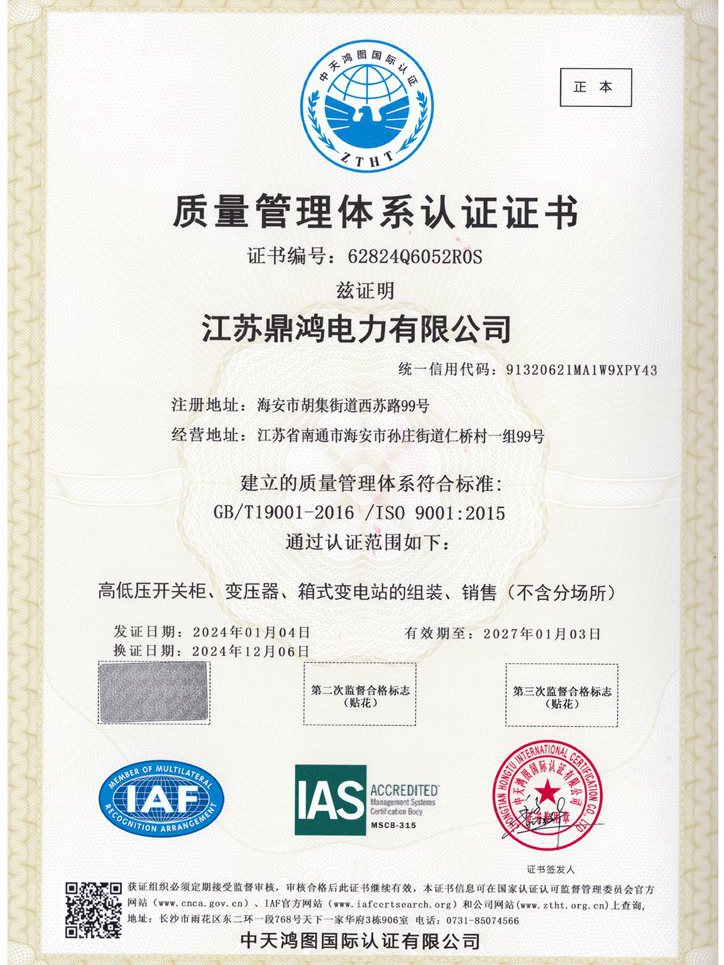
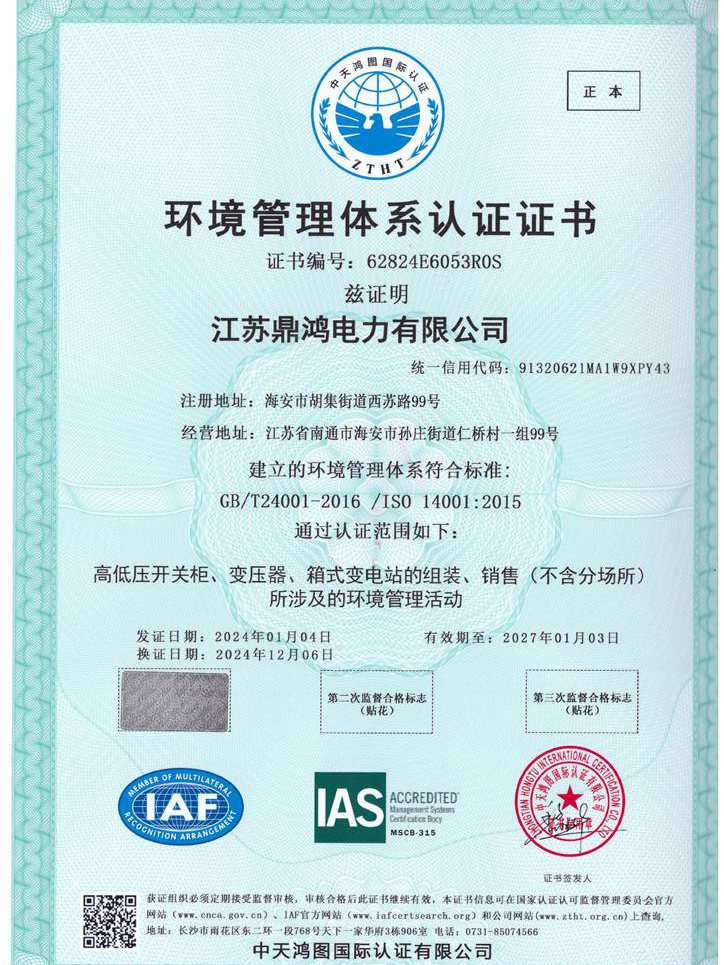
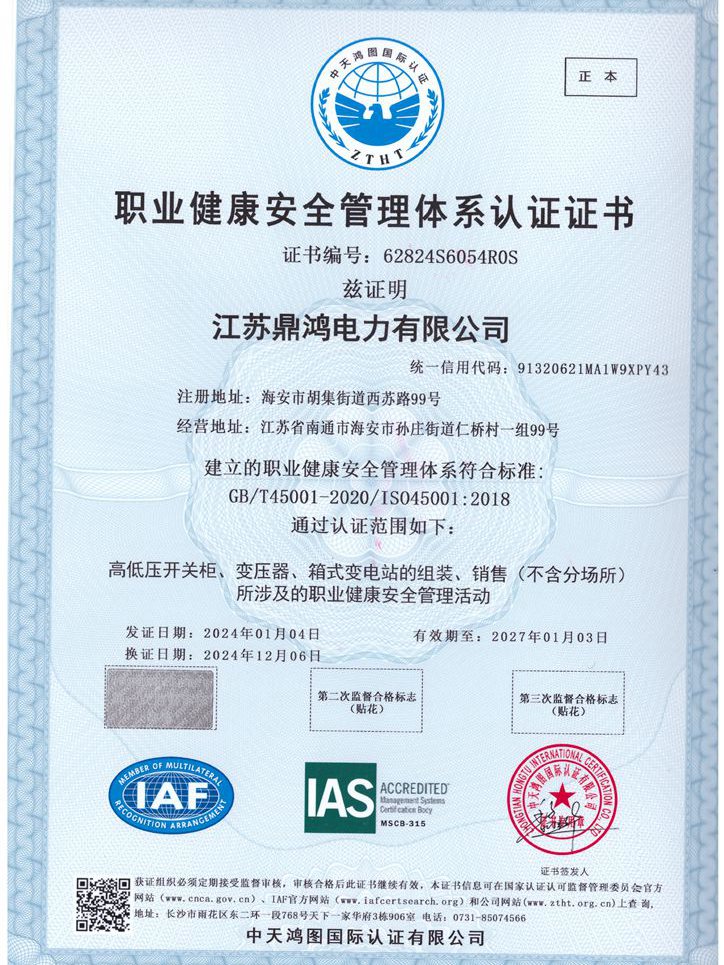
ISO 9001 quality, ISO 14001 environmental and ISO 45001 occupational health and safety systems, all independently certified and valid through 2027.
Complete Documentation
General arrangement drawings, nameplate drafts, guaranteed loss values, routine test reports and O&M manuals supplied in English as standard.
211 Qualified Supply Partners
Contracted sources for silicon steel, copper, bushings and accessories keep material lead times stable through volatile commodity cycles.
24-Hour Engineer Response
Technical questions, drawing revisions and after-sales issues receive a qualified response from an engineer within one working day.
Own production base with a full set of industry certificates and a TÜV Rheinland verified assessment report available to your compliance team.
Supplier to Fortune 500 companies, with finished product inspection performed on every unit rather than by sampling.
Third-party witness testing welcome — SGS, BV, Intertek or your own QA engineer can attend routine tests before shipment is released.
Qualifications
Certificates & Compliance Evidence
Certificate numbers are published so your compliance team can verify each document directly with the issuing body rather than relying on a logo.
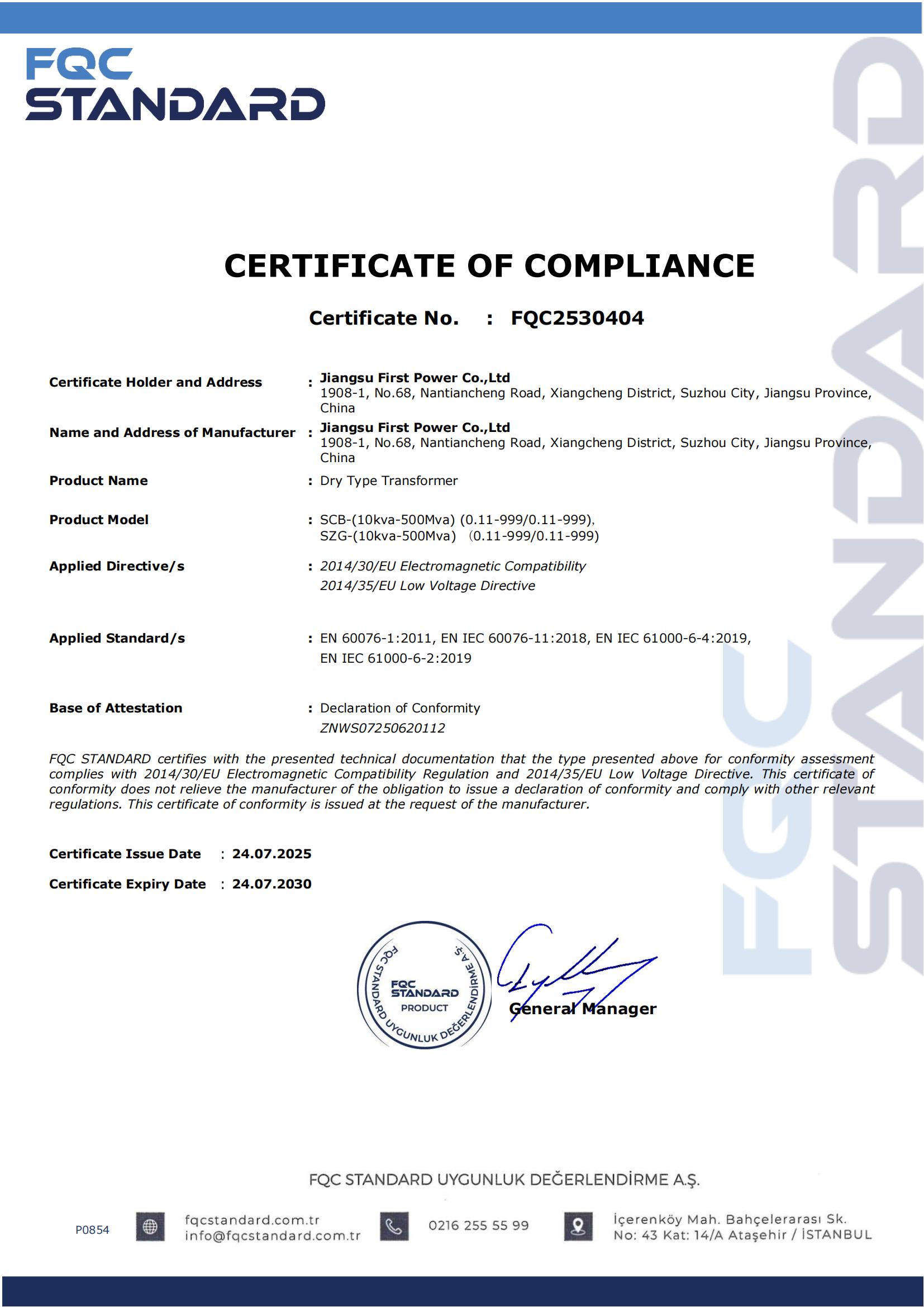
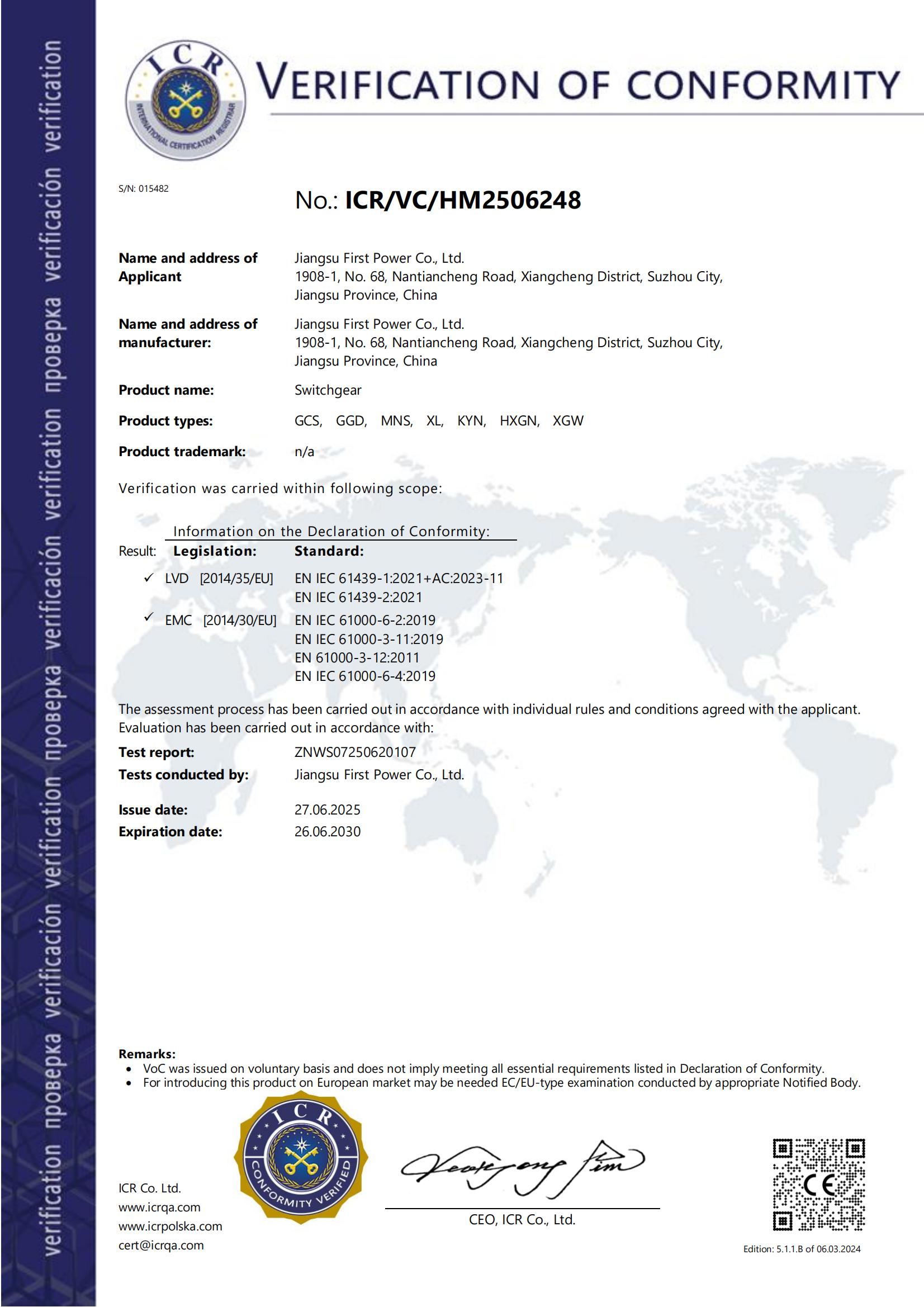
CE · Dry Type
Dry type transformer · No. FQC2530404 · 2025–2030
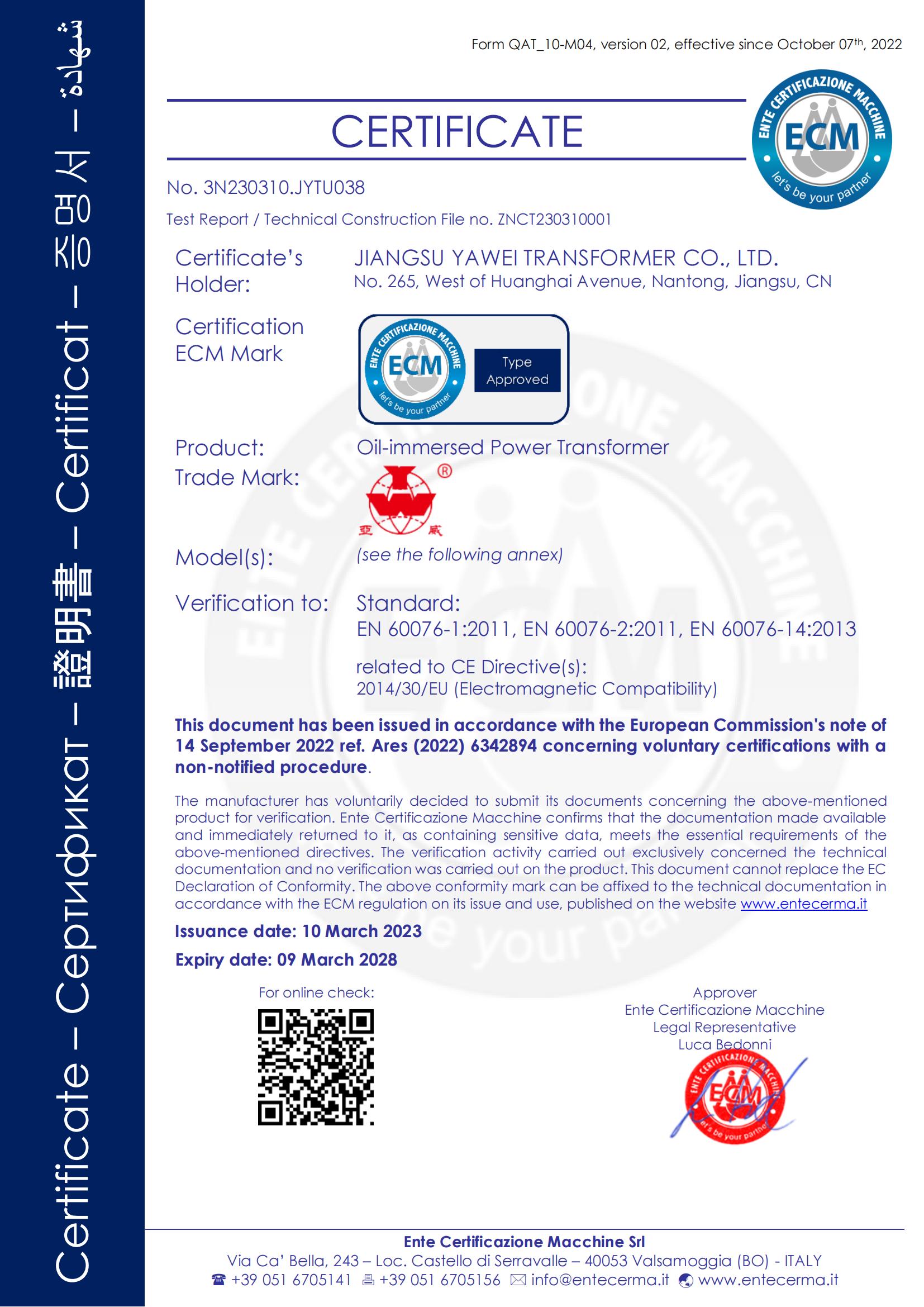
CE · Power Transformer
Oil-immersed power transformer · No. 3N230310.JYTU038 · 2023–2028
Health & safety management · No. 62824S6054R0S · 2024–2027
FAQ
What Bristol Buyers Ask Before Placing a Transformer Order
Direct answers from our engineering and export departments on the questions that come up most often from UK procurement teams.
Are your encapsulated dry transformers suitable for the UK 50 Hz, 11 kV network?
Yes. Units supplied to Bristol are built for 50 Hz operation with primary voltages matched to UK distribution practice — typically 11 kV, with 6.6 kV, 20 kV and 33 kV configurations available where the local network requires it. Secondary windings are configured for 433/250 V three-phase four-wire distribution. Vector group Dyn11 is our standard for UK distribution, and alternative vector groups are engineered on request.
How long does delivery to Bristol take from order?
Standard cast-resin units in the 30 to 2,500 kVA range typically require 25 to 40 working days for manufacture after drawing approval, depending on rating, enclosure protection and whether forced-air cooling or special finishes are specified. Ocean freight from Shanghai or Ningbo to Felixstowe or Southampton adds roughly four to six weeks, with onward road transport to Bristol taking one to two days. We confirm the exact programme on the order acknowledgement rather than quoting a generic lead time.
Can you deliver DDP to a Bristol site address?
Yes. We work with FOB, CFR, CIF, EXW, FCA, CIP, CPT and DDP terms, so we can quote delivered to your Bristol postcode with duties and inland transport included, or hand over at a UK port if your freight forwarder prefers to control the final leg. Payment can be arranged in GBP, EUR or USD by T/T, L/C, D/P or D/A depending on the order value and history.
Which standards do your dry-type transformers comply with?
Cast-resin units are designed and tested to IEC 60076-11 and the corresponding BS EN adoption, with E-class environmental, C-class climatic and F-class fire ratings available. Production runs under ISO 9001, ISO 14001 and ISO 45001 management systems. Oil-immersed product lines are designed to IEC 60076 or ANSI/IEEE C57.12 series standards depending on the destination market, and our dry type transformer line holds CE certificate number FQC2530404.
Can the losses be guaranteed to meet UK Ecodesign limits?
Yes, and we recommend specifying it that way. Rather than accepting a general statement of compliance, ask for guaranteed no-load loss and load loss figures in watts at reference temperature on the quotation, then verify them against the routine test report for the serial number you actually receive. UK Ecodesign limits mirror the European tiers, and for most commercial Bristol projects we build to Tier 2 as the practical baseline.
What sound pressure level should I expect at one metre?
For cast-resin units in typical commercial ratings, expect approximately 55 to 65 dB(A) measured at one metre, rising with kVA and with forced-air cooling engaged. If the plant room sits next to a habitable room or a residential boundary, ask for the calculated level at the nearest receptor rather than the level at the unit — that is the figure a planning condition will reference. Acoustic enclosures and vibration isolation pads are available where the margin is tight.
Do you supply enclosures for indoor and outdoor installation?
Yes. Units can be supplied as open, IP00 assemblies for installation inside a client-built plant room, or fitted with sheet-steel or stainless enclosures rated from IP21 up to IP54 for dusty, damp or outdoor locations. Enclosure finish, colour, cable entry position, lifting provisions and anti-condensation heaters are all confirmed on the general arrangement drawing before production is released.
Can you integrate the transformer into a compact substation package?
Yes. We build prefabricated compact substations to IEC 62271-202 that combine medium-voltage switchgear, the transformer and low-voltage distribution in a single factory-assembled enclosure. This is often the faster route for fast-track Bristol sites, temporary supplies and renewable compounds, because site works reduce to a foundation, a cable connection and commissioning rather than separate trades and interfaces.
What testing documentation accompanies each unit?
Every unit receives routine tests: winding resistance on all phases, voltage ratio and vector group verification, short-circuit impedance and load loss, no-load loss and no-load current, applied voltage withstand and induced voltage withstand. For liquid-filled products, oil dielectric strength is tested as well. Type test reports are available on request, and third-party witness inspection by SGS, BV, Intertek or your own QA engineer is welcome before shipment is released.
What warranty and after-sales support is provided?
Standard warranty terms are confirmed per contract and typically cover manufacturing defects for a defined period from commissioning or delivery, whichever is specified at order. Technical support is available by email and live chat, with a qualified engineer response target of one working day. Where a Bristol project requires attendance on site, we can arrange commissioning support through our UK-based service partners — this is quoted separately so the scope is explicit.
Technical Data Checklist for a Faster, More Accurate Quotation
Send these parameters and our engineers will return a compliant design with guaranteed losses, without a round of clarification emails.
Rated power (kVA)
Primary and secondary voltage
Frequency (50 Hz for UK)
Vector group and impedance
Tap changer type and range
Cooling method and enclosure IP rating
Applicable standard (IEC or BS EN)
Site altitude and ambient range
Loss limits or efficiency target
Have a Dry Transformer Specification Ready for Review?
Send us your datasheet, tender documents or single-line diagram. A transformer engineer — not a sales script — will review the requirement, flag any specification risk and come back with a compliant design and guaranteed losses, usually within one working day.
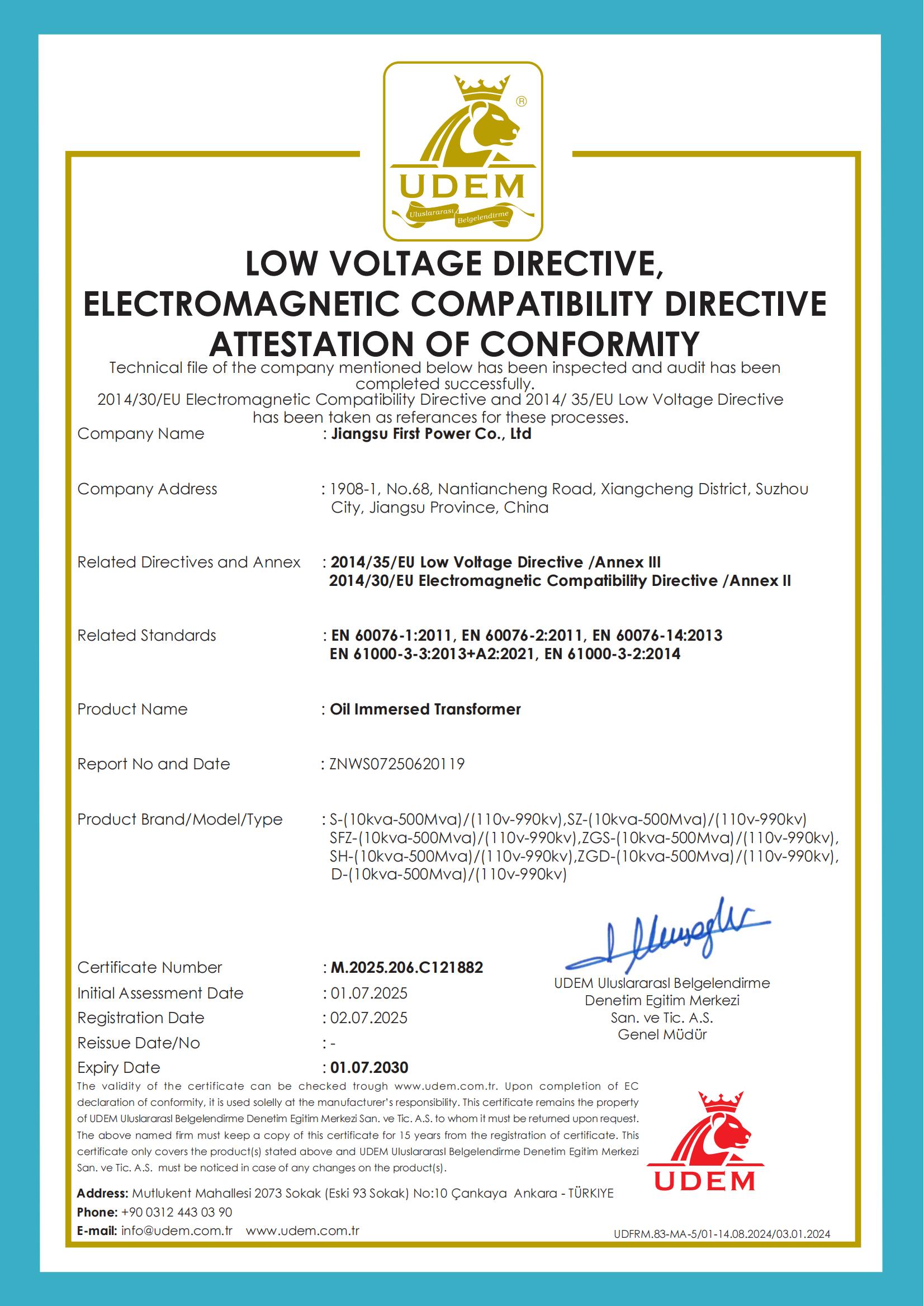
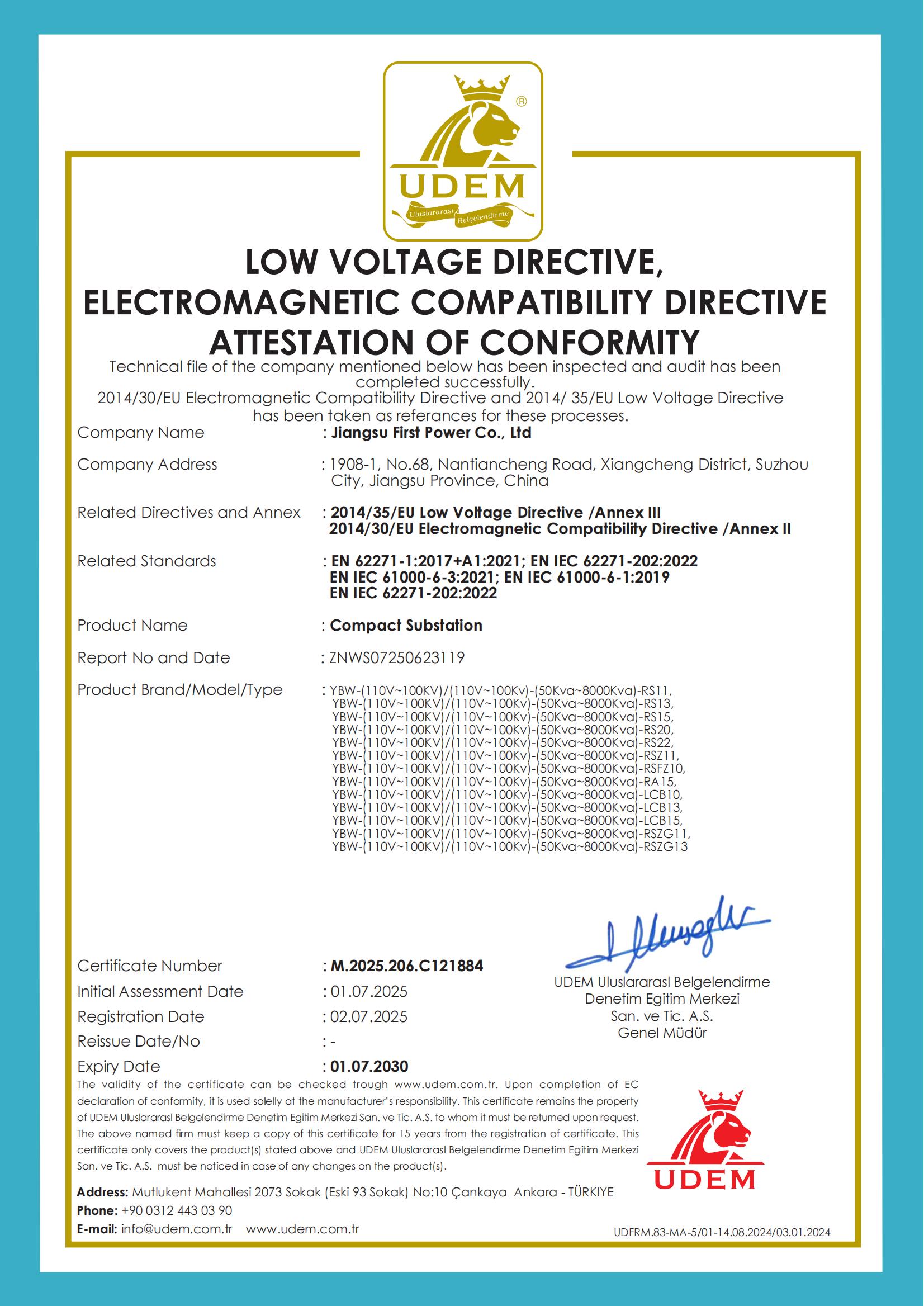
 CE · MV/HV