Low Voltage Switchgear: The Revenue-Critical Layer of Your Power System
Low voltage switchgear is the final control and protection layer between a distribution transformer and the loads that keep a site operating. It distributes power at voltages up to 1,000 V AC, typically 400 V, 415 V, 480 V or 690 V, and combines air circuit breakers, moulded case circuit breakers, contactors, busbars, metering, protection relays and communication devices inside a type-tested assembly. For factories, commercial buildings, data centers, water treatment plants, renewable energy projects and compact substations, the design of this assembly directly affects safety, uptime and maintenance cost.
For global procurement teams, the commercial risk is not limited to the purchase price. A low voltage switchgear panel that fails inspection, overheats in a high-ambient site, cannot be serviced locally or lacks coordinated protection settings can create delays far more expensive than the equipment itself. That is why experienced buyers compare IEC 61439 design verification, short-circuit withstand, form of separation, IP rating, busbar material, component traceability and documentation before they compare unit prices.
Jiangsu Wisegj Power Co., Ltd. approaches low voltage switchgear as an engineered system, not a catalogue box. The company’s production base, engineering team and export documentation process are structured to support utilities, EPC contractors, panel builders and industrial buyers who need compliant equipment and clear evidence before shipment.
Designed to IEC 61439-1 and IEC 61439-2
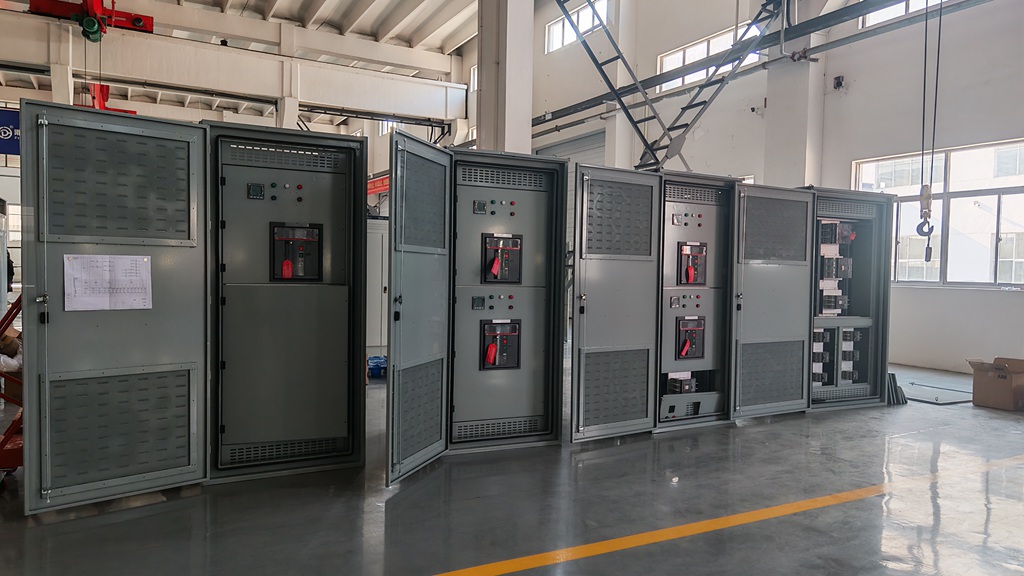
Main, draw-out, MCC, PFC and ATS configurations
Copper busbars and branded protection devices
Routine tests and documentation per project
Export packing and global trade support
Engineering review before quotation
Recommended Products
Low Voltage Switchgear Solutions for Different Project Needs
From main LV distribution boards to motor control centers and power factor correction panels, each assembly is configured around the project single-line diagram, short-circuit study, site conditions and maintenance strategy.
Modular draw-out compartments allow breaker replacement or maintenance without long shutdowns, ideal for critical facilities and continuous process plants.
What Global Buyers Are Changing in Low Voltage Switchgear Procurement
Procurement teams are no longer buying low voltage switchgear only on price per panel. They are buying compliance evidence, lifecycle performance, delivery certainty and documentation that satisfies internal engineering and external auditors.
1. Type-Tested Compliance Before Price
IEC 61439 requires design verification of the complete assembly, not only the incoming breaker or contactor. Buyers increasingly ask for type-test evidence, temperature-rise verification, short-circuit co-ordination and form of separation before comparing quotations. This reduces the risk of a low-cost panel failing local inspection or derating under real site conditions.
2. Total Cost of Ownership
Energy losses, maintenance access, spare-part availability and downtime dominate the lifecycle cost of low voltage switchgear. Draw-out modules, high-quality busbars, branded protection devices and clear labelling may cost more initially, but they shorten maintenance outages and reduce operational risk over ten to twenty years.
3. Digital and BIM-Ready Documentation
EPC contractors and facility owners increasingly request editable drawings, BIM-compatible files, terminal schedules, protection settings and test reports. Good documentation reduces installation errors, speeds up commissioning and supports future maintenance. Suppliers that treat documentation as part of the product are easier to integrate into global projects.
4. Supply Chain Resilience and Dual Sourcing
After several years of volatile freight and component lead times, buyers are shortening approval cycles and qualifying more than one supplier for critical switchgear. They look for manufacturers with qualified component partners, clear production planning and export experience, rather than relying on a single brand or a single shipping route.
5. Modular and Prefabricated Distribution
Compact substations, prefabricated electrical rooms and modular LV panels are growing because they reduce site labour, shorten commissioning and improve quality control. Integrating transformers, low voltage switchgear, metering and protection into factory-assembled sections can be especially attractive for renewable energy, mining, data center and temporary power projects.
6. Safety, Sustainability and Lifecycle Service
Arc-flash mitigation, internal separation, clear operating labels, lock-out/tag-out provisions and remote monitoring are becoming standard requests. At the same time, buyers ask about recyclable copper, material efficiency, low-loss components and end-of-life planning. A credible supplier should be able to discuss both safety and environmental performance with engineering evidence.
Development Trends
How Low Voltage Switchgear Is Evolving
Low voltage switchgear is becoming more digital, safer and more integrated with renewable energy and facility management systems. Traditional panels focused on short-circuit protection and manual operation. Modern assemblies add temperature monitoring, power quality measurement, communication gateways and condition-based maintenance data.
For buyers, the key is to specify technology that solves a real operational problem. A factory that suffers nuisance trips may need better protection co-ordination and thermal design. A data center may prioritise remote monitoring and fast draw-out replacement. A solar or EV charging project may need bidirectional power flow, harmonic management and future capacity expansion.
IoT temperature and partial-discharge monitoring
Arc-flash mitigation and remote racking options
Thermal simulation for compact high-current designs
Integration with transformers, ATS and compact substations
Modbus, Profibus, Ethernet/IP and IEC 61850 gateways
Design for recyclability and reduced material waste
RFQ Checklist
How to Specify Low Voltage Switchgear for a Faster, More Accurate Quotation
The fastest way to receive a compliant low voltage switchgear proposal is to share a complete technical package. The table below shows the information that most affects design, price and delivery.
Specification Item
Why It Matters
Typical Information to Provide
System Voltage & Frequency
Determines insulation, creepage, protection and component selection.
400 V, 415 V, 480 V, 690 V; 50 Hz or 60 Hz.
Rated Current
Sets busbar size, breaker frame and ventilation requirements.
Main busbar current, incoming rating, outgoing feeder ratings.
Short-Circuit Withstand
Defines safety and coordination under fault conditions.
Icw, Ipk and short-circuit study or transformer data.
Form of Separation
Affects maintenance safety, downtime and panel cost.
Form 2b, 3b or 4b; fixed or draw-out functional units.
IP Rating
Protects against dust, water and site contamination.
IP31 to IP54 depending on indoor or outdoor installation.
Ambient & Altitude
High temperature or altitude may require derating.
Maximum ambient, altitude, humidity and coastal conditions.
Busbar & Components
Affects conductivity, losses, service life and lead time.
Copper or aluminium busbar; preferred ACB/MCCB brands.
Monitoring & Communication
Supports energy management and predictive maintenance.
Power meters, Modbus, Profibus, Ethernet/IP, alarms.
Testing & Documentation
Provides evidence for inspection and future maintenance.
Routine test reports, GA drawings, O&M manuals, witness test.
If the single-line diagram is not yet final, share transformer rating, load list, short-circuit current and future expansion plan. Jiangsu Wisegj Power Co., Ltd. can review the technical route before drawings are frozen.
Why Jiangsu Wisegj Power Co., Ltd.
Supplier Advantages You Can Verify
For low voltage switchgear, trust should be supported by factory evidence, management-system certificates, testing records and export experience. These advantages are built into the way Jiangsu Wisegj Power Co., Ltd. quotes and supplies projects.
Verified Factory Capacity
6,847 m² of inspected production floorspace with dedicated assembly, busbar fabrication, wiring and testing areas.
In-House Testing
Dielectric tests, wiring checks, torque verification, protection settings and functional operation tests before shipment.
Certified Systems
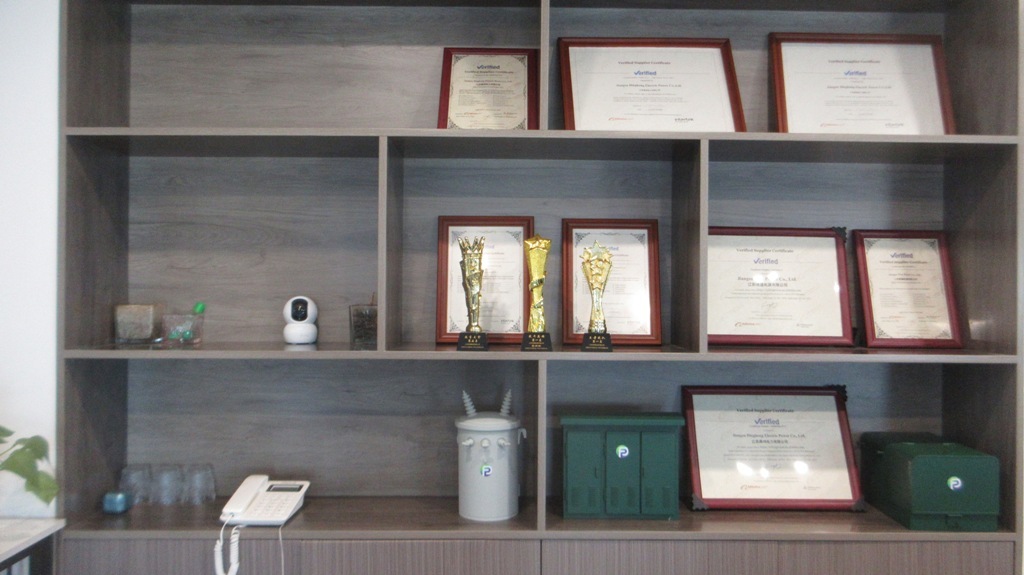
ISO 9001, ISO 14001 and ISO 45001 management systems, CE-certified switchgear and TÜV Rheinland verified production capability.
Engineering Customization
50+ engineers and technical staff support OEM, ODM, design-based and sample-based customization to match utility and EPC specifications.
211 Supply Partners
A qualified supply chain for busbars, breakers, contactors, meters and accessories helps stabilise lead time and component traceability.
Complete Documentation
GA drawings, nameplate drafts, terminal schedules, test reports and O&M manuals supplied in English for approval and handover.
Export Logistics
Seaworthy packing, shock indicators and Incoterms coverage from EXW to DDP for projects in the Americas, Europe, Africa and Asia.
24 h Engineer Response
Technical questions, drawing clarifications and after-sales issues receive a qualified response target within one working day.
Production Evidence
Inside the Low Voltage Switchgear Supply Chain
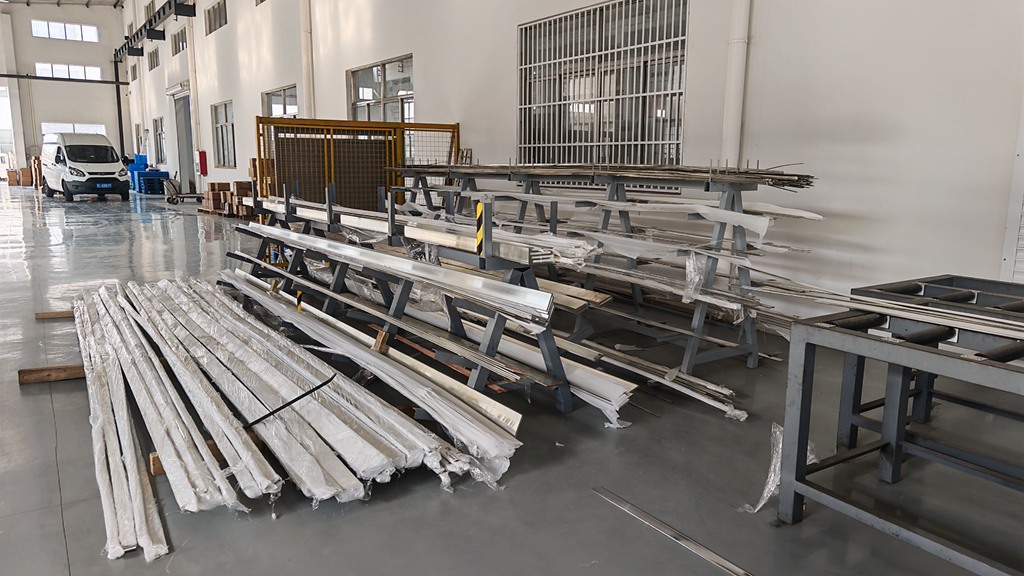
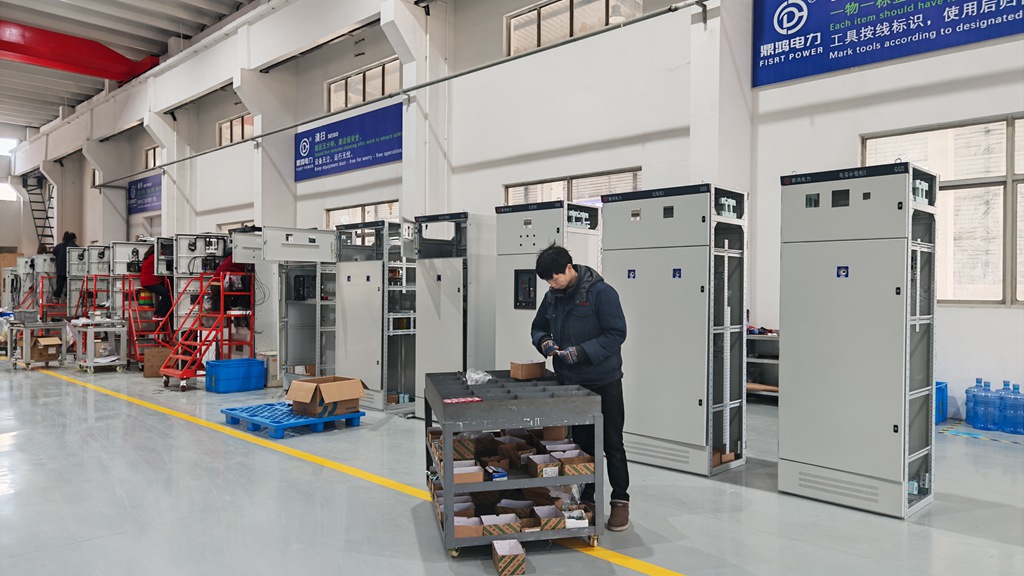
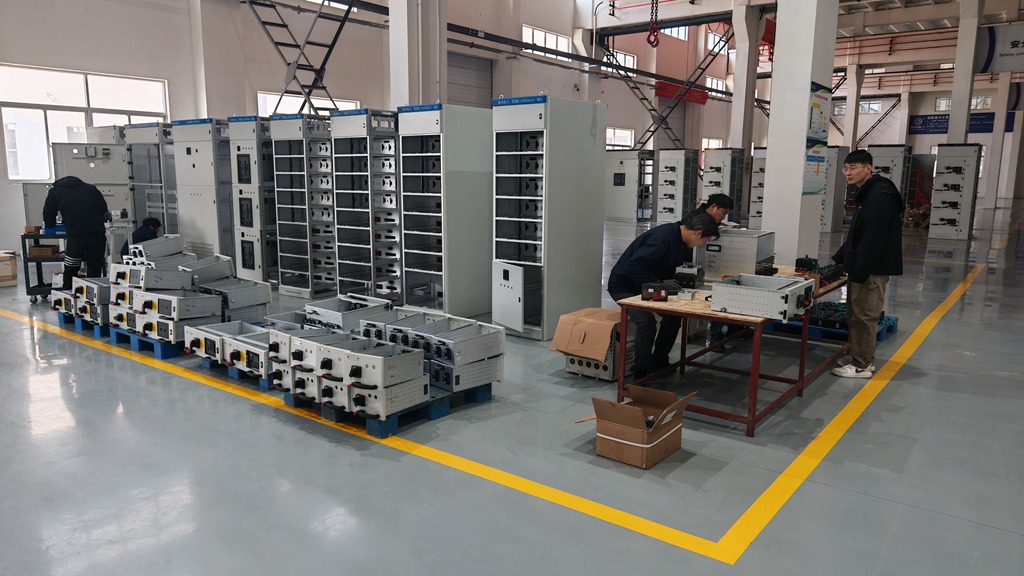
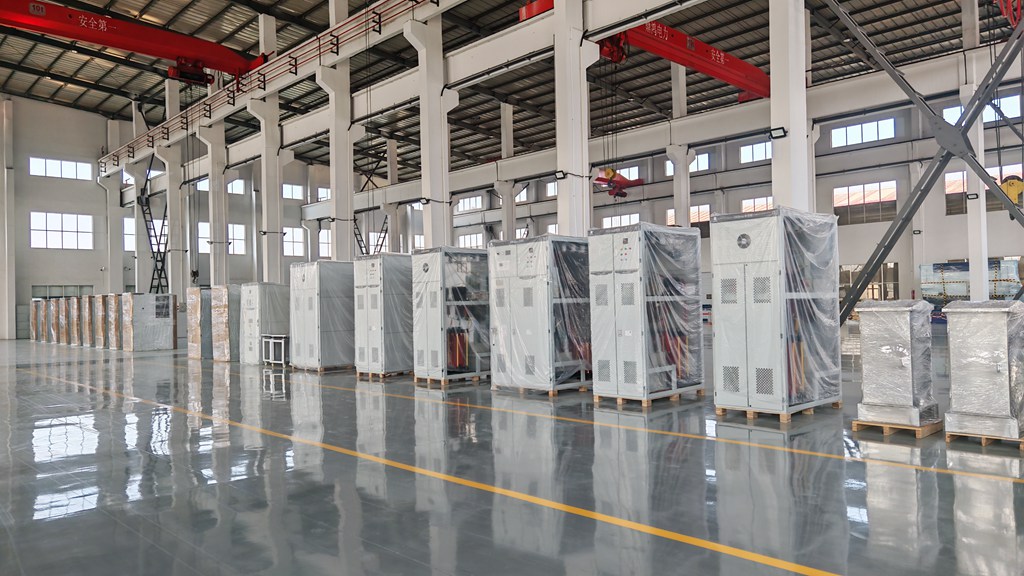
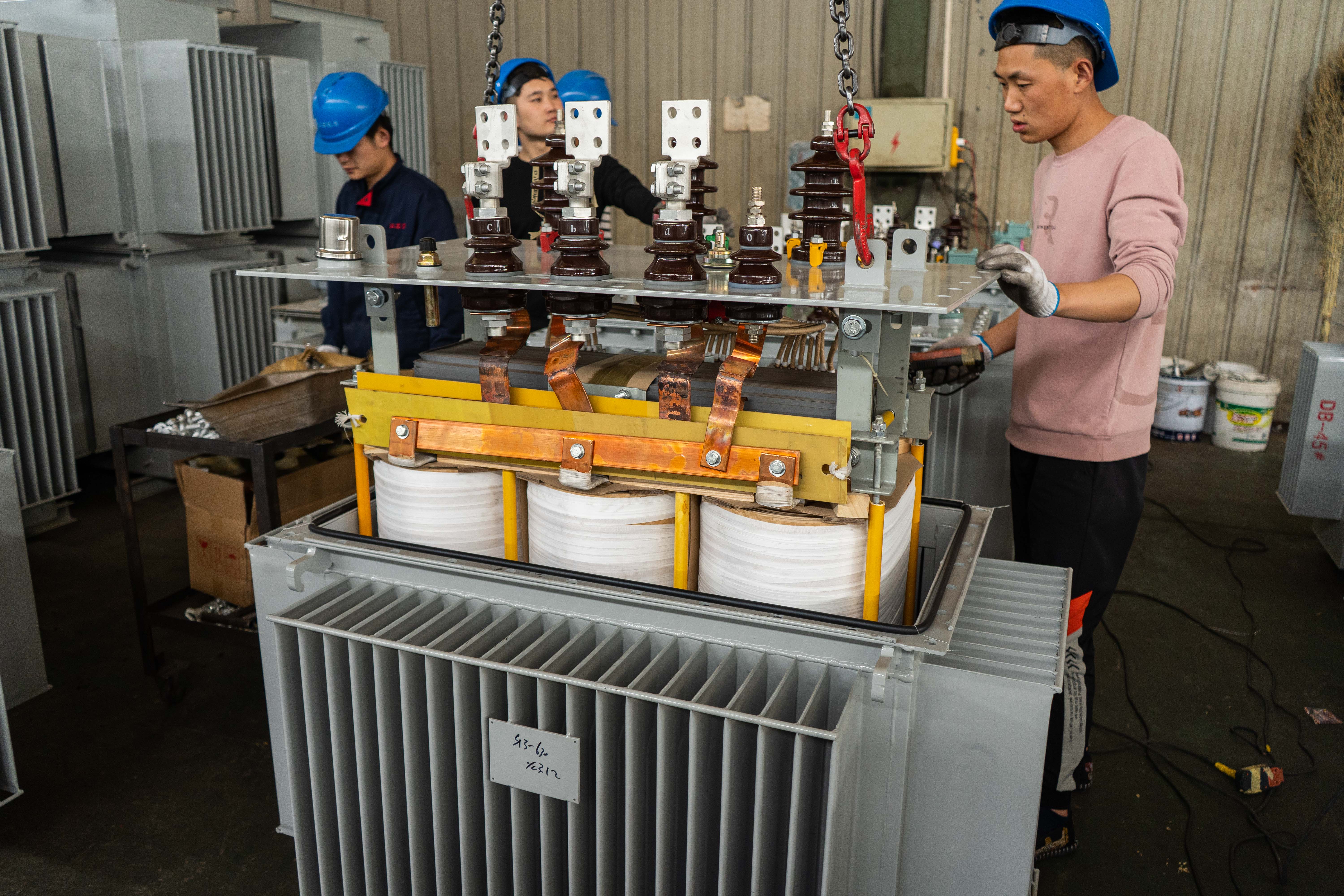
Production control, testing and export packing are part of the quality story. The images below show the type of facility, workshop and inspection environment behind Jiangsu Wisegj Power Co., Ltd. projects.
Low Voltage Switchgear Questions Global Buyers Ask
These are the questions procurement teams, EPC contractors and facility owners most often ask when evaluating low voltage switchgear suppliers and specifications.
What is low voltage switchgear, and where is it used?
Low voltage switchgear distributes, protects and controls electrical power at voltages up to 1,000 V AC. It is installed at the secondary side of distribution transformers and feeds factories, commercial buildings, data centers, hospitals, water treatment plants, renewable energy systems, EV charging infrastructure and compact substations. A typical assembly includes incoming ACBs or MCCBs, busbars, outgoing feeders, motor starters, metering, protection relays and communication devices.
Which standards and certificates matter for global procurement?
For most international projects, low voltage switchgear should be designed and verified to IEC 61439-1 and IEC 61439-2. CE marking may be required for Europe, while North America may require UL 891 or local utility approval. Buyers should ask for design verification, routine test reports, component certificates, ISO 9001 quality management evidence and, where applicable, third-party inspection. Jiangsu Wisegj Power Co., Ltd. supplies documentation in English to support approval and handover.
How do I specify current rating, short-circuit withstand and form of separation?
Start with the single-line diagram and short-circuit study. The rated current should cover present load plus planned expansion, while Icw and Ipk must match the fault level at the installation point. Form 2b, 3b or 4b separation should reflect maintenance philosophy: higher separation improves safety and serviceability but increases cost and size. Also define IP rating, ambient temperature, altitude, busbar material, incoming device type and outgoing feeder requirements before requesting a final quotation.
Should I choose fixed, draw-out or motor control center designs?
Fixed designs are economical for simple distribution and lower maintenance requirements. Draw-out designs are preferable when fast breaker replacement or maintenance without extended shutdown is important. Motor control centers are best for plants with many pumps, fans, conveyors, compressors and process loads. In many projects, a hybrid approach is used: main incoming and critical feeders in draw-out compartments, with fixed feeders or MCC buckets for less critical loads.
How can low voltage switchgear improve energy efficiency and sustainability?
Efficient low voltage switchgear reduces losses through properly sized copper busbars, low-resistance joints, quality breakers and optimised ventilation. Power factor correction panels release transformer capacity and reduce line losses. Power meters and communication gateways help identify inefficient loads. From a sustainability perspective, buyers can request recyclable copper, reduced material waste, low-loss components, clear material documentation and a design that allows future expansion without replacing the whole assembly.
What documents should a low voltage switchgear supplier provide?
A complete package normally includes approved GA drawings, single-line diagram, terminal schedule, nameplate drawing, component list, routine test reports, dielectric test records, functional test records, protection settings, installation instructions and an O&M manual. For export projects, packing lists, certificates of origin and shipping documents are also required. Jiangsu Wisegj Power Co., Ltd. prepares English documentation to support engineering approval, customs clearance and site commissioning.
What is the typical lead time and export process?
Lead time depends on current rating, component brand, form of separation, testing requirements and order quantity. Standard projects usually begin with technical clarification, drawing approval, component procurement, assembly, routine testing and export packing. Jiangsu Wisegj Power Co., Ltd. supports FOB, CFR, CIF, EXW, FCA, CIP, CPT, DDP and other Incoterms, with payment methods such as T/T, L/C, D/P and D/A available by agreement. Buyers should confirm the inspection plan and document package before production begins.
Can low voltage switchgear be integrated with a transformer or compact substation?
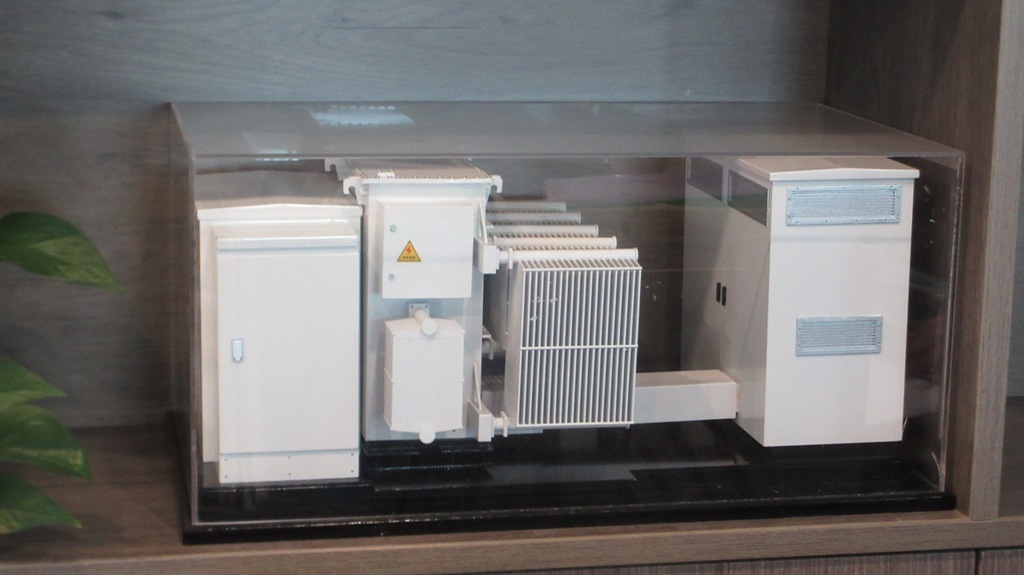
Yes. Low voltage switchgear is often integrated with a distribution transformer, MV switchgear, metering and protection into a compact substation or prefabricated electrical room. This approach reduces site labour, shortens commissioning and improves factory quality control. Jiangsu Wisegj Power Co., Ltd. manufactures transformers, compact substations and switchgear, so the interfaces between transformer LV terminals, busbar connections, protection settings and enclosure dimensions can be reviewed together.
How do I request a low voltage switchgear quotation?
Send the single-line diagram, short-circuit study or transformer data, system voltage and frequency, rated current, short-circuit withstand, form of separation, IP rating, ambient conditions, preferred component brands, communication requirements, delivery destination and required documentation. If the design is not final, a load list and future expansion plan are enough for a preliminary technical review. Jiangsu Wisegj Power Co., Ltd. will respond with questions, a compliant technical route and a quotation. For document requests, write to [email protected].
Technical Data Checklist for a Faster Low Voltage Switchgear Offer
Sharing these parameters lets our engineers return a compliant design, accurate bill of materials and realistic lead time without unnecessary clarification rounds.
Rated current and busbar rating
System voltage and frequency
Short-circuit withstand Icw and Ipk
Form of separation and IP rating
Single-line diagram and load list
Ambient temperature and altitude
Preferred breaker and meter brands
Communication protocol and metering
Destination port and document requirements
Need a Compliant Low Voltage Switchgear Proposal?
Send your single-line diagram, short-circuit study, voltage, frequency, rated current, IP requirement, ambient conditions and destination port. Jiangsu Wisegj Power Co., Ltd. will review the specification and respond with a technical proposal, preliminary drawings and a quotation. For documentation requests, write to [email protected].



 Up to 6300 A