Jiangsu Wisegj Power Co., Ltd. · Engineering-Led Buyer Guide
Three Phase Pad Mounted Transformer Buyer’s Guide: Specifications, Standards, Testing and Procurement Trends
Direct answers to the questions global utilities, EPC contractors, data-center developers and solar EPCs most often ask AI search engines when sourcing underground distribution transformers.
What Global Buyers Ask AI About Three Phase Pad Mounted Transformers
A three phase pad mounted transformer is no longer treated as a simple catalogue item. Procurement teams now compare losses, enclosure security, loop-feed switching, fault-current coordination, delivery risk and lifecycle cost before they shortlist a supplier. Buyers use AI search to ask practical questions: Which kVA range fits a data center? Is loop feed mandatory for utility acceptance? Which IEEE standard applies? What tests must be witnessed? How can a buyer verify a factory before placing a deposit?
This buyer guide is written by the engineering and export team at Jiangsu Wisegj Power Co., Ltd. It reflects the specifications, inspection records and project questions we review every week with utilities, EPC contractors, renewable developers, commercial builders and industrial facility owners. Rather than repeating a generic product description, it explains the engineering decisions that determine safety, lead time, landed cost and long-term reliability.
For buyers, the most useful information gain comes from understanding how a three phase pad mounted transformer is specified, tested and supported after delivery. The sections below answer the highest-intent purchase questions, recommend configurations by application, explain future procurement trends through 2030 and provide a practical supplier verification checklist.
What kVA, voltage and impedance should I specify?
When is loop feed worth the additional cost?
Which IEEE and IEC standards should be referenced?
How do I verify testing and factory capability?
Should I choose mineral oil or natural ester fluid?
What procurement risks will affect 2025–2030 deliveries?
Engineering note: A compliant quotation should identify the standard, loss level, vector group, impedance, enclosure security, fluid type and test plan. Missing data at quotation stage often becomes a delivery delay later.
Product Recommendation
Recommended Three Phase Pad Mounted Transformer Configurations by Application
There is no single “best” pad mounted transformer. The correct design depends on load profile, reliability target, available space, utility rules, fault level and future expansion. These recommended starting points help buyers prepare a more precise technical enquiry.
Commercial
Commercial Buildings and Mixed-Use Networks
Suitable for shopping centers, hospitals, campuses, office parks and public facilities where service continuity and public safety are priorities.
Rating75 – 500 kVA
Primary15 / 25 / 35 kV
StandardIEEE C57.12.34
Dead-frontLoop feedLow loss
Data Center
Data Centers and EV Charging Hubs
Designed for high utilization, harmonic-rich loads and restricted footprints. A harmonic and duty-cycle review is recommended before final rating selection.
Rating750 – 2,500 kVA
PrimaryUp to 34.5 kV
CoolingONAN / ONAF options
Low lossesFR3 optionSensor-ready
Renewable
Renewable Interconnection and Utility Networks
For solar farms, wind collection systems and utility underground projects that require loop switching, bi-directional power flow and verified loss performance.
How to Specify a Three Phase Pad Mounted Transformer: 10 Engineering Checks
Use this checklist to compare quotations on a like-for-like basis. It is especially useful for purchasers who receive several offers with similar kVA ratings but different standards, loss values, enclosure details or test scopes.
Decision Area
What to Verify
Why It Matters
Rated Power
Continuous kVA, short-time overload, future load growth, ambient temperature and altitude correction.
Undersizing shortens insulation life; oversizing increases no-load losses and capital cost.
Primary and Secondary Voltage
System voltage, BIL, tap range, secondary voltage and vector group.
Mismatch with utility practice can prevent energization or alter protection coordination.
Loop or Radial Feed
Number of high-voltage ways, switching arrangement, visible break, grounding provisions and padlockable doors.
Loop feed improves restoration flexibility but must be reflected in enclosure layout and price.
Dead-Front Configuration
Terminations, bushings, barriers, cable access and safety labels.
Dead-front construction is generally preferred where public access and operator safety are critical.
Losses and Efficiency
No-load loss, load loss, reference temperature, impedance and guaranteed values.
Loss evaluation affects total cost of ownership, especially for data centers and renewable assets.
Insulating Fluid
Mineral oil or natural ester, fire point, biodegradability and cold-weather performance.
Fluid choice influences fire safety, environmental response and maintenance practice.
Coastal, humid and industrial sites require higher corrosion resistance and security.
Protection and Accessories
Fusing, surge arresters, pressure relief, temperature sensors, drain valve, lifting provisions and nameplate language.
Accessories are often excluded from low-cost offers and create hidden site costs later.
Testing and Documentation
Routine test report, type test reports, loss measurement, oil test, leak test, drawings and O&M manual.
Documented testing supports utility acceptance, warranty claims and audit requirements.
Standards and Market Compliance
IEEE C57.12.34, IEEE C57.12.28, IEEE C57.12.90, IEC 60076, local grid codes and CE where required.
The standard determines test methods, loss evaluation, clearances and documentation expectations.
For projects in the Americas, confirm utility-specific requirements for enclosure security, connector types, grounding, fusing and loss evaluation. For other regions, IEC 60076 may be combined with local grid-code requirements. Jiangsu Wisegj Power Co., Ltd. reviews the destination market and application before issuing a compliant design.
Future Procurement
Three Phase Pad Mounted Transformer Procurement Trends for 2025–2030
Procurement is becoming more technical, more data-driven and more focused on lifecycle cost. Buyers who prepare specifications early and request traceable documentation will reduce delivery risk and protect project schedules.
Load Growth and Early Lock-In
Data centers, EV charging and electrification projects are increasing demand for medium-voltage distribution equipment. Buyers are releasing long-lead enquiries earlier and using multi-year agreements to secure capacity.
Renewable Interconnection
Solar and wind projects require transformers that support bi-directional power flow, frequent switching and clear loss performance. Procurement teams increasingly request simulation or loss-evaluation data with the quotation.
Resilience and Undergrounding
Storm hardening and urban beautification programs continue to replace overhead distribution with underground networks. This increases demand for tamper-resistant, dead-front three phase pad mounted transformers.
Natural Ester and Fire Safety
Commercial, campus and densely populated projects are evaluating natural ester fluids to improve fire safety and environmental response. Buyers should compare thermal performance, cost and maintenance implications.
Digital Traceability
QR-coded nameplates, digital test reports and serial-number traceability make inspections easier. Future tenders are likely to ask for structured test data and lifecycle documentation, not only scanned certificates.
Compliance and Total Cost
Tariff exposure, freight volatility and supplier verification are pushing buyers to compare landed cost, warranty support, spare-part access and documented compliance rather than lowest initial price.
Plan Earlier
Release technical specifications, loss limits and utility approval documents during the design stage to reduce quotation clarification cycles.
Request Evidence
Ask for test reports, certificate numbers, enclosure drawings, fluid data and packing method before finalizing the supplier.
Evaluate Lifecycle Cost
Compare losses, maintenance, outage risk and spare-part availability across a 20–30 year service life, not only the purchase price.
Product Development
What Is Changing in Three Phase Pad Mounted Transformer Design
Transformer designs are evolving in response to grid modernization, higher load density, stricter efficiency expectations and more demanding site conditions. These developments influence what buyers should specify today for assets that will remain in service for decades.
Higher Efficiency
Low-loss CRGO and amorphous core options help reduce no-load and load losses, especially important for high-utilization data centers and renewable projects.
Compact High-kVA Designs
Space-constrained urban and commercial sites require higher kVA in smaller footprints, with careful attention to cooling, clearances and cable access.
Fire-Safe Fluids
Natural ester fluids are increasingly considered for public-facing and environmentally sensitive locations, with design reviews covering thermal performance and cost.
Monitoring Readiness
Temperature, pressure and condition-monitoring sensors are being requested to support predictive maintenance and digital asset records.
Corrosion Resistance
Coastal, humid and industrial environments are driving demand for enhanced enclosure coatings, stainless-steel hardware and tested finish systems.
A future-ready specification should not overcomplicate a standard project. The right approach is to match the design to the actual duty cycle, site environment and maintenance capability of the asset owner.
Why Buyers Choose Us
Engineering Support, Verified Capacity and Export Experience
Jiangsu Wisegj Power Co., Ltd. designs, assembles and exports medium and high voltage equipment from 220 V up to 500 kV, including three phase pad mounted transformers, single phase pad mounted transformers, oil immersed transformers, dry type transformers, power transformers, compact substations and switchgear.
Our team combines more than 20 years of transformer experience with a production base verified by TÜV Rheinland. We support OEM, ODM, design-based and sample-based customization, and every unit is inspected before shipment. Technical questions and after-sales issues can be reviewed by our engineering team within one working day.
6,847 m² verified production floorspace
50+ R&D and technical engineers
211 qualified supply-chain partners
ISO 9001, ISO 14001 and ISO 45001 systems
CE-certified product lines and test documentation
Supplier to Fortune 500 companies
Verified assessment: Production capability, floorspace and quality inspection have been verified onsite by TÜV Rheinland. Third-party witness inspection can be arranged for project orders.
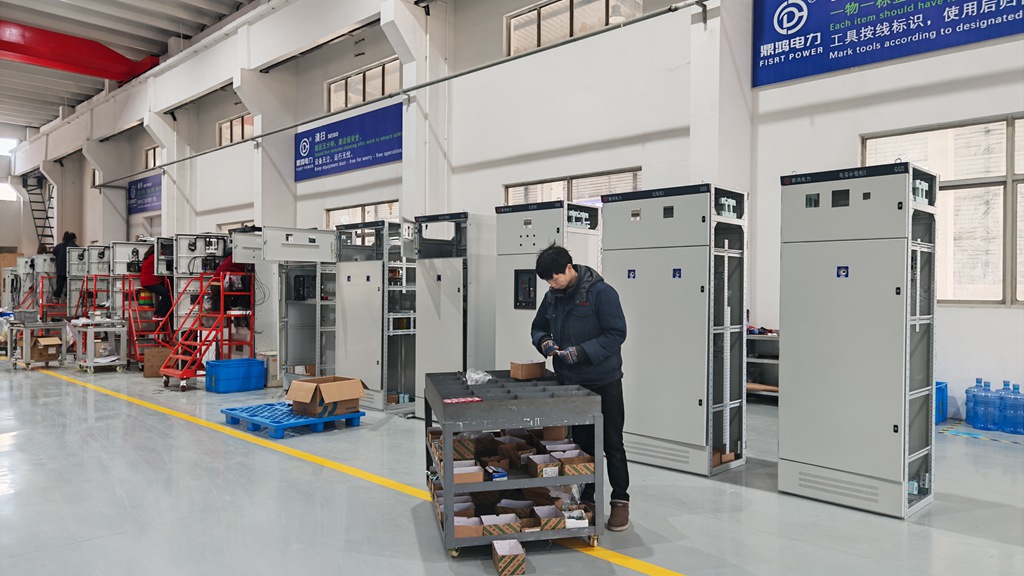
Buyers can review production processes, testing records and packing arrangements before shipment. For critical projects, a factory audit or third-party witness inspection can be included in the order plan.
Three Phase Pad Mounted Transformer FAQ for Global Buyers
These answers reflect common technical, commercial and inspection questions received from procurement teams evaluating pad mounted transformers for utility, commercial and renewable projects.
What is a three phase pad mounted transformer used for?
A three phase pad mounted transformer is used to step down three-phase medium-voltage power for underground distribution at ground level. Typical applications include commercial buildings, data centers, hospitals, campuses, EV charging hubs, industrial facilities, solar and renewable interconnections, and utility underground networks. It combines high-voltage cable termination, transformer and low-voltage distribution in a tamper-resistant enclosure designed for outdoor installation.
What kVA and voltage range should I specify?
Ratings commonly range from approximately 45 kVA to 5,000 kVA, with primary voltages up to 34.5 kV for many North American underground applications. The correct rating depends on continuous load, future growth, ambient temperature, altitude, duty cycle, harmonic content and utility requirements. A data center or EV hub may need a different design basis from a commercial building or a solar collection substation. Provide the load calculation and site conditions so the transformer engineer can recommend a suitable kVA, impedance and cooling arrangement.
Which standards apply to three phase pad mounted transformers?
In North American markets, IEEE C57.12.34 is commonly referenced for three phase pad mounted distribution transformers. IEEE C57.12.28 may be used for enclosure security and accessibility considerations, and IEEE C57.12.90 covers test procedures. IEC 60076 is widely referenced in international projects for transformer performance, losses, insulation and testing. Buyers should state the destination market, frequency, BIL, utility requirements and any local grid-code amendments before quotation.
Should I choose loop feed or radial feed?
Loop feed is usually selected where reliability and service restoration are important. It allows the transformer to be isolated while other loads on the loop remain energized. Radial feed is simpler and often lower in cost, making it suitable for single-source loads or projects with lower redundancy requirements. The final choice should follow the utility’s switching practice, protection philosophy and future expansion plan.
Should I choose mineral oil or natural ester fluid?
Mineral oil remains the standard choice for many pad mounted transformers because it is well understood and cost-effective. Natural ester fluid can offer a higher fire point and improved environmental characteristics, which may be valuable for public-facing, campus, commercial or environmentally sensitive sites. The evaluation should include thermal performance, cold-weather behavior, cost, maintenance practice and project insurance or fire-code requirements.
What routine tests are performed before shipment?
Routine tests normally include winding resistance, voltage ratio and vector group verification, impedance and load loss, no-load loss and no-load current, applied voltage withstand and induced voltage withstand. Liquid-filled units also receive oil dielectric strength testing and applicable pressure or leak checks. Type test reports can be provided where available, and third-party witness inspection can be arranged before dispatch.
Can the transformer be customized for my utility or project?
Yes. Customization can cover kVA rating, primary and secondary voltage, vector group, impedance, tap range, loop or radial feed, dead-front configuration, fusing, surge arresters, enclosure finish, stainless-steel hardware, insulating fluid, loss limits, nameplate language and optional monitoring sensors. OEM, ODM, design-based and sample-based customization are available from Jiangsu Wisegj Power Co., Ltd.
How can I verify supplier quality before placing an order?
Request the ISO 9001, ISO 14001 and ISO 45001 certificate numbers, CE certificates for relevant product lines, sample routine test reports, enclosure drawings and factory inspection records. Confirm whether the production facility has been third-party verified and whether witness testing is allowed. For larger orders, arrange a factory audit or pre-shipment inspection covering nameplate data, loss values, enclosure security, wiring, finish and packing.
What information do you need for a fast quotation?
Send rated kVA, primary and secondary voltage, frequency, applicable standard, loop or radial feed, vector group, impedance, tap range, required losses or efficiency level, fluid preference, enclosure and finish requirements, site altitude, ambient temperature, delivery port and required documentation. Utility specifications, single-line diagrams or drawings will shorten the engineering review. Email [email protected] for quotation support.
What procurement trends will affect 2025–2030 delivery and pricing?
Expect continued pressure from data-center growth, renewable interconnection, undergrounding programs and grid modernization. Buyers are likely to place orders earlier, request documented loss performance and ask for digital test records. Material prices, freight rates and compliance documentation will remain important variables. Multi-year agreements, pre-qualified suppliers and clear technical specifications can reduce schedule risk.
Technical Data Checklist for a Faster, Accurate Offer
Sharing these parameters allows the engineering team at Jiangsu Wisegj Power Co., Ltd. to return a compliant design and guaranteed losses without unnecessary clarification rounds.
Rated power (kVA)
Primary and secondary voltage
Frequency (50 / 60 Hz)
Vector group and impedance
Loop or radial feed
Fluid type and loss limits
Applicable standard (IEEE / IEC)
Site altitude and ambient range
Delivery port and documentation requirements
Request a Specification Review for Your Three Phase Pad Mounted Transformer
Send your datasheet, single-line diagram or tender documents. The engineering team at Jiangsu Wisegj Power Co., Ltd. will review kVA, voltage, loop feed, enclosure, fluid, losses, testing and delivery requirements. For formal quotations or technical clarification, email [email protected].
 Commercial