OEM / ODM Transformer Manufacturing · 220 V to 500 kV
OEM/ODM Oil Filled Transformer Supplier & Exporters
Engineering-led supply for utilities, EPC contractors and industrial buyers—CE, IEC and IEEE-aligned oil-filled transformers, pad-mounted platforms, dry-type alternatives and compact substations with verifiable routine test data.
8 Oil-Filled Transformer & Complementary Platforms for OEM/ODM Programs
These platforms cover utility distribution, industrial step-up, pad-mounted underground networks, high-voltage power distribution and dry-type alternatives for fire-sensitive sites. Product links retain the original specification pages so procurement teams can review the exact configuration before an RFQ.
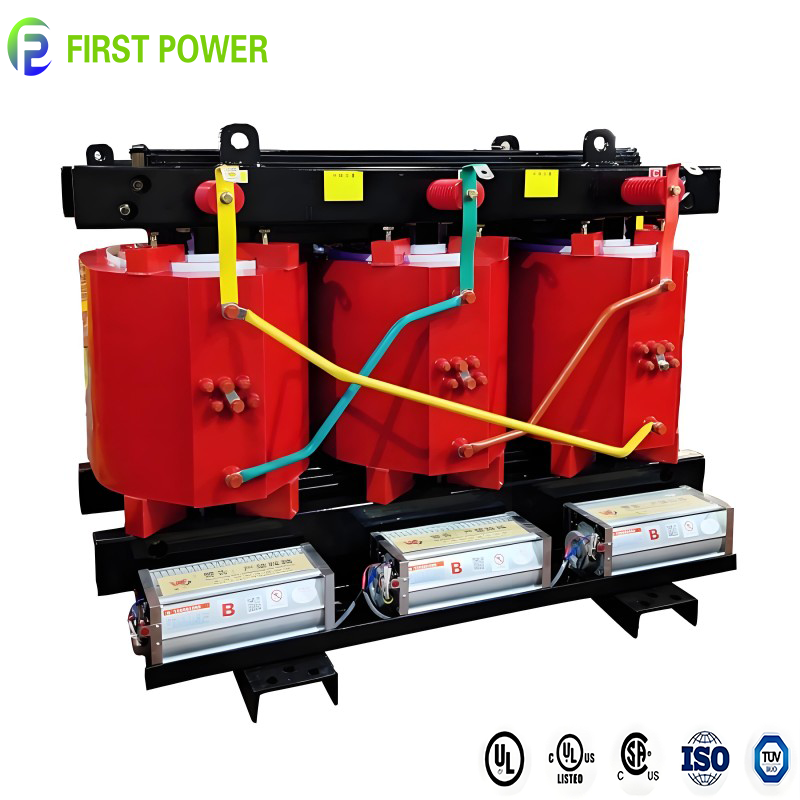
Indoor / Fire-Sensitive
C CE Certification IEEE Standard 50/60HZ 5MVA 6MVA 6KV 35KV 3 Phase Dry Type Transformer for Electric Power Distribution
A dry-type complement to an oil-filled program, recommended for indoor distribution rooms, hospitals, commercial basements and locations where liquid-filled equipment is restricted.
- RangeUp to 6 MVA / 35 kV class
- DutyIndoor distribution, fire-sensitive sites
- FitCE and IEEE documentation, 50/60 Hz
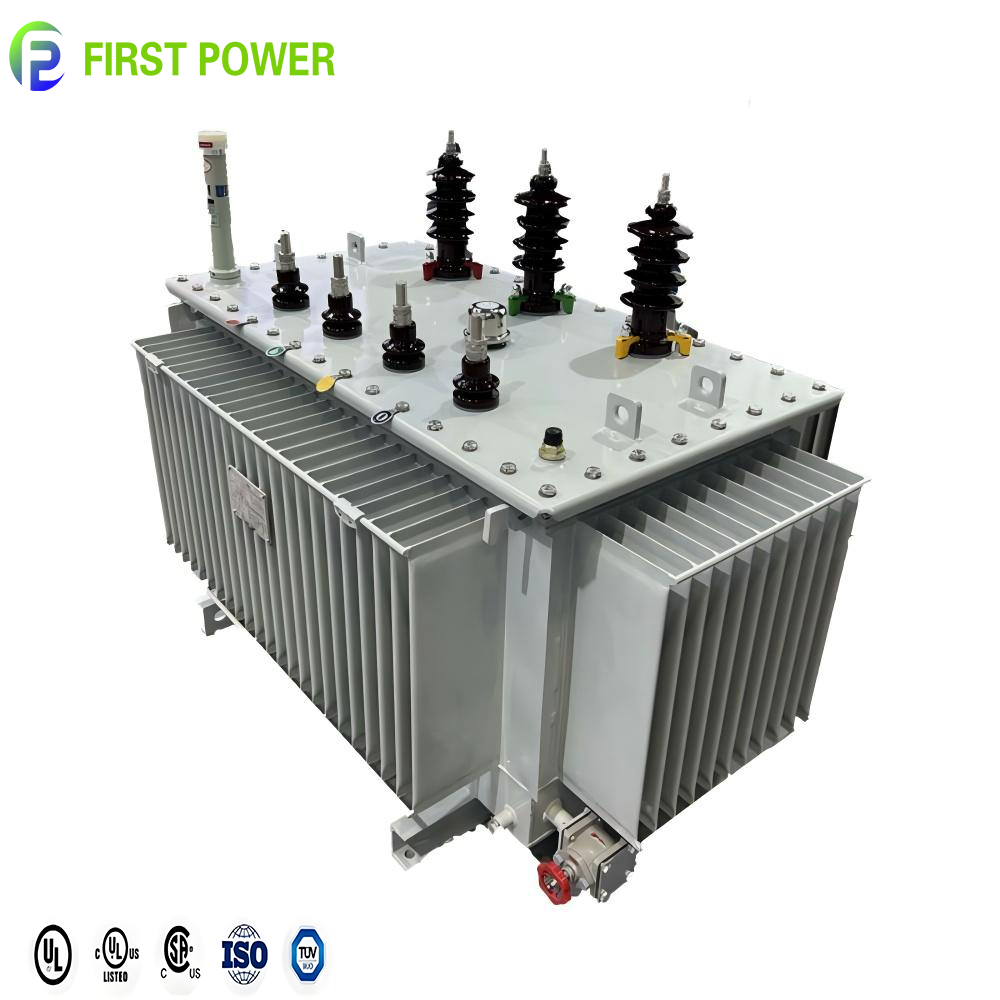
Distribution / S11
C CE 50/60HZ S11 10KV 20KV 35KV 50KVA 100KVA 200KVA 3 Phase Electrical Oil Immersed Transformer for Distribution System
An S11 oil-immersed distribution platform for 10–35 kV networks. A practical OEM base for utility tenders requiring a sealed tank, low loss and verified routine tests.
- Rating50–200 kVA shown; project ratings available
- Voltage10 kV, 20 kV, 35 kV class
- UseDistribution systems and repeat EPC orders
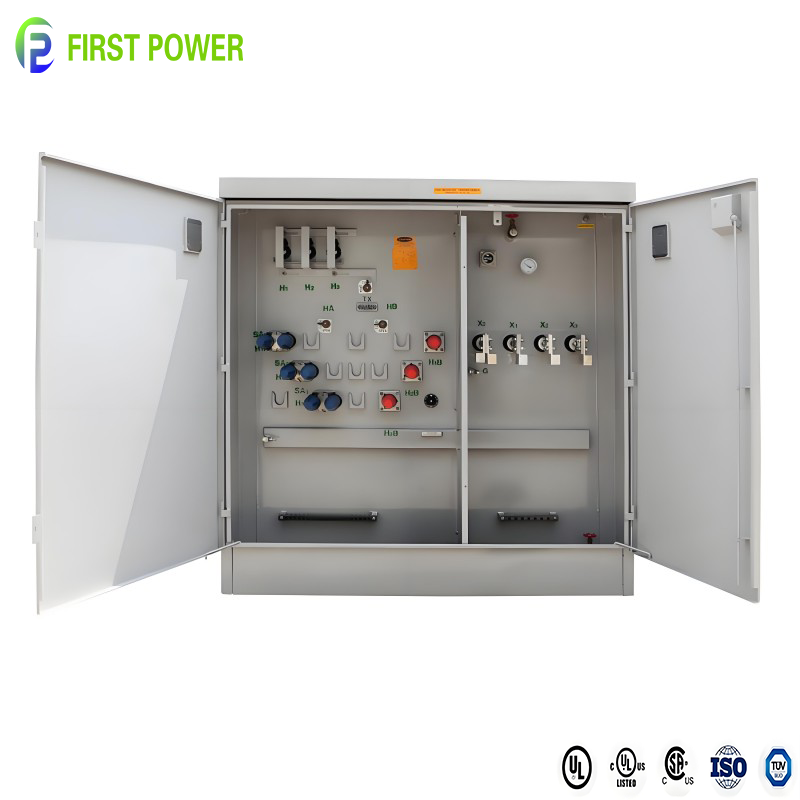
Loop Feed / Industrial
C CE MV&HV 50/60HZ 300KVA 500KVA 630KVA 700KVA 10KV 15KV 20KV 35KV 3 Phase Loop Feed Pad Mounted Transformer for Industrial
MV/HV loop-feed pad-mounted units for industrial and commercial distribution. Suitable for underground feed, tamper-resistant enclosures and space-constrained projects.
- Rating300–700 kVA shown
- Voltage10 kV to 35 kV class
- FeatureLoop feed, pad-mounted enclosure
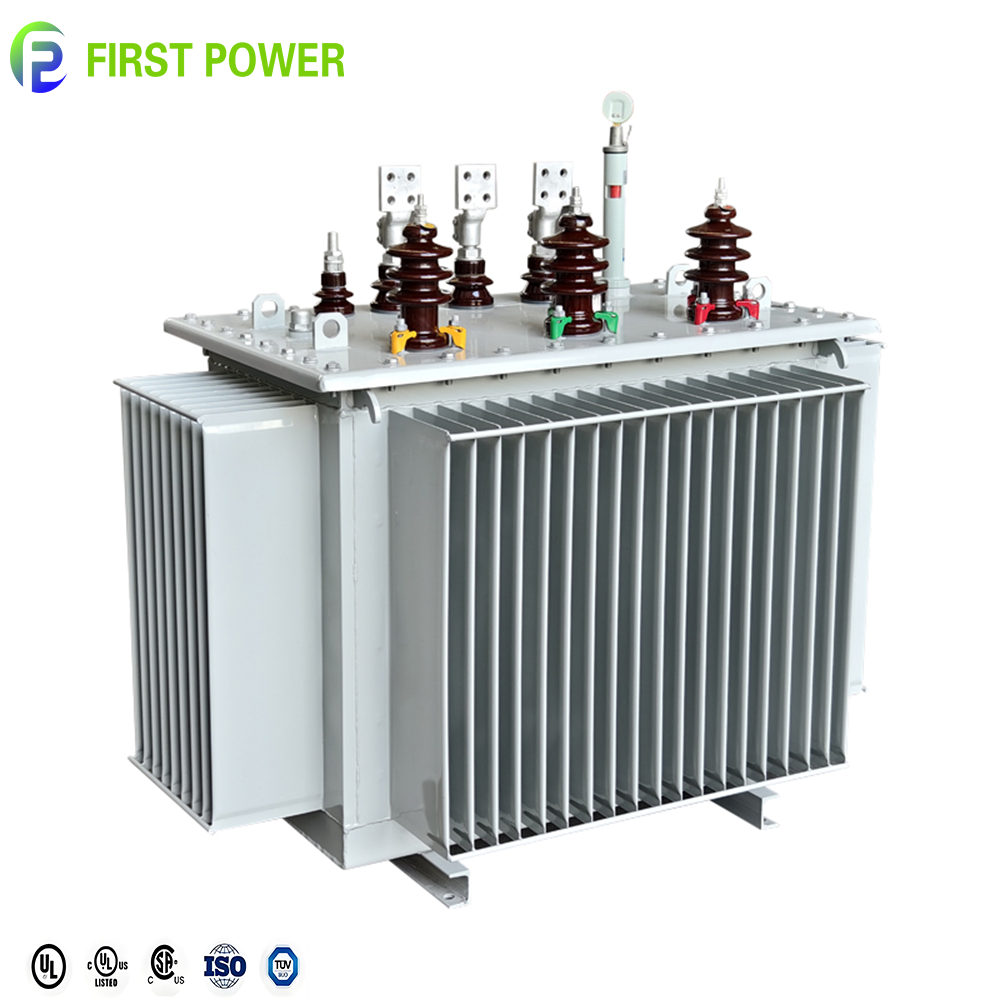
Industrial / Step-Up
C CE 50/60HZ 6KV 10KV 15KV 20KV 35KV 100KVA 200KVA 300KVA 500KVA 220V Output Voltage Step up Oil Transformer for Industrial
Step-up oil transformers for industrial plants and generator interconnection. Ratio, impedance and taps can be engineered to match collection systems, motor loads and site conditions.
- Rating100–500 kVA shown
- Voltage6 kV to 35 kV primary range
- UseStep-up duty for industrial power systems
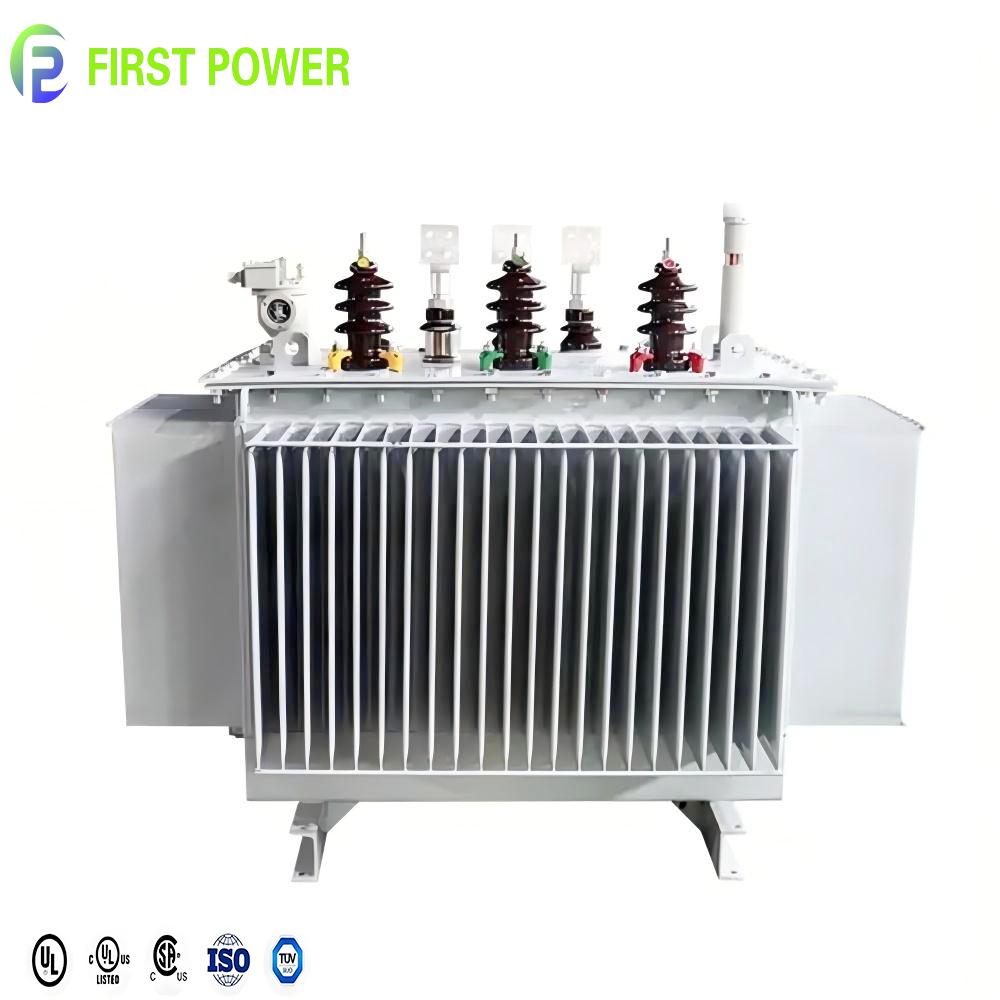
Distribution / 50–250 kVA
C CE S11 10KV 20KV 35KV 50KVA 100KVA 150KVA 200KVA 250KVA 3 Phase Oil-Immersed Transformer for Electric Power Distribution
An S11 three-phase oil-immersed transformer for distribution systems. Suitable for OEM standard stock, rural electrification and EPC repeat orders.
- Rating50–250 kVA
- Voltage10 kV, 20 kV, 35 kV class
- UsePower distribution and utility networks
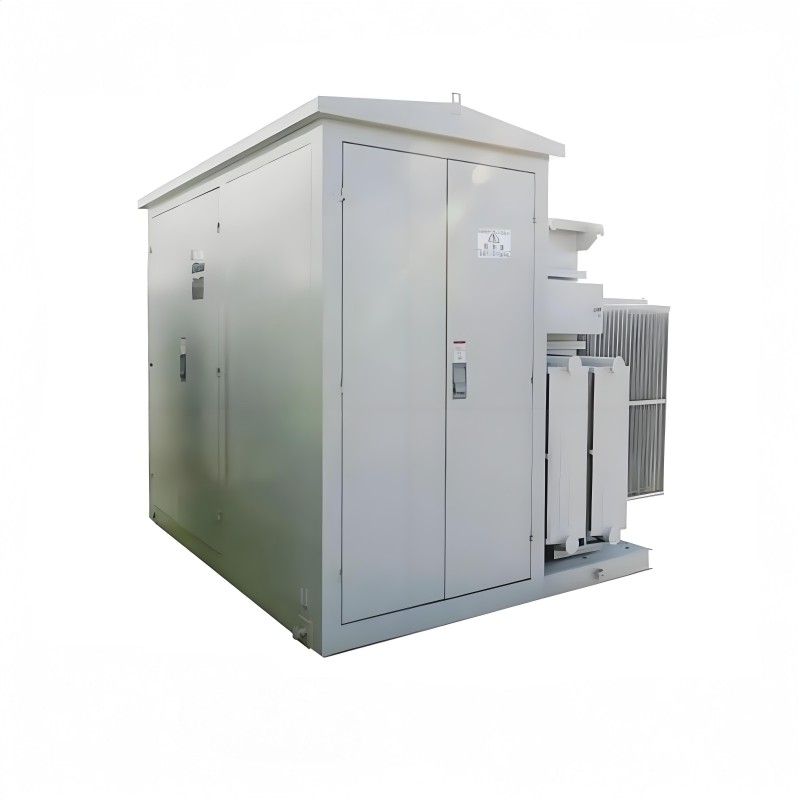
North American Standard
American Standard /C Certified 3000kva 34.5kv/480v Oil Type Pad Mounted Transformer 60 Hz 10kv Input 380v 440v Output
American-standard 3,000 kVA pad-mounted oil transformer, 34.5 kV/480 V class, 60 Hz. Recommended for North American commercial, industrial and solar projects requiring an ANSI footprint.
- Rating3,000 kVA
- Voltage34.5 kV / 480 V class
- Frequency60 Hz
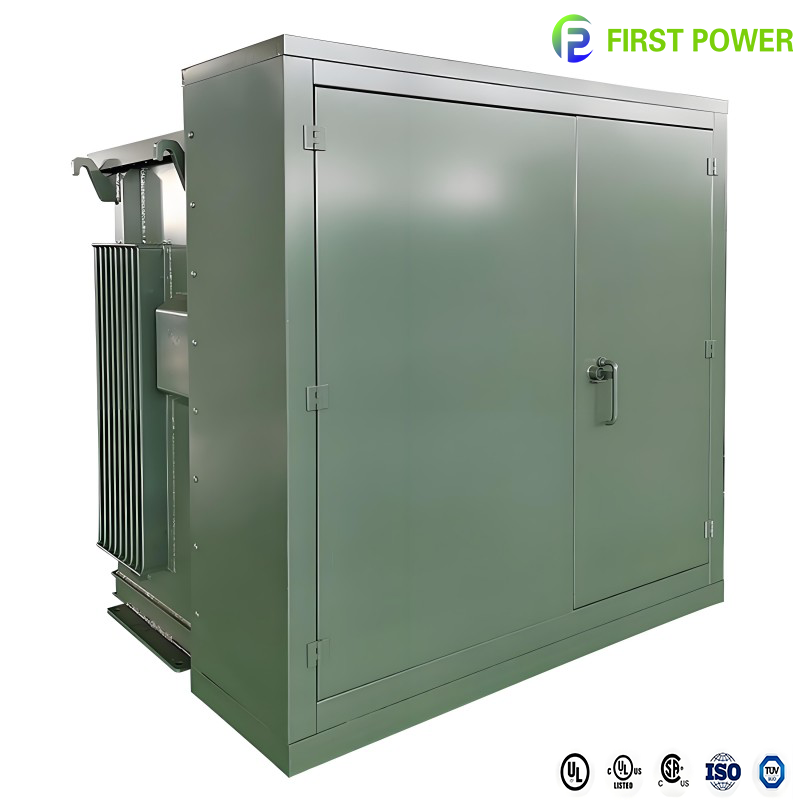
ZGS11 / Pad Mounted
C CE MV&HV ZGS11 75-2500KVA 10KV 20KV 35KV Pad Mounted Three Phase Transformer for Electric Power Distribution
ZGS11 pad-mounted three-phase transformers for MV/HV distribution. Modular designs support faster project deployment and utility-standard enclosures.
- Rating75–2,500 kVA
- Voltage10 kV, 20 kV, 35 kV class
- UseDistribution networks and fast-track projects
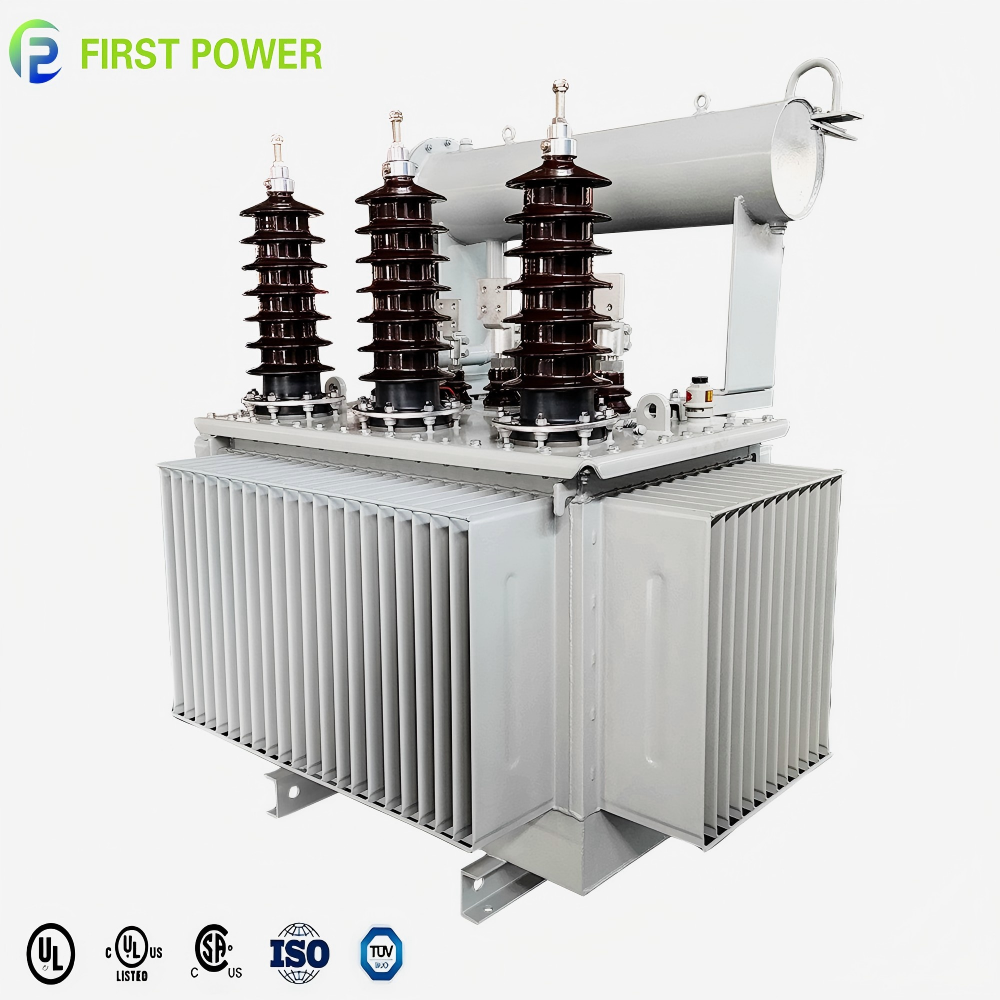
33 kV / IEEE
C CE Certification IEEE Standard 50/60HZ S11 Three Phase 33KV Oil Immersed Power High Voltage Transformer for Industrial
IEEE S11 33 kV oil-immersed power transformers for industrial high-voltage distribution. Suited to utility substations, plants and infrastructure where oil cooling and high-voltage duty are required.
- Voltage33 kV class
- TypeS11 oil-immersed power transformer
- UseIndustrial and substation applications
Oil-Filled Transformer Sourcing in 2025: From Price Comparison to Lifecycle Decision
A transformer is a long-lived capital asset, not a commodity box. No-load loss, load loss, impedance, temperature rise, lead time, documentation and after-sales response continue to affect the project long after the invoice is paid.
Buyers searching for OEM/ODM oil filled transformer suppliers and exporters usually arrive with three different intents. The first is standard utility replacement—repeatable ratings, predictable losses and fast documentation. The second is a project-engineered transformer where vector group, impedance, tap range, cooling class, bushings, insulating fluid and enclosure details must match a tender. The third is a private-label or OEM program where the buyer needs a manufacturing partner that can reproduce nameplates, drawings, test reports and packaging across multiple shipments.
The commercial risk is not only whether a supplier can quote a kVA rating. It is whether the supplier can reproduce the same specification, with the same material control and test evidence, on the next order. That is why serious procurement teams evaluate total cost of ownership, not just unit price. Loss capitalization, failure risk, spare-parts planning, transport damage and documentation quality all belong in the comparison.
Intent 1: Utility Replacement
Prioritize standard ratings, verified losses, routine test reports and repeatable lead times. Compare against the utility’s approved material list.
Intent 2: Project Engineering
Confirm drawings, impedance, vector group, taps, cooling, fluid, altitude and ambient conditions before the offer is frozen.
Intent 3: OEM / Private Label
Verify change control, nameplate language, packaging, witness testing, document handover and serial-number traceability.
Future Procurement Trends in Oil-Filled Transformer Supply
Utility and EPC purchasing teams are moving toward auditable lifecycle value. The strongest suppliers will be those who can document efficiency, resilience and compliance without slowing down the project schedule.
Lifecycle Cost & Loss Capitalization
Buyers increasingly evaluate no-load and load loss over 20–30 years, not only the initial quotation. Specify loss limits and require test data for every unit.
Resilience & Lead-Time Certainty
Dual sourcing, buffer stock and predictable material planning are becoming part of supplier qualification. Lead-time certainty can be more valuable than a marginal price difference.
Digital QA Dossiers
Drawings, material traceability, routine test reports, nameplate drafts and packing records are increasingly requested as a complete digital package before shipment release.
Sustainability & Fluid Strategy
Natural ester fluids, leakage containment, recyclability and fire-safety planning are entering technical specifications, especially for renewable and urban projects.
Oil-Filled Transformer Product Trends Buyers Should Plan For
Technical requirements are becoming more specific. Suppliers that can support efficiency targets, condition monitoring and alternative fluids will be better positioned for the next procurement cycle.
High-Efficiency Cores & Low-Loss Designs
CRGO and amorphous-core options, optimized flux density, improved winding geometry and tighter process control help meet modern loss limits and utility efficiency targets.
Digital-Ready Condition Monitoring
Temperature sensors, partial-discharge monitoring and DGA interfaces can be integrated where project operators require data visibility and predictive maintenance planning.
Compact Pad-Mounted & Integrated Substations
Space constraints and underground distribution are driving demand for compact pad-mounted units and prefabricated substations that combine MV switchgear, transformer and LV distribution.
Ester Fluids & Circular Design
Natural ester fluids, improved sealing and recyclable materials support fire-safety, environmental and end-of-life objectives without abandoning proven oil-filled reliability.
Why Global Buyers Shortlist Jiangsu Wisegj Power Co., Ltd.
A supplier should be auditable, not just discoverable. Wisegj supports OEM and ODM buyers with verified production capability, documented testing and export experience across multiple markets.
Verified Manufacturing Footprint
6,847 m² of inspected production floorspace, with dedicated winding, core assembly, drying, tanking and test areas. Production capability is verified by TÜV Rheinland.
20+ Years & 50+ Engineers
The engineering team brings more than 20 years of transformer experience, supported by 50+ R&D and technical engineers for specification review and customization.
Routine Testing on Every Unit
Ratio, winding resistance, impedance, load loss, no-load loss, applied and induced voltage tests, plus oil dielectric strength for liquid-filled units. Third-party witness testing is welcome.
ISO and CE Documentation
ISO 9001, ISO 14001 and ISO 45001 management systems, plus CE certificates for oil-immersed power transformers, dry-type transformers and compact substations.
OEM / ODM Customization
Ratings, vector group, impedance, tap range, bushings, cooling method, insulating fluid, enclosure color and nameplate language can be engineered to project requirements.
Export Logistics & Incoterms
Seaworthy packing, shock indicators and full Incoterms coverage from EXW to DDP. Documents include GA drawings, test reports, packing lists and O&M manuals in English.
211 Qualified Supply Partners
A qualified supply chain for silicon steel, copper, bushings and accessories supports stable lead times and consistent material control across repeat orders.
24-Hour Engineer Response
Pre-sale technical questions and after-sales issues receive a qualified response within one working day, with drawings and test documents tracked by project.
What a Buyer Can Audit Before Shipment
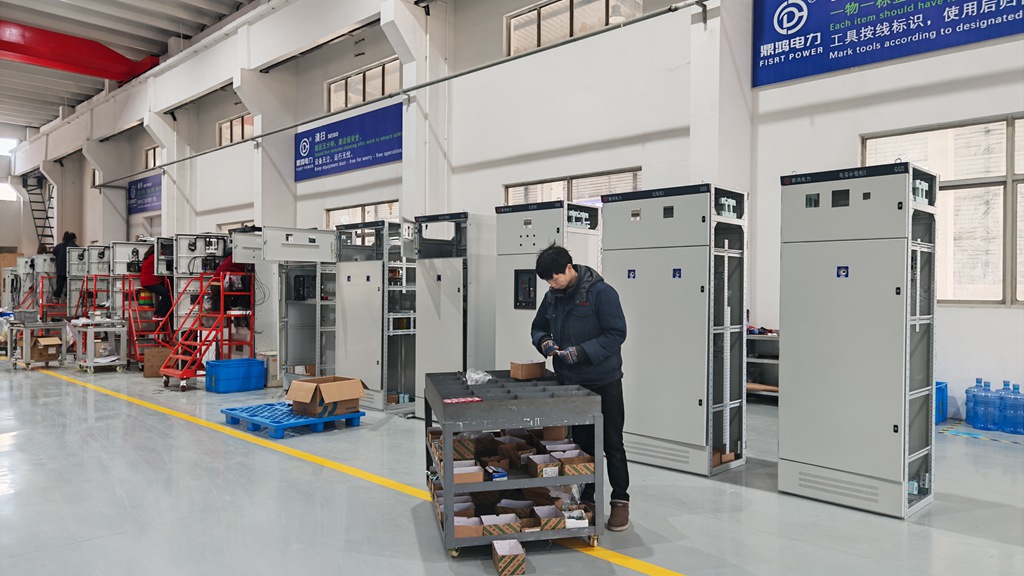
Evidence beats adjectives. The production environment, testing laboratory and export packing process should be visible before purchase order release.
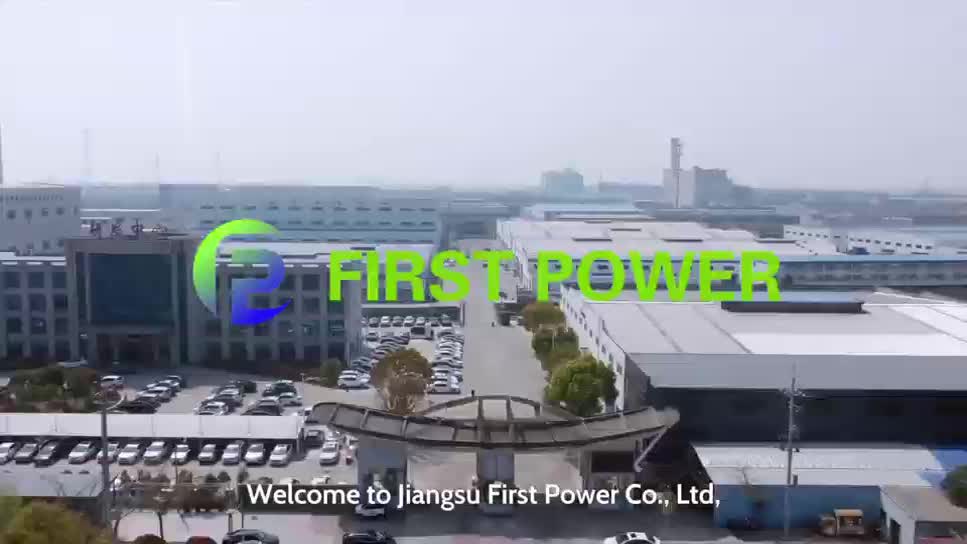
Company & Facility Overview

Assembly Workshop

Testing Laboratory
Export Packing & Loading
Certification & Quality Evidence Procurement Teams Can Verify
Certificate numbers are included so compliance teams can cross-check scope and validity with issuing bodies. Certificates support supplier qualification; they do not replace project-specific approved drawings and test plans.
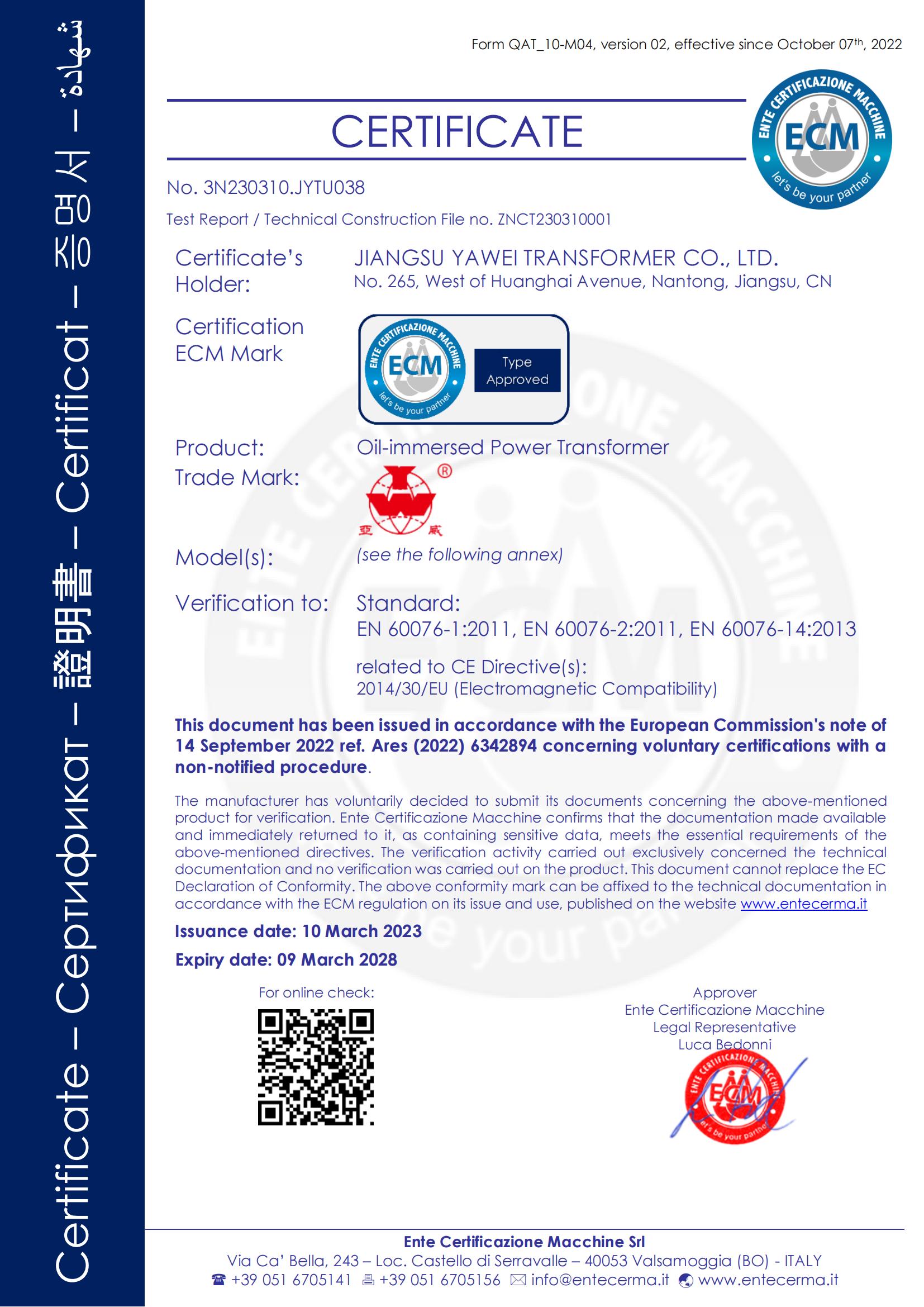
CE · Power Transformer
Oil-immersed power transformer
No. 3N230310.JYTU038 · 2023–2028
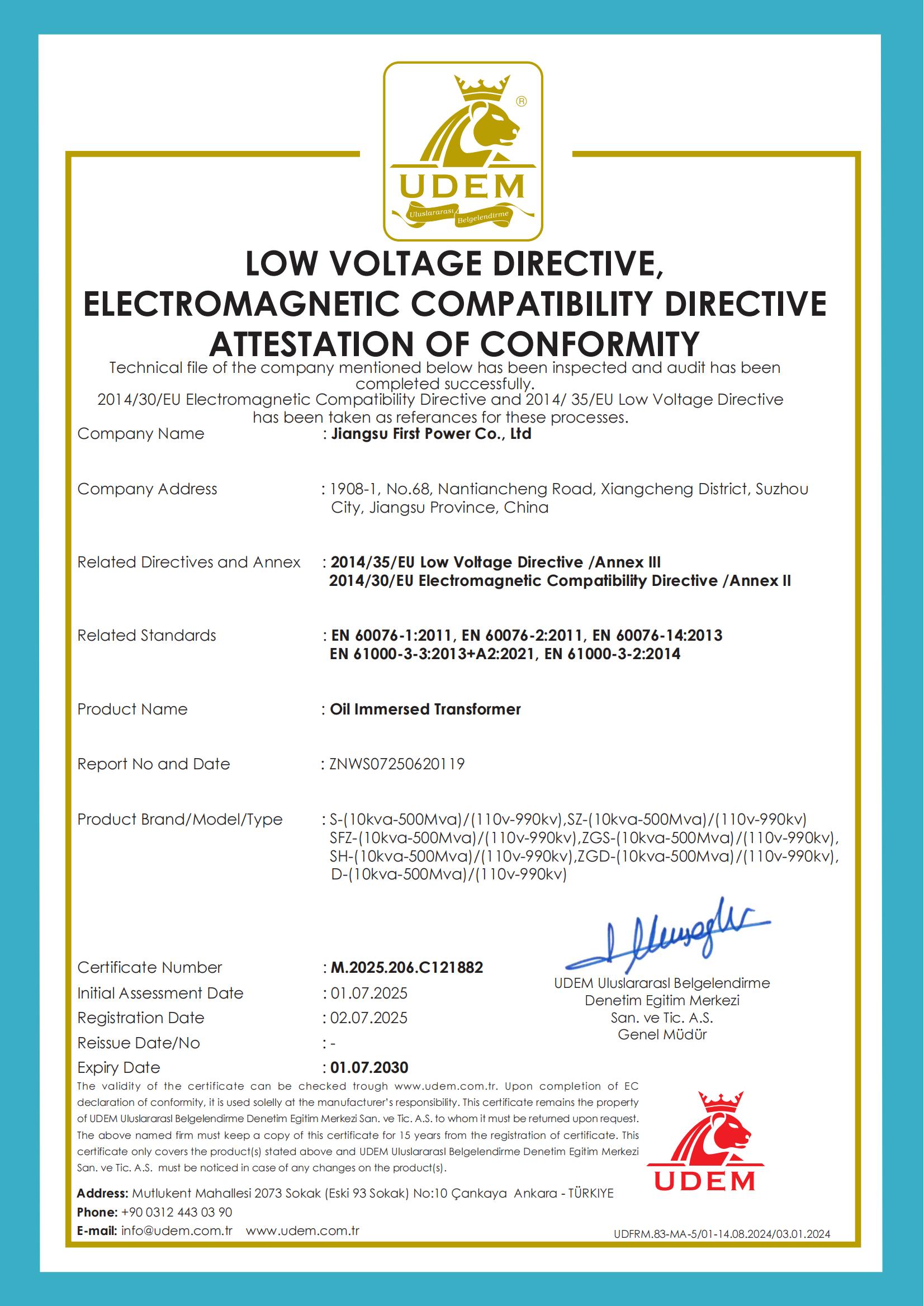
CE · Oil Immersed
Oil immersed transformer
No. M.2025.206.C121882 · 2025–2030
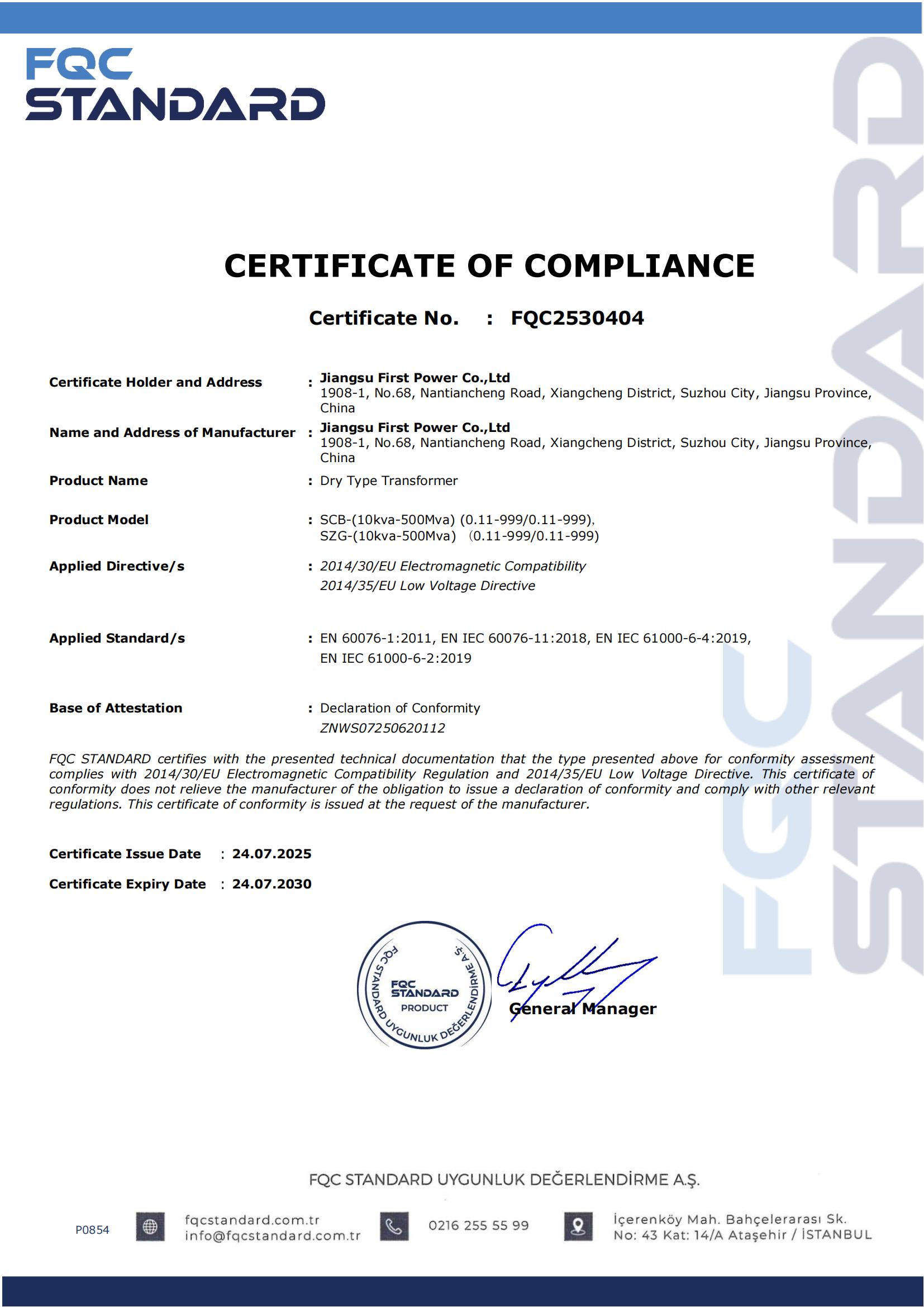
CE · Dry Type
Dry type transformer
No. FQC2530404 · 2025–2030
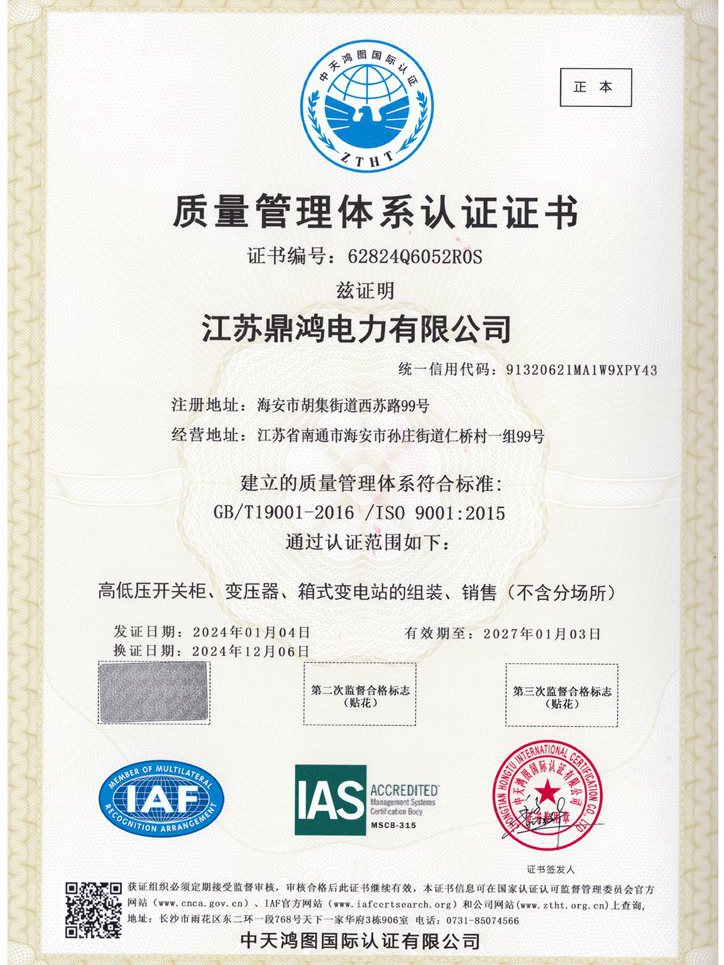
ISO 9001
Quality management system
No. 62824Q6052R0S · 2024–2027
Additional management-system evidence includes ISO 14001 No. 62824E6053R0S and ISO 45001 No. 62824S6054R0S. Compact substation CE certification is listed under No. M.2025.206.C121884.
Oil-Filled, Pad-Mounted, Dry-Type or Substation: Selection Matrix
Use this matrix for early shortlisting, then confirm the final rating, impedance, temperature rise, tap range, losses and test plan on the approved datasheet.
| Transformer Type | Typical Rating | Best Installation | Procurement Fit | Standards to Confirm |
|---|---|---|---|---|
| Oil-Immersed Distribution Transformer | 30–2,500 kVA; 6–35 kV class | Outdoor platform, pole or indoor substation room with oil containment | High-efficiency utility distribution, industrial plants, repeat OEM orders | IEC 60076 series; project-specific utility requirements |
| Pad-Mounted Transformer | 45–5,000 kVA; up to 34.5 kV class | Underground distribution, commercial sites, renewable projects | Loop or radial feed, tamper-resistant enclosure, dead-front configuration | IEEE C57.12.34, C57.12.28 and local grid codes |
| Dry-Type Transformer | 30–2,500 kVA; up to 35 kV class | Indoor, close to load, fire-sensitive buildings | Complementary option where oil-filled equipment is restricted | IEC 60076-11; local fire and building codes |
| Power Transformer | 35–500 kV class | Utility substation, generation step-up or grid interconnection | Project-engineered transmission and high-voltage industrial duty | IEC 60076 and IEEE C57.12 series as applicable |
| Compact Substation | 100–2,500 kVA; 10–35 kV class | Prefabricated enclosure, fast-track sites, urban networks | Integrated MV switchgear, transformer and LV distribution | IEC 62271-202 and project-specific interface requirements |
Ranges are indicative. Ratings outside these values can be engineered after specification review. The approved drawing, nameplate data and routine test report remain the controlling documents for shipment.
From RFQ to Export: A Controlled OEM/ODM Workflow
Repeatable transformer supply depends on document control. The workflow below protects the buyer against specification drift and shipment surprises.
Specification Review
Engineers check rating, voltages, frequency, vector group, impedance, taps, cooling, altitude, ambient and applicable standards.
Drawing & Loss Approval
GA drawing, nameplate draft and guaranteed losses are confirmed with the buyer before production release.
Controlled Production
Core, winding, drying, oil filling and tanking proceed under documented work instructions and in-process inspection.
Routine & Witness Testing
Each unit receives routine tests with a serial-number report. Third-party witness inspection can be arranged.
Export Packing & Documents
Seaworthy packing, impact recorders where required, packing list, test report, drawings and O&M documentation.
Oil-Filled Transformer Procurement FAQ
Direct answers for procurement, engineering and compliance teams comparing OEM/ODM transformer suppliers and exporters.
How does OEM versus ODM affect an oil-filled transformer purchase?
OEM production follows the buyer’s drawings, nameplate branding and approved specification. ODM supply starts from the manufacturer’s proven platform and adapts it to the project. Both models must define loss limits, impedance, vector group, temperature rise, test plan, drawing ownership, nameplate language and change-control rules before the order is placed.
Which standards and certificates should I verify?
Confirm the destination-market requirements first. Oil-filled transformers are commonly specified to IEC 60076; North American pad-mounted units may require IEEE C57.12 series designs; European projects may require CE documentation. Verify certificate numbers, scope and validity against the factory. Wisegj operates under ISO 9001, ISO 14001 and ISO 45001 systems and holds CE certificates for oil-immersed power transformers, dry-type transformers and compact substations.
How do I choose between oil-filled and dry-type transformers?
Oil-filled transformers are generally preferred for outdoor utility distribution, industrial power and applications where efficiency, overload capability and proven service life are important. Dry-type transformers are often selected for indoor, fire-sensitive locations such as hospitals, high-rise buildings and tunnels. Final selection should follow local fire codes, ambient conditions, noise limits, maintenance capability and lifecycle cost.
What technical data is needed for an accurate quotation?
Provide rated power, primary and secondary voltage, frequency, vector group, impedance, tap changer type and range, cooling method, insulating fluid, loss limits, altitude, ambient temperature, applicable standard, enclosure requirements and any witness testing or third-party inspection requirements. A single-line diagram and site conditions help reduce clarification rounds.
How are transformer losses and temperature rise verified?
Routine tests typically include winding resistance, voltage ratio, vector group, impedance and load loss, no-load loss and current, applied voltage and induced voltage tests, plus oil dielectric strength for liquid-filled units. Temperature rise is normally supported by type-test evidence or calculation; buyers should request the relevant reports and confirm the loss values on the final routine test certificate.
Can oil-filled transformers be customized for OEM/ODM projects?
Yes. Customization can cover ratings, vector group, impedance, tap range, bushing configuration, cooling method, mineral oil or natural ester fluid, enclosure color, nameplate language, packaging and document language. All customized items should be frozen through approved drawings and a project-specific test plan before production.
What trade terms, payment methods and currencies are accepted?
Trade terms include FOB, CFR, CIF, EXW, FCA, CIP, CPT and DDP. Payment options include T/T, L/C, D/P and D/A, subject to contract review. Major currencies such as USD, EUR, GBP, CAD and AUD can be discussed. Lead time depends on the rating, material schedule, test requirements and factory planning.
How can I audit quality before shipment?
Start with supplier qualification, factory audit and approval of drawings and guaranteed losses. During production, request in-process inspection records. Before shipment, review the routine test report, nameplate data, packing method and document package. Third-party witness inspection and pre-shipment inspection can be arranged for buyers who require independent verification.
Ready to Turn Your Oil-Filled Transformer Specification Into a Buildable Package?
Send your datasheet, single-line diagram or tender documents. The Wisegj engineering team will review the rating, standards, losses, drawings and test plan before quotation—so the offer reflects what the project actually needs.
Get CatalogEmail: [email protected] · Jiangsu Wisegj Power Co., Ltd. · Suzhou, Jiangsu, China · ISO 9001 · ISO 14001 · ISO 45001 · CE Certified