Hanoi · 50 Hz · 22 kV / 35 kV

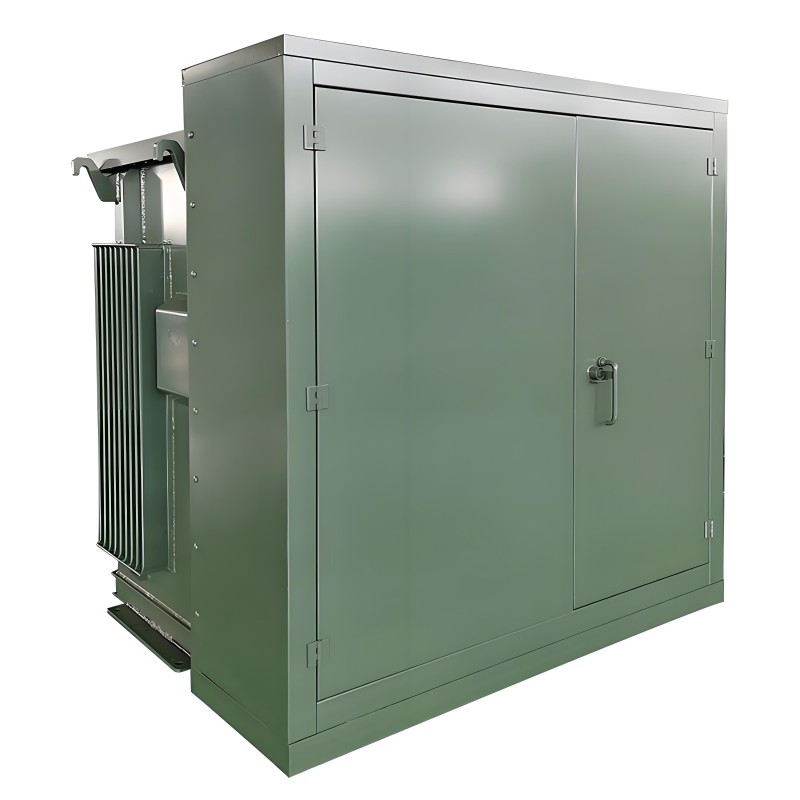
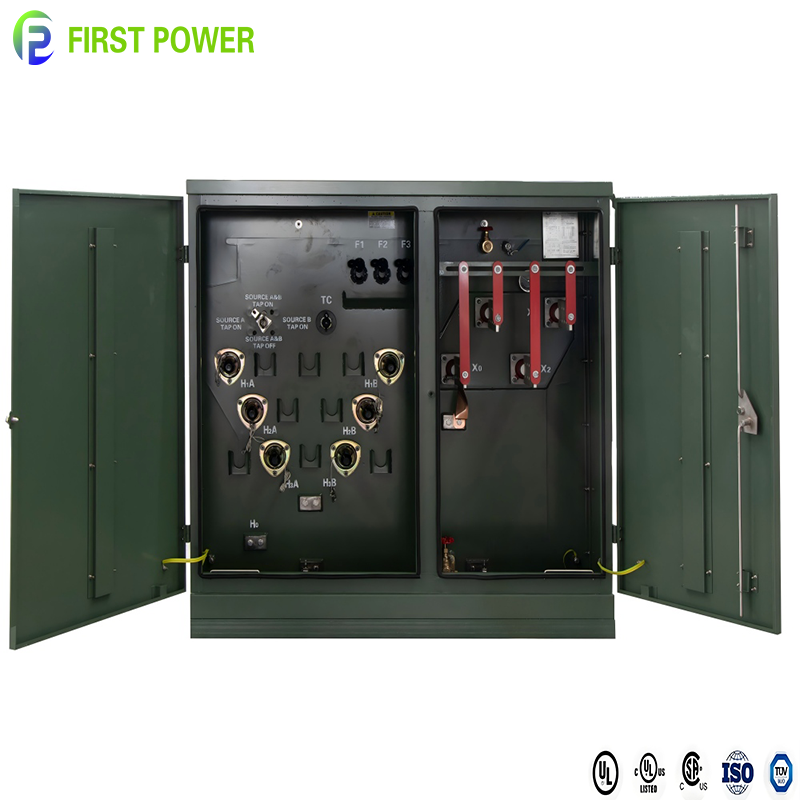
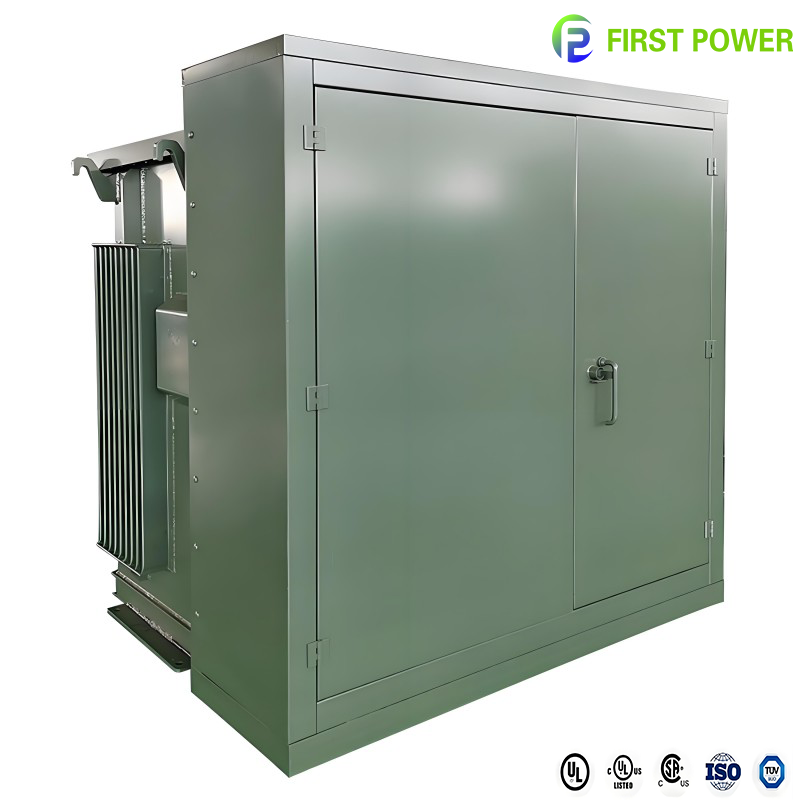
Oil Filled Pad Mounted Transformer Manufacturers & Supplier for the Hanoi Market

Utility-grade oil filled pad mounted transformers engineered to IEC 60076 and EVN-aligned specifications, produced in a 6,847 m² third-party verified plant and shipped to Hai Phong Port for onward delivery to Hanoi project sites.

Get Catalog
20+Years of transformer experience across the team
500 kVHighest voltage class supplied
6,847 m²Third-party verified production area
50+R&D and technical engineers
211Qualified supply-chain partners
4.9/5Average buyer rating
Hanoi Market Overview

Buying an Oil Filled Pad Mounted Transformer for a Hanoi Project

Sourcing equipment for Hanoi is not a translation exercise. It is a specification exercise.

A pad mounted transformer that performs perfectly on a 60 Hz, 480 V North American feeder will not simply “plug in” to a Hanoi distribution network. Vietnam runs a 50 Hz grid, Hanoi’s medium-voltage distribution is built predominantly around 22 kV with 35 kV for larger industrial customers and legacy 10 kV / 6 kV circuits still present in older districts, and low-voltage delivery follows the 380/220 V convention rather than 480 V. Every nameplate, ratio, tap range and loss guarantee therefore has to be fixed against Vietnamese practice before the first coil is wound. This page sets out what Hanoi buyers actually specify, where these units are installed, what is changing in the local grid, and how to qualify a manufacturer without losing six weeks to clarification emails.

50 Hz, Verified on the Test Certificate

Vietnam operates at 50 Hz. Whether the datasheet quotes 50/60 Hz or a single frequency, request the no-load and load-loss figures measured at 50 Hz, plus the ratio and impedance results from the same test run. A 60 Hz-optimised design tested only at 60 Hz leaves the buyer to absorb the difference.

22 kV Is the Default; 35 kV Is the Exception

Most Hanoi distribution projects are quoted at 22 kV primary with 0.4 kV secondary and a Dyn11 vector group. Industrial parks with heavy loads or dedicated substations may specify 35 kV. Confirm the primary voltage, the tap range (±2 × 2.5% is common) and the secondary voltage before pricing.

Humidity and Monsoon Load, Not Desert Load

Hanoi averages roughly 80% relative humidity, with a concentrated rainy season and street-level flooding in low-lying districts. Sealed tank construction, pressure-relief devices, stainless-steel hardware, a corrosion system rated for a humid tropical atmosphere and IP54-rated enclosures matter more here than extreme ambient temperature alone.

Local Applications

Where Oil Filled Pad Mounted Transformers Are Installed in Hanoi

Six project types generate most of the enquiry volume from Hanoi contractors, developers and industrial owners.

Urban Undergrounding Works

Hanoi has been progressively converting overhead medium-voltage lines into underground cable in central districts such as Ba Dinh, Hoan Kiem, Cau Giay and Thanh Xuan. Ground-level, tamper-resistant pad mounted units are the natural endpoint for these converted feeders, and low-profile enclosures are preferred where the equipment sits on a pavement or within a public easement.

Residential and Mixed-Use Developments

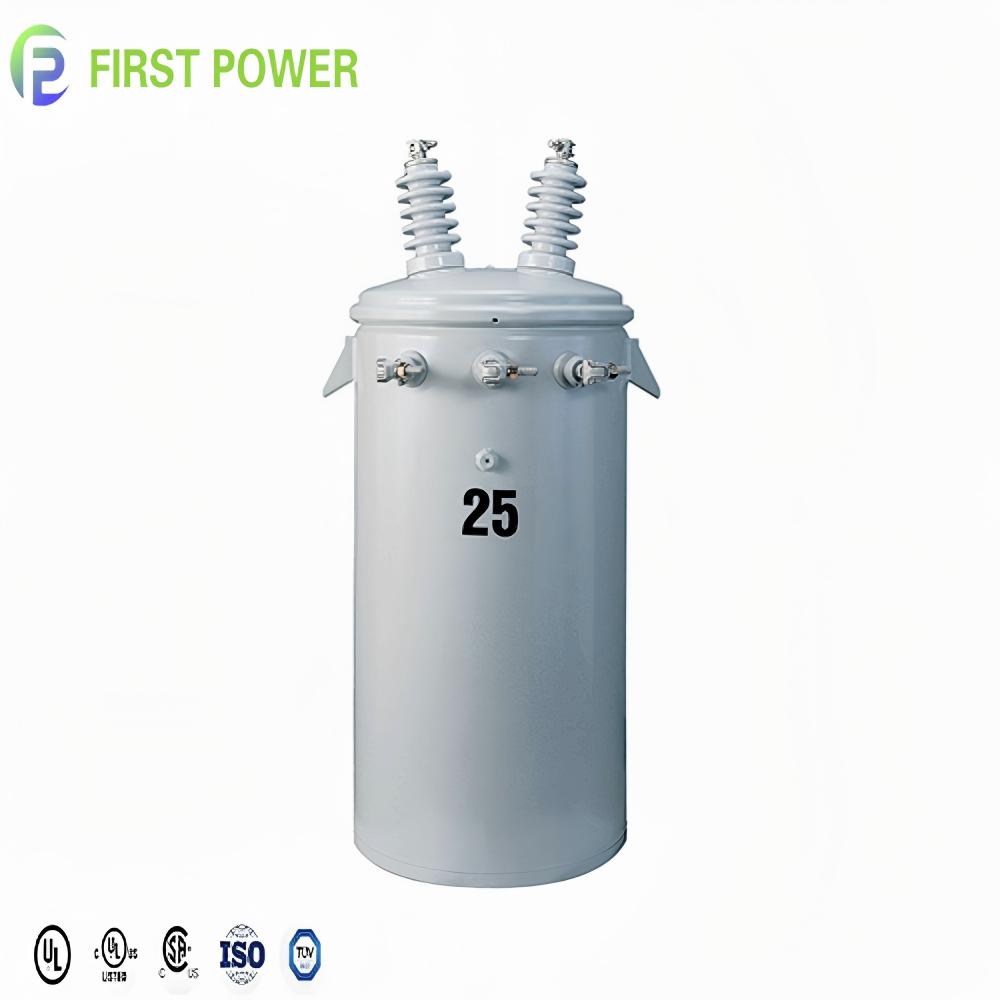
Large township projects in Gia Lam, Nam Tu Liem, Bac Tu Liem and Hoang Mai typically combine single-phase units for residential branch circuits with three-phase units of roughly 400–1250 kVA for the commercial podium, clubhouse and car park loads. Loop-feed configurations are normal because developers want supply continuity during cable maintenance.

Industrial Parks and Factories

Bac Thang Long, Thang Long, Noi Bai and Hoa Lac industrial zones, together with the manufacturing belt around Dong Anh and Soc Son, regularly specify 1000–2500 kVA three-phase units at 22 kV or 35 kV. For these sites, guaranteed losses and impedance usually carry more commercial weight than enclosure aesthetics.

Rooftop Solar and On-Site Generation

Factory rooftop PV across Hanoi’s industrial belt uses step-up oil immersed units to lift inverter output to 22 kV for internal distribution or grid export. Solar duty means daily load cycling and harmonic content, so temperature rise, cooling class and harmonic tolerance should be stated in the technical schedule rather than assumed.

Data Centres and Commercial Towers

Colocation and enterprise data centre capacity in Greater Hanoi is expanding, and these facilities demand N+1 or 2N redundancy, tight voltage regulation and documented routine test reports for every unit on site. Pad mounted oil units are commonly used on the utility interface side of the campus.

Replacement and Capacity Upgrades

A significant share of Hanoi demand is replacement rather than greenfield: ageing units at existing factories, hotels and hospitals are swapped for higher-efficiency models with the same footprint and cable positions. Supplying a dimensioned outline drawing early is often what wins these orders, because the civil works are already fixed.

Product Range

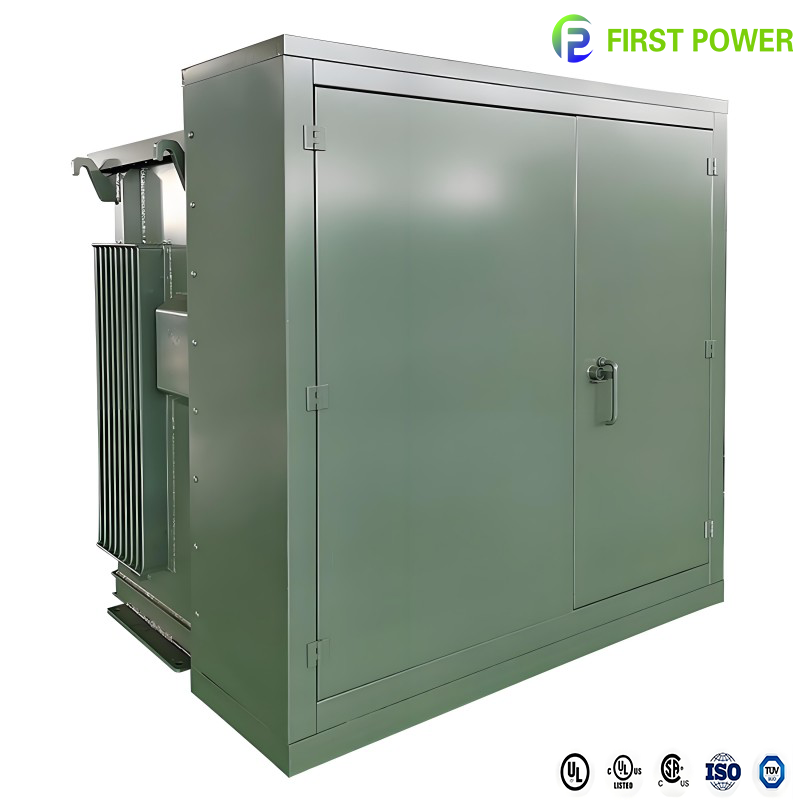
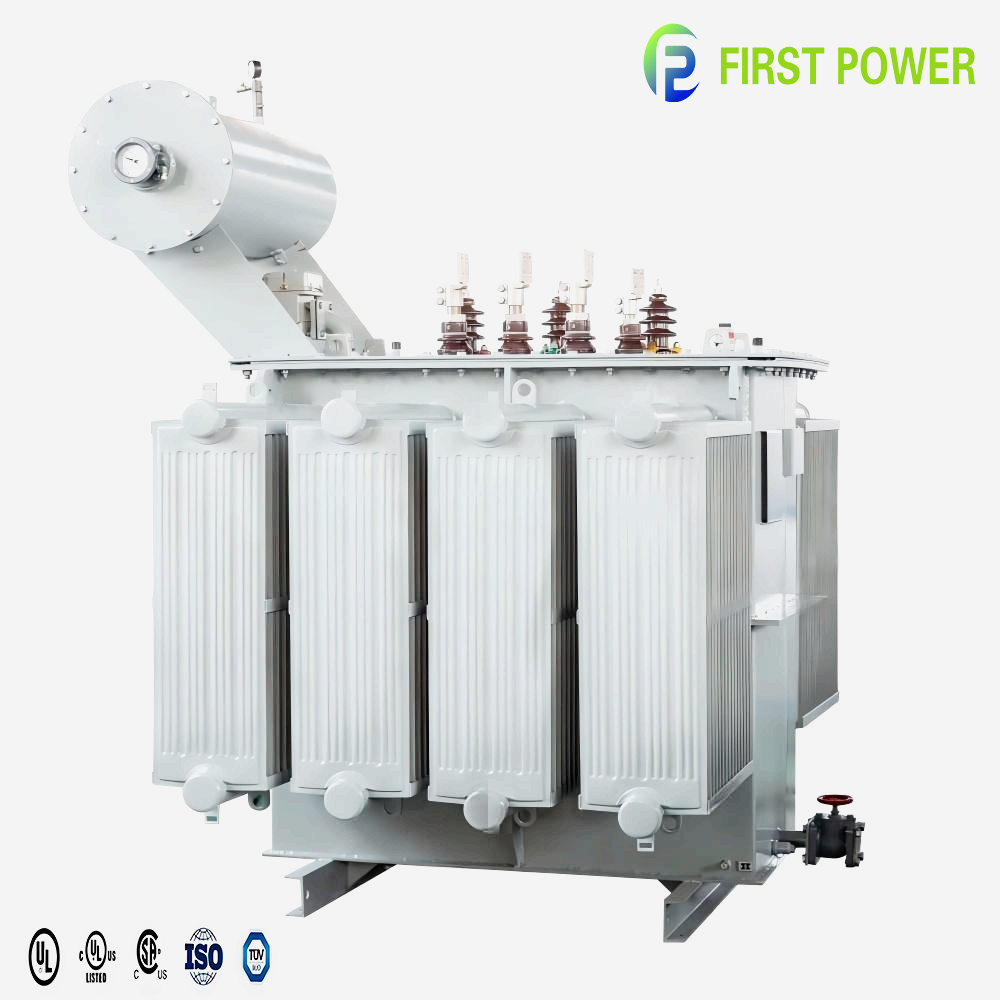
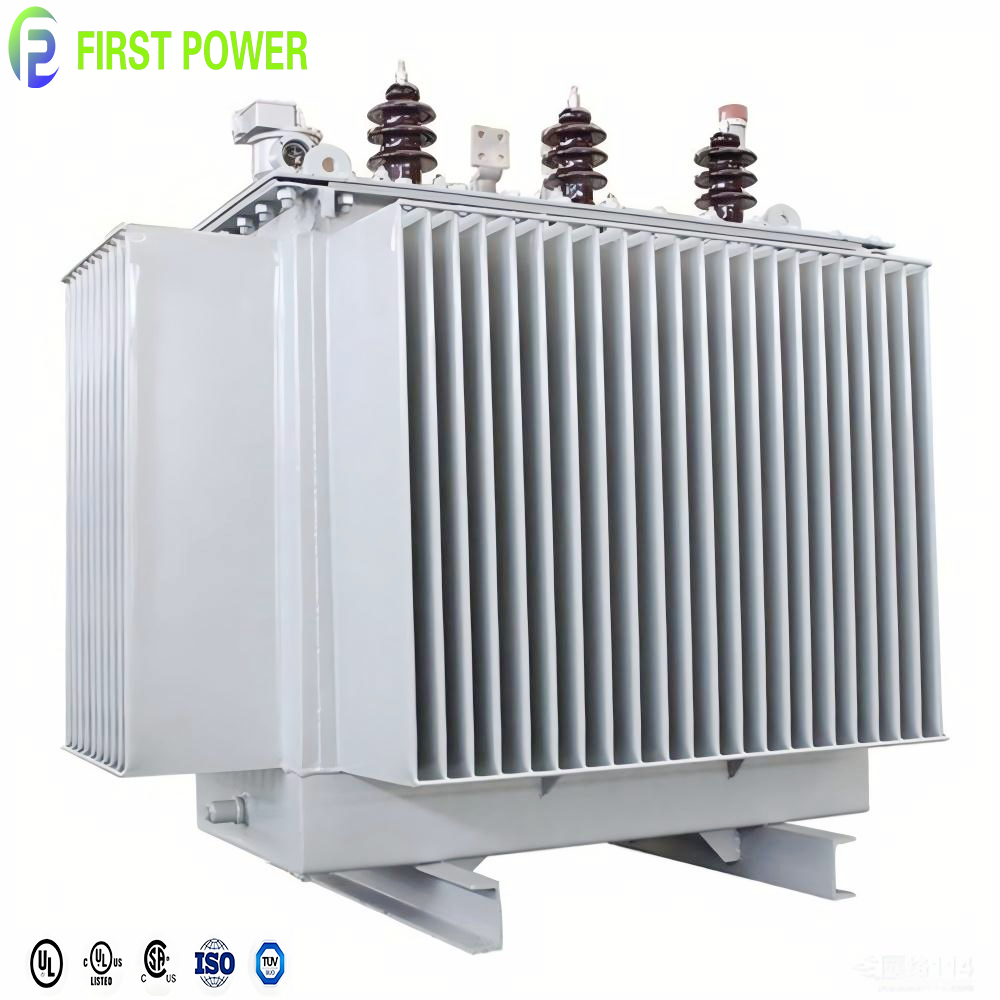
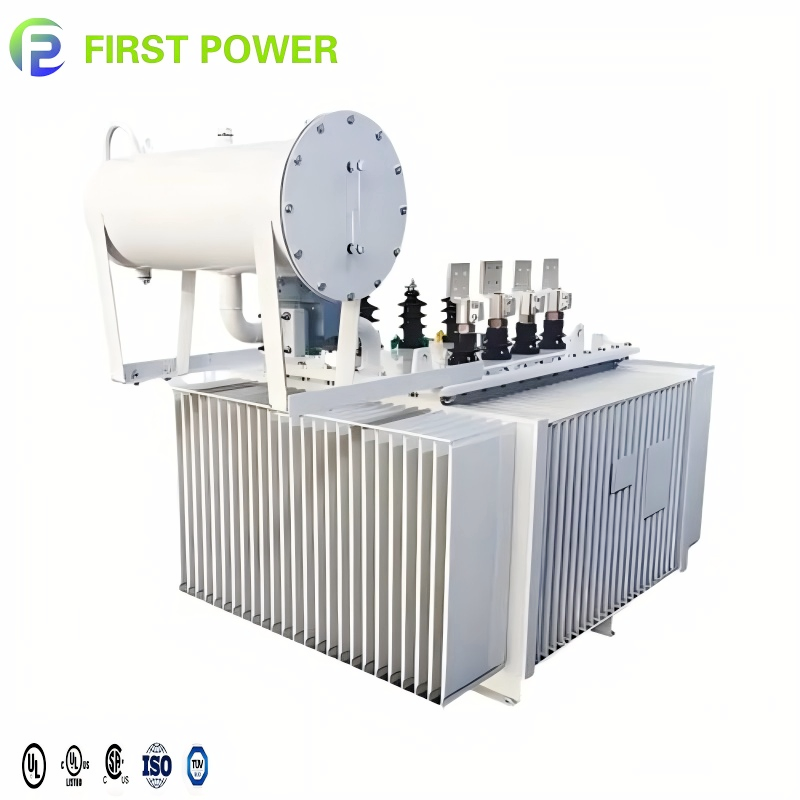
Oil Filled Pad Mounted Transformer Models for Hanoi Buyers

Eight production families covering residential branch circuits through to 2500 kVA industrial and solar step-up duty. Full specifications, drawings and 50 Hz test data are available on request.

Not every standard catalogue rating matches a Hanoi tender. Ratings, vector groups, impedance, tap range and low-voltage values can be engineered to the project schedule.

Technical Configuration

Six Parameters That Decide Whether a Unit Fits the Hanoi Network

These are the values our engineers confirm before a quotation becomes a manufacturing order.

Rated Power and Duty Cycle

Confirm kVA for continuous duty, plus any overload or cyclic requirement. Solar, welding, crane and data-centre loads each justify a different thermal margin, and the rating on the nameplate should reflect the real duty rather than the nearest catalogue size.

Voltage Ratio, Taps and Vector Group

22 kV / 0.4 kV with Dyn11 is the mainstream Hanoi configuration. State the tapping range explicitly, confirm whether the neutral is brought out for the low-voltage system, and check that the ratio is verified at 50 Hz on the routine test sheet.

Guaranteed Losses and Impedance

No-load and load losses should be stated as guaranteed values with a defined tolerance, measured at rated voltage and frequency. Impedance affects downstream protection coordination, so a non-standard value has consequences beyond the transformer itself.

Insulating Fluid and Fire Strategy

Mineral oil is the default for cost efficiency. Where a unit sits beneath or beside an occupied building, natural ester fluid is frequently requested because of its higher fire point and biodegradability. The choice changes the tank, gaskets and sealing design, so it must be settled early.

Enclosure, Ingress and Finish

For Hanoi, specify tamper-resistant locked compartments, IP54 ingress protection for the enclosure, hot-dip galvanised or stainless hardware, and a coating system appropriate to a humid tropical atmosphere with high time-of-wetness.

Standards, Tests and Documentation

State whether IEC 60076 or an ANSI/IEEE C57.12 reference governs the design, and which routine tests the buyer will witness. Nameplate language, drawing formats and test report templates are usually agreed before production release.

Selection Guide

Matching Transformer Type to Hanoi Project Type

A practical starting point for EPC estimators and developer procurement teams.

Project TypeTypical CapacityPrimary Voltage in HanoiSecondaryNotes
Urban underground distribution100 – 630 kVA22 kV0.4 kVLow-profile pad mounted enclosure, tamper-resistant, pavement-compatible footprint
Residential township400 – 1250 kVA three phase; 25 – 100 kVA single phase22 kV0.4 kV / 0.23 kVLoop-feed configuration for maintenance continuity
Industrial park / factory1000 – 2500 kVA22 kV or 35 kV0.4 kVGuaranteed loss values and impedance carry contractual weight
Rooftop solar step-up800 – 2500 kVA22 kV0.4 kV or 0.69 kVDaily cycling duty; harmonic tolerance to be stated
Commercial / data centre1000 – 2500 kVA22 kV0.4 kVRedundancy scheme and per-unit test documentation
Legacy network reinforcement75 – 400 kVA10 kV or 22 kV0.4 kVDimensioned outline drawing needed for fit into existing civil works

Values shown are typical production ranges for Hanoi enquiries. Ratings outside these ranges can be engineered to order.

Local Trends

What Is Changing in the Hanoi Distribution Market

Six shifts that are reshaping specifications and delivery expectations for incoming transformer orders.

National Power Plan Investment

Vietnam’s Power Development Plan 8 sets out a large multi-year build-out of generation and grid infrastructure to 2030. Distribution reinforcement in and around Hanoi is part of that pipeline, which keeps demand steady for standardised 22 kV distribution equipment.

Standardisation on 22 kV

New medium-voltage work in Hanoi is largely built around 22 kV, with 10 kV and 6 kV surviving mainly in older circuits. For a manufacturer, that means type-test evidence and loss data at 22 kV matter more than a long list of exotic voltage classes.

Tighter Loss Expectations

Utility and EPC technical schedules increasingly lock in no-load and load loss values with penalties for non-compliance. A supplier that can hold a low-loss guarantee across a repeat order is more valuable than one quoting the lowest first price.

Undergrounding and Streetscape Rules

As central districts push cables underground for safety and visual reasons, the footprint, height and colour of the pad mounted enclosure become planning considerations, not just electrical ones. Custom enclosure finishes and reduced silhouettes are increasingly requested.

Fire Safety and Ester Fluid

Where land is scarce, transformers end up closer to occupied buildings and car parks. Natural ester fluid is being specified more often in dense urban plots because it raises the fire point and reduces the consequence of a tank failure.

Compressed Project Timelines

Funding schedules push procurement windows shorter each year. Manufacturing lead time plus sea freight to Hai Phong and roughly 120 km of road transport to Hanoi has to be planned as one chain, not two separate stages.

Manufacturer Credentials

Why Hanoi Buyers Shortlist Jiangsu Wisegj Power

Experience you can question, certificates you can verify and documentation you can hand to your own QA team.

Verified Production Base

A 6,847 m² production floor with dedicated winding, core assembly, drying, tanking and test areas, audited on site by TÜV Rheinland as an independent third party rather than described in a brochure.

Routine Testing on Every Unit

Winding resistance, ratio and vector group, impedance and load loss, no-load loss and current, applied and induced voltage withstand, plus oil dielectric strength for liquid-filled units. Third-party witness inspection is welcomed.

OEM and ODM Customisation

Ratings, vector group, impedance, tap range, bushing layout, cooling method, insulating fluid, enclosure colour, nameplate language and drawing format can all be adapted to a Hanoi tender document.

Certificates With Numbers

ISO 9001 (62824Q6052R0S), ISO 14001 (62824E6053R0S) and ISO 45001 (62824S6054R0S) run to 2027. CE certificates cover oil-immersed power transformers, dry type transformers, compact substations and switchgear.

Engineer-to-Engineer Response

Technical questions reach a transformer engineer rather than a scripted inbox, and replies are targeted within one working day. A team of more than 50 R&D and technical staff backs that commitment.

Export Logistics Experience

Seaworthy packing with shock indicators, full Incoterms coverage including FOB, CFR, CIF, EXW, FCA, CIP, CPT and DDP, and payment in USD, EUR, GBP, CAD, AUD and other major currencies.

Jiangsu Wisegj Power Co., Ltd. designs, assembles and exports medium and high-voltage equipment from 220 V up to 500 kV, including pad mounted transformers, oil immersed distribution transformers, dry type transformers, power transformers, compact substations and switchgear. The engineering team carries more than 20 years of hands-on transformer experience, works with 211 qualified supply-chain partners, and serves utilities, EPC contractors and developers across the Americas, Europe, Africa and Asia.

Buyer FAQ

Questions Hanoi Procurement Teams Ask Before Ordering

Direct answers from our engineering and export departments.

Should a Hanoi project specify 22 kV or 35 kV for an oil filled pad mounted transformer?
Most Hanoi distribution work is quoted at 22 kV primary with 0.4 kV secondary. 35 kV appears where an industrial customer has a dedicated substation, a long feeder run or a legacy 35 kV connection. The correct answer comes from the connection agreement and the feeder drawings, not from the transformer supplier, but once you confirm the primary voltage you should also fix the tap range, the vector group and whether the neutral is brought out.
Does Vietnam use 50 Hz or 60 Hz, and why does it matter for a transformer order?
Vietnam operates a 50 Hz grid. Many export datasheets quote 50/60 Hz because the same platform is sold into North America. That is acceptable only if the no-load loss, load loss, impedance and ratio results are measured and certified at 50 Hz. Loss performance shifts with frequency, so a supplier should provide 50 Hz test values rather than a 60 Hz dataset and an assurance that the design “also works” at 50 Hz.
Can you manufacture to a Vietnamese EPC technical schedule or utility specification?
Yes. Send the technical schedule and we will return a marked-up compliance sheet showing every parameter we meet, every item requiring clarification and any deviation. Ratings, vector group, impedance, tap range, bushing configuration, cooling class, insulating fluid, enclosure colour and nameplate language can all be customised. Where the schedule references IEC 60076 the alignment is direct; where it references a local standard we confirm the corresponding IEC clause rather than assuming equivalence.
How does the transformer reach a Hanoi project site from your factory?
The normal route is ocean freight to Hai Phong Port, customs clearance, then road transport of roughly 120 km to Hanoi. We quote FOB, CFR, CIF or DDP depending on how much of that chain you want us to manage. Units are export-crated with shock and tilt indicators, and packing lists, weights and lifting points are supplied in advance so the receiving contractor can plan crane and truck access at the site gate.
Will CE certification and IEC test reports be accepted by a Hanoi owner or consultant?
That depends on the contract, and buyers should be realistic about it. Vietnam’s own conformity framework is built on TCVN and QCVN standards, so CE marking is not a substitute for compliance with a Vietnamese technical regulation. What CE and IEC documentation do provide is verifiable evidence of design and routine testing, which owners, insurers and third-party inspectors commonly accept as part of the document package. We supply routine test reports per serial number, type test references and certificate copies so your consultant can make that judgement on evidence rather than on a claim.
How is reliability protected in Hanoi’s humidity and rainy season?
The sealing system is the key defence. We use a fully sealed tank design with a pressure relief device, gaskets selected for humid tropical service, stainless or hot-dip galvanised external hardware, and a coating system applied for high humidity and high time-of-wetness. Enclosures are specified at IP54 unless the project requires otherwise. For sites with known standing water during heavy rain, the civil plinth height and cable entry arrangement should be agreed with the contractor at drawing approval stage, because no enclosure can compensate for a pad that sits below the flood line.
What are the typical payment terms and lead times?
Payment is normally structured with a deposit and balance against shipping documents, and we accept T/T, L/C, D/P and D/A depending on the order value and the buyer’s banking arrangement. Trade terms include FOB, CFR, CIF, EXW, FCA, CIP, CPT and DDP. Lead time depends on rating, quantity and whether the design is standard or customised; the confirmed schedule is stated in the contract and production progress is reported against the agreed drawing release date.
What technical data should we send to get an accurate quotation quickly?
Send rated power, primary and secondary voltage, frequency, vector group, impedance, tap changer type and range, cooling method, insulating fluid preference, applicable standard, site altitude and ambient conditions, plus any loss limit or efficiency target. A single-line diagram and the tender technical schedule, if available, remove most of the remaining ambiguity and shorten the clarification cycle considerably.
RFQ Checklist

What to Include in a Transformer Enquiry for a Hanoi Project

Supplying these nine parameters lets our engineers return a compliant design with guaranteed losses without clarification rounds.

  • Rated power in kVA or MVA
  • Primary and secondary voltage
  • System frequency, 50 Hz for Vietnam
  • Vector group and impedance
  • Tap changer type and tapping range
  • Cooling method and insulating fluid
  • Applicable standard, IEC 60076 or specified equivalent
  • Site altitude, ambient temperature and humidity class
  • Loss limits or efficiency target from the tender

Ready to Compare a Compliant Offer for Your Hanoi Project?

Send your technical schedule, single-line diagram or tender document. A transformer engineer will review the specification, flag anything that needs clarification, and return a design-matched quotation with 50 Hz test commitments and delivery schedule to Hai Phong.

Get Catalog
ISO 9001 / 14001 / 45001 CE Certified Product Lines TÜV Rheinland Verified Plant 220 V – 500 kV Portfolio