Custom Transformer Product Recommendations for OEM Review
These eight builds cover underground distribution, solar PV generation, loop-feed industrial service, on-load tap changing and fire-sensitive dry type applications. Each can be customized by rating, vector group, impedance, tap range, bushing arrangement, cooling method, enclosure colour and nameplate language.
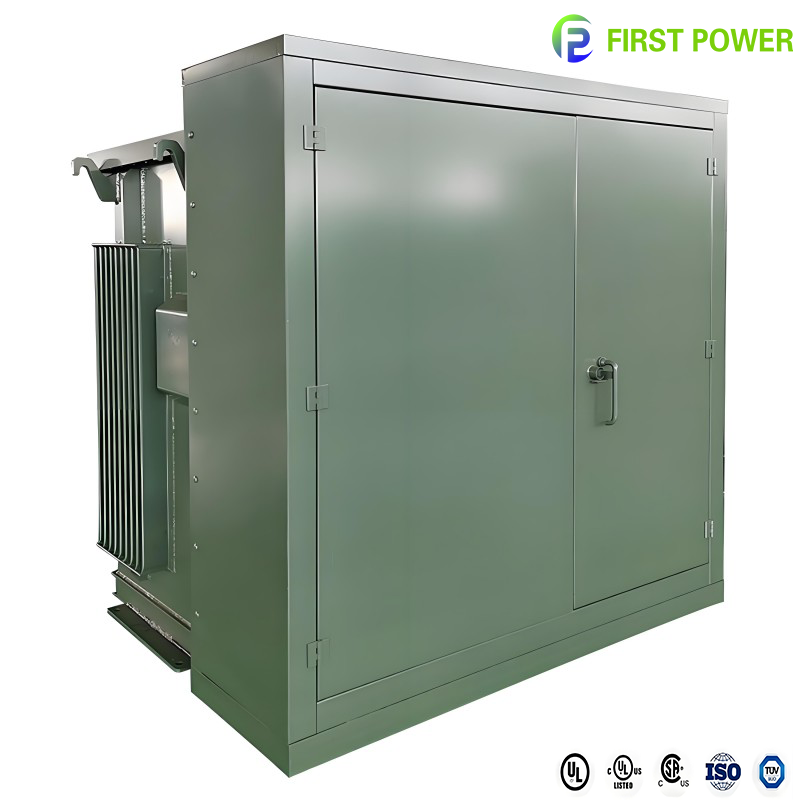 Pad Mounted
C CE 50/60HZ 10KV 20KV 35KV 75KVA 100KVA 200KVA 300KVA 400KVA 3 Phase Oil Type Pad Mounted Transformer for Power Generation
A compact three-phase pad mounted platform for generation projects, commercial campuses and underground distribution where tamper-resistant access and cable-friendly compartment design are required.
View specification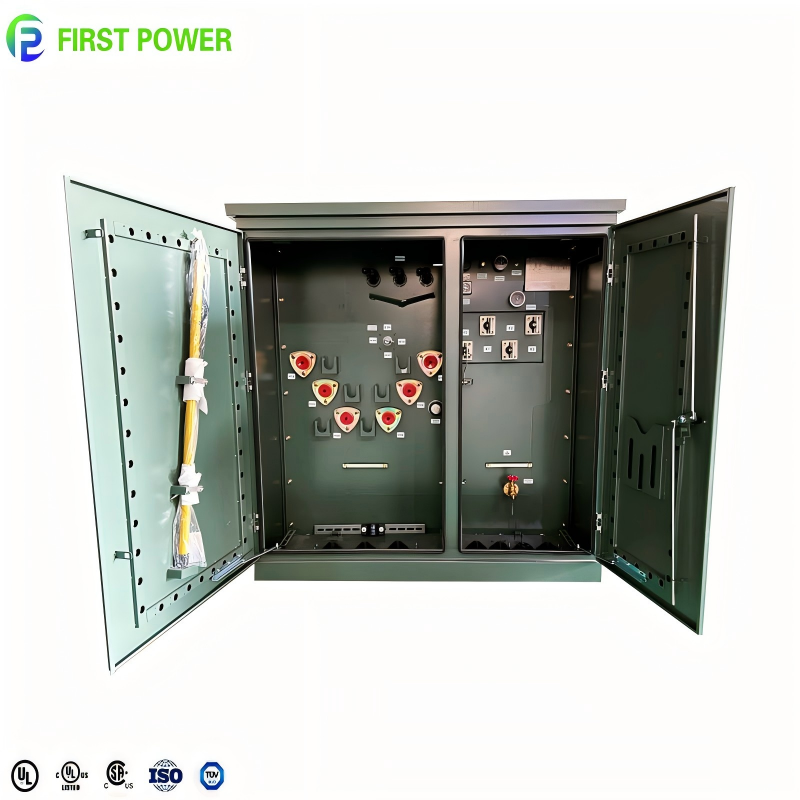 ZGS11
C ZGS11 50/60HZ 75KVA-50000KVA 6KV 10KV 15KV 20KV 35KV Three Phase Pad Mounted Transformer for Electric Power Distribution
A broad-capacity ZGS11 range for utility distribution and larger commercial loads, with configurable loop or radial feed, compartment layout and loss performance.
View specification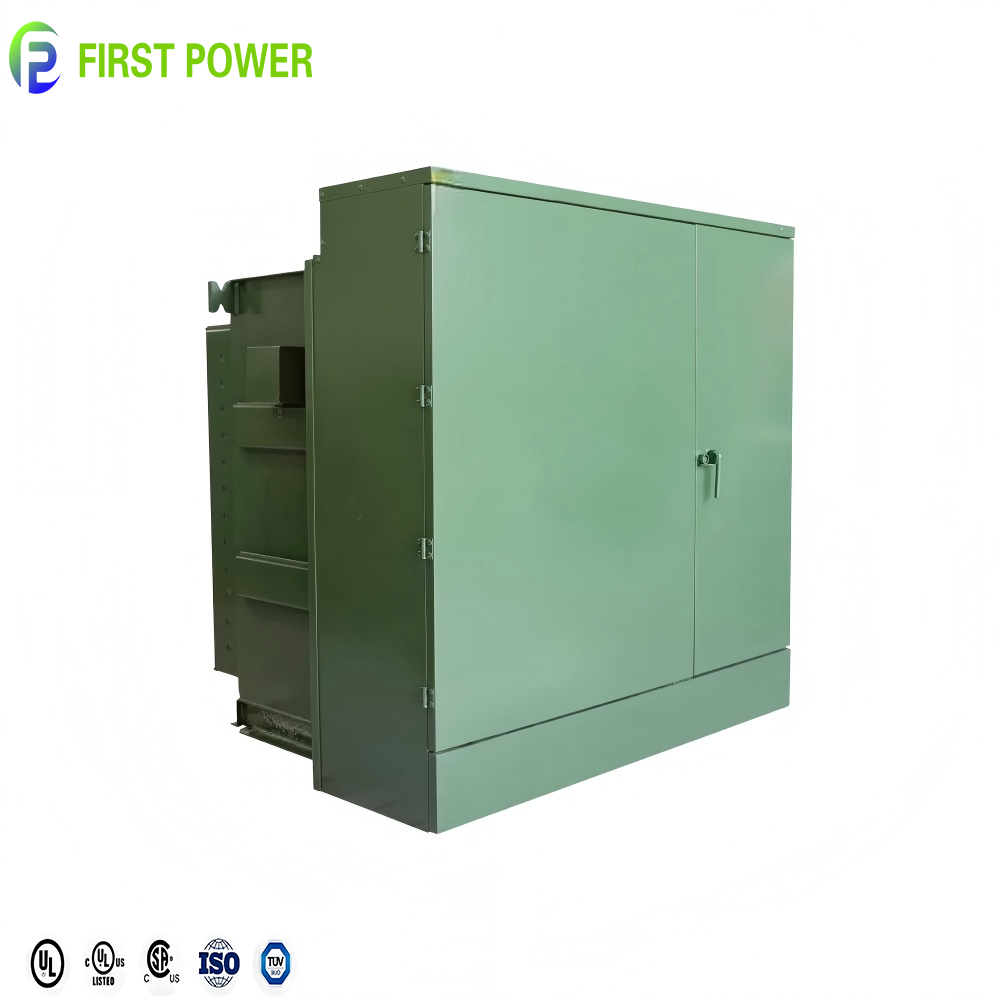 Distribution
C CE 50/60HZ 10KV 20KV 35KV 300KVA 500KVA 630KVA 750KVA Three Phase Pad Mounted Transformer for Electric Power Distribution
Recommended for underground commercial distribution and district networks where 300–750 kVA capacity, compact footprint and reliable weather protection matter.
View specification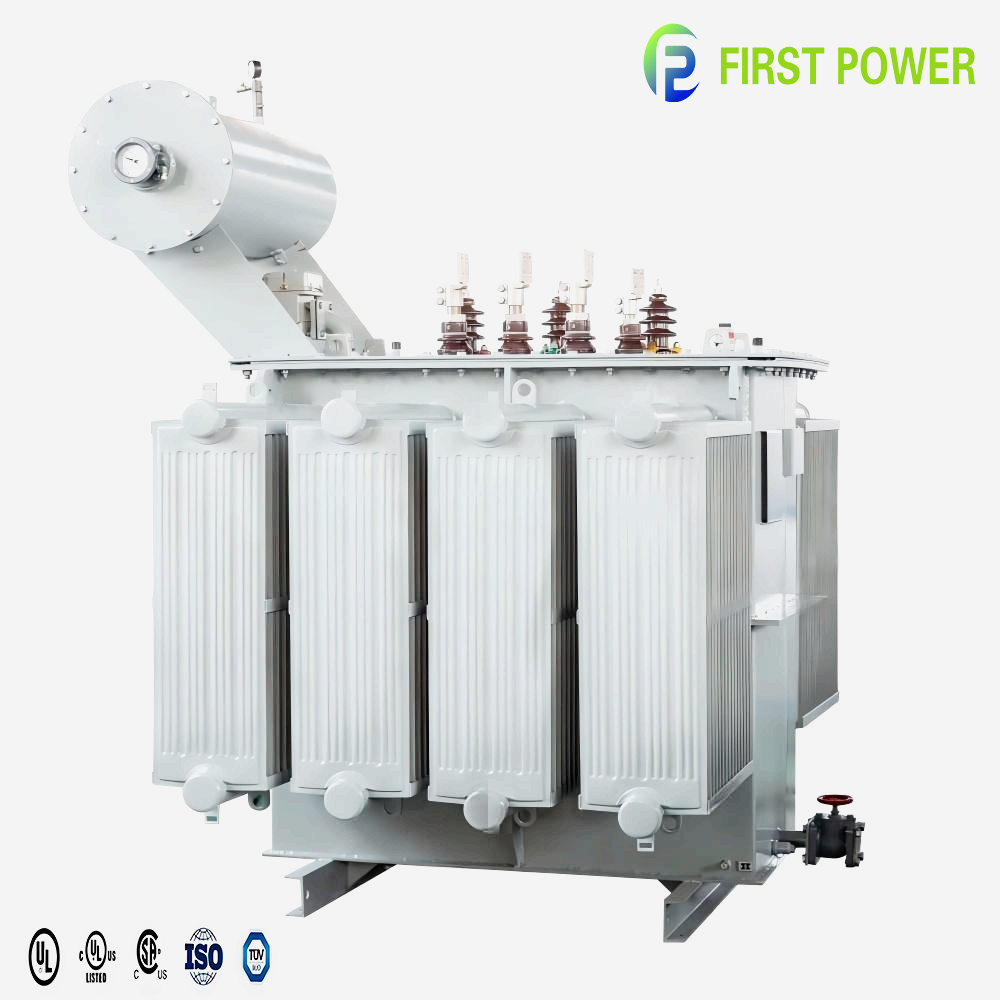 Solar PV
C Certification 50/60HZ 6KV 10KV 20KV 35KV Three Phase 1000KVA 1MW Solar PV Transformers Oil Immersed for Power Generation
A renewable-energy build for solar PV collection systems, with engineering attention to harmonic duty, thermal cycling, enclosure protection and grid-code compatibility.
View specification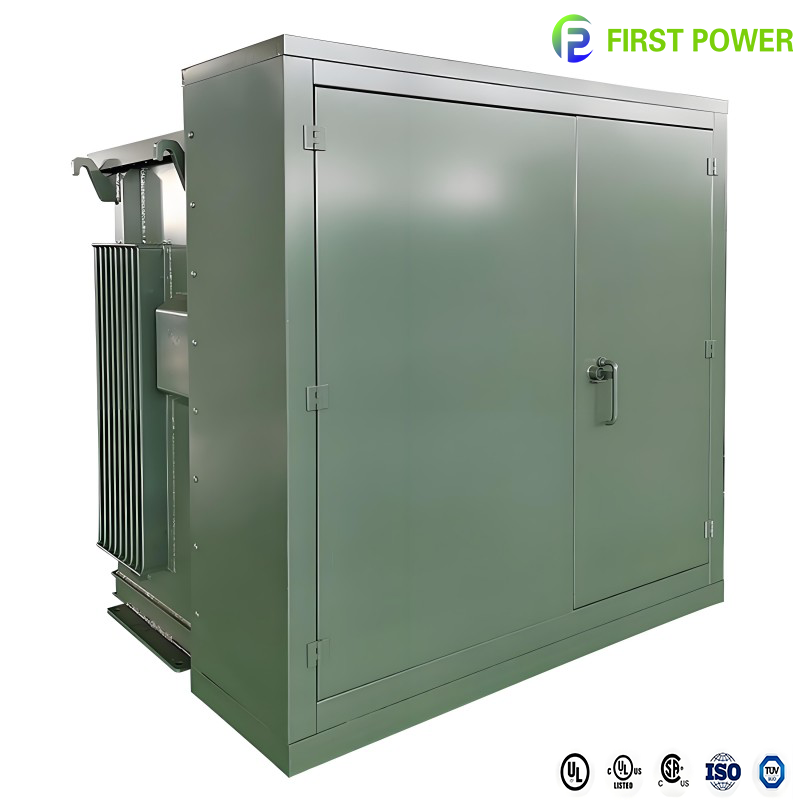 MV / HV
C CE MV&HV ZGS11 75-2500KVA 10KV 20KV 35KV Pad Mounted Three Phase Transformer for Electric Power Distribution
A flexible 75–2,500 kVA platform for medium-voltage distribution projects, suitable for utilities and developers standardizing pad mounted equipment across sites.
View specification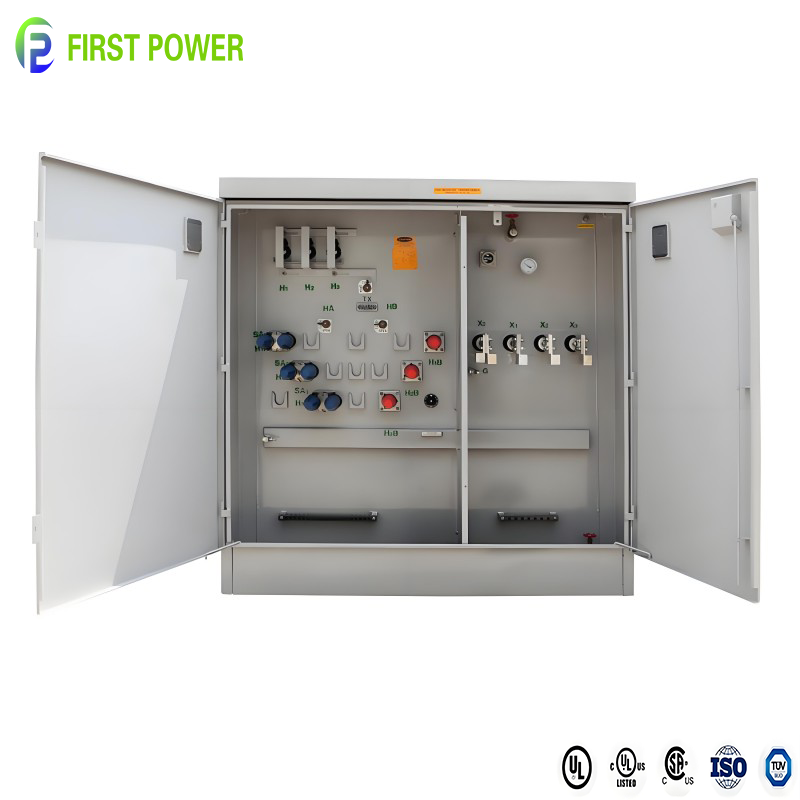 Loop Feed
C CE MV&HV 50/60HZ 300KVA 500KVA 630KVA 700KVA 10KV 15KV 20KV 35KV 3 Phase Loop Feed Pad Mounted Transformer for Industrial
Recommended for industrial parks and facilities using loop-feed networks, with configurable switching, fusing and compartment arrangements for maintainability.
View specification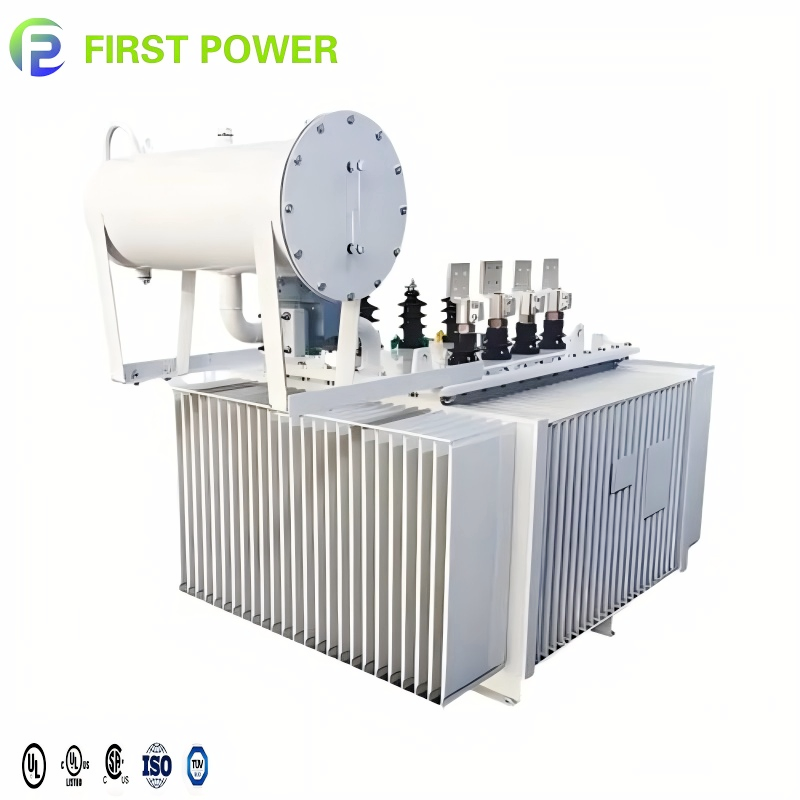 OLTC
C CE 10KV 20KV 35KV 1000KVA 2000KVA 2500KVA 3 Phase Oil Type on Load Tap Changer Transformer for Industrial Power Supply
A high-capacity oil type solution with on-load tap changing for industrial power supply where voltage regulation and process continuity are critical.
View specification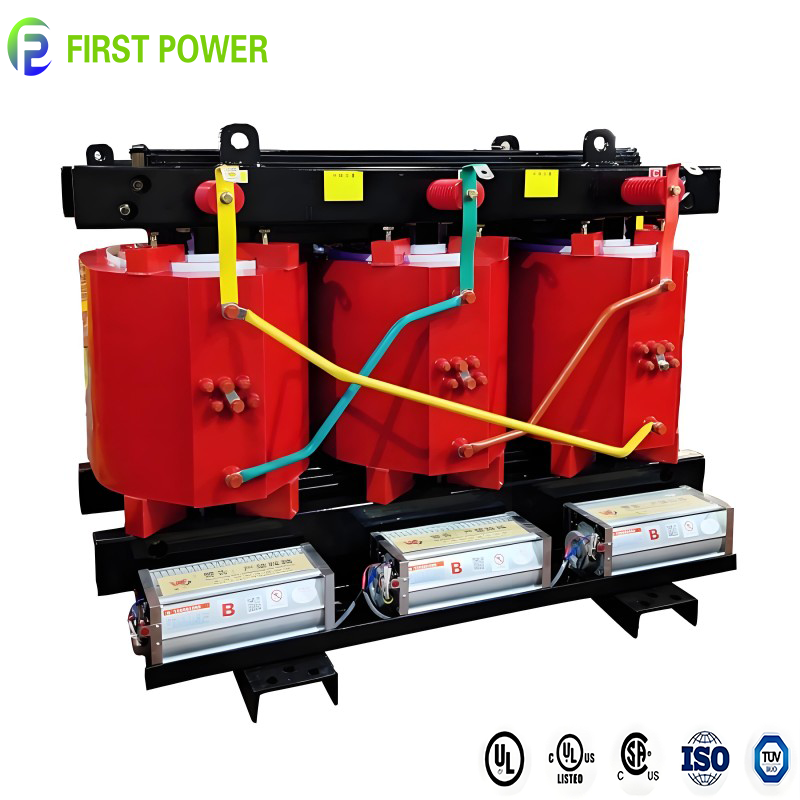 Dry Type
C CE Certification IEEE Standard 50/60HZ 5MVA 6MVA 6KV 35KV 3 Phase Dry Type Transformer for Electric Power Distribution
A fire-safe, oil-free option for indoor substations, tunnels, hospitals and high-rise buildings where liquid-filled equipment is restricted.
View specificationNeed a non-standard rating, vector group or enclosure? Send the rated power, primary and secondary voltage, frequency, impedance, tap range and installation environment. Our engineers will review the specification and advise on the most suitable OEM configuration.
Get a QuoteWhat Utility and EPC Buyers Now Expect from a Transformer Supplier
Custom OEM transformer procurement is moving away from lowest first cost and toward lifecycle cost, audit-ready evidence and schedule certainty. Buyers are not only comparing kVA and price; they are comparing loss performance, factory test documentation, drawing approval discipline, packaging quality and after-sales responsiveness.
Loss Capitalization and TCO
No-load and load-loss values are increasingly evaluated over 20–30 years. A lower-loss design can justify a higher initial price when the utility applies a loss capitalisation factor or efficiency incentive.
Standards and Documentation
IEC 60076, IEEE C57.12, ISO 9001 and CE documentation are now reviewed by QA teams before commercial award. Certificate numbers and routine test reports should be verifiable.
Lead-Time Resilience
Projects increasingly value factory visibility, approved drawings before production and clear packing schedules. Qualified supply-chain partners help reduce risk when raw materials or accessories tighten.
New Load Profiles
Solar, wind, battery storage, data centres and EV charging introduce harmonic duty, thermal cycling and higher reliability expectations. Custom specifications now reflect these operating conditions.
A practical 100-point RFQ scorecard for transformer sourcing
Use this model to structure supplier comparison and avoid a single-price decision. The weighting can be adapted for utility, industrial or renewable projects.
Information gain: what a serious supplier should clarify before quotation
A compliant offer cannot be built from kVA alone. The strongest OEM suppliers ask about altitude, ambient temperature, seismic requirement, duty cycle, short-circuit withstand, impedance target, vector group, tap range, bushing orientation, cable entry and local grid code.
They also state what is included and excluded: routine tests, type test reports, third-party witness inspection, sea-worthy packing, impact recorders, oil sampling, spare parts, O&M manuals and commissioning support. This clarity reduces change orders after production begins.
Review company and quality profileTransformer Design Trends Shaping the Next Procurement Cycle
Custom OEM transformer development is being driven by efficiency regulation, renewable interconnection, urban space constraints, fire safety and digital maintenance. These trends influence specification, not just marketing language.
Low-Loss Cores and High Efficiency
CRGO and amorphous core options, optimized winding geometry and improved cooling are used to reduce no-load and load losses. Buyers should request guaranteed loss values and test verification, not catalogue estimates.
Fire-Safe Insulation and Ester Fluids
Natural ester fluids and cast resin dry type designs support indoor, urban and environmentally sensitive installations. They can reduce fire risk and improve environmental profiles, but must be matched to temperature and loading requirements.
Condition Monitoring and Digital Data
Temperature sensors, oil-level indicators and optional monitoring interfaces are increasingly requested for critical transformers. The objective is early warning and maintenance planning, not unnecessary complexity.
Prefabricated Compact Substations
Factory-assembled MV switchgear, transformer and LV distribution reduce site labour and commissioning time. This is especially relevant for renewables, temporary power and fast-track urban projects.
Renewable and Storage Duty
Solar, wind and battery storage applications require attention to cyclic loading, harmonics, inverter interaction and ambient extremes. A standard distribution design may not be sufficient without reviewing the duty profile.
Dual IEC and ANSI/IEEE Compliance
Export projects often require 50 Hz or 60 Hz designs, different voltage classes and local grid practices. Suppliers with experience across both IEC and ANSI/IEEE environments can reduce redesign risk.
How to Match a Transformer Type to the Application
Use this comparison as an early-stage shortlisting tool. A final design should always be confirmed against the site conditions, local code, loss evaluation method and project schedule.
| Transformer type | Typical application | Custom OEM decision points | Verification focus |
|---|---|---|---|
| Three-phase pad mounted | Underground commercial distribution, campuses, data centres, solar collection | Loop or radial feed, dead-front arrangement, enclosure finish, oil or ester fluid | IEEE C57.12 series or IEC 60076, pressure and leak tests, cable termination review |
| Oil immersed distribution | Utility networks, industrial plants, mining, renewable step-up | CRGO or amorphous core, loss target, tap range, vector group, cooling class | Guaranteed losses, impedance, temperature rise, oil dielectric test |
| Dry type transformer | Hospitals, high-rise buildings, tunnels, underground stations | Cast resin class, IP enclosure, fan cooling, fire and environmental requirements | IEC 60076-11, partial discharge, temperature rise, noise level |
| Power transformer | Transmission, generation step-up, grid interconnection | OLTC or NLTC, cooling stages, impedance, seismic design, transport study | IEC 60076 or IEEE C57.12, impulse test, temperature rise, short-circuit withstand |
| Solar PV transformer | Utility-scale PV, battery storage, hybrid renewable plants | Inverter harmonic duty, enclosure, corrosion protection, loss optimisation | Thermal cycling review, harmonic loss assessment, grid code documentation |
| Compact substation | Fast-track power, renewables, urban distribution, temporary supply | MV switchgear, transformer size, LV panel, enclosure construction, access | IEC 62271-202, factory assembly inspection, cable and earthing coordination |
A custom specification is not automatically more expensive. In many cases, matching the transformer to the actual load profile and installation method avoids oversizing, reduces civil works and improves total cost of ownership.
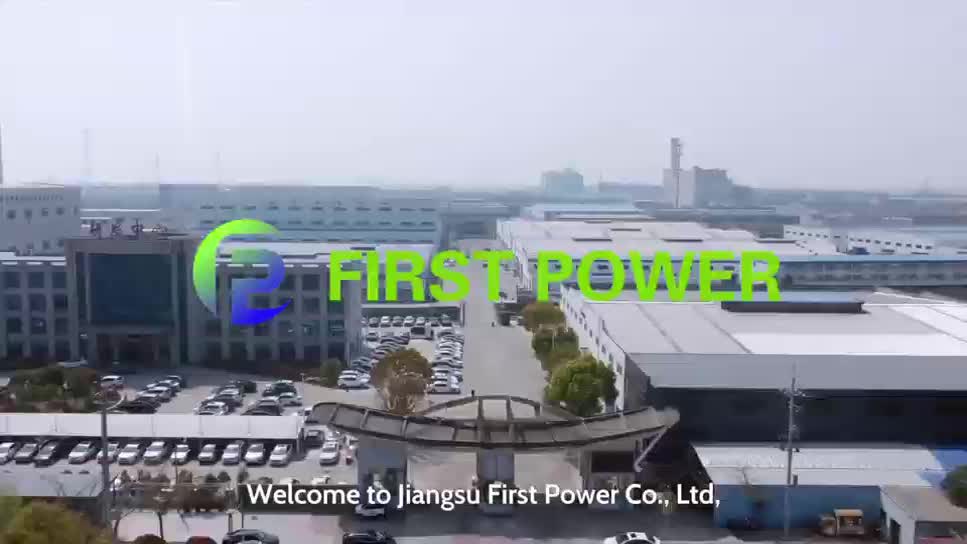
Why buyers choose Wisegj for custom OEM transformer projects
Jiangsu Wisegj Power Co., Ltd. designs, assembles and exports medium and high voltage equipment including power transformers, distribution transformers, pad mounted transformers, dry type transformers, compact substations, switchgear, distribution boxes and voltage stabilisers. The company is based in Suzhou, Jiangsu, China, and serves utilities, EPC contractors and industrial buyers across five continents.
Our engineering team brings more than 20 years of hands-on transformer experience. Projects are reviewed by engineers before quotation, produced under ISO 9001 quality control and shipped with routine test reports, giving procurement teams a clearer path from specification to energization.
- Own production base with full industry certificates
- 50+ engineers in R&D and technical support
- Supplier to Fortune 500 companies
- 24-hour pre-sale and after-sale response
- OEM, ODM and design-based customization
- Finished product inspection on every unit

Production capability, floorspace and quality inspection verified onsite by TÜV Rheinland, an independent third-party inspection body.
Manufacturing is supported by 6,847 m² of verified production floorspace, dedicated winding, core assembly, drying, tanking and testing areas, and 211 qualified supply-chain partners for silicon steel, copper, bushings and accessories. Every unit receives routine testing before dispatch, and third-party witness inspection can be arranged.
Explore the full company profileAuditable Certificates Reduce Procurement Risk
Certificate numbers should be listed so compliance teams can verify them with issuing bodies. Wisegj holds CE certification for oil immersed power transformers, dry type transformers and compact substations, and operates under ISO 9001, ISO 14001 and ISO 45001 management systems.
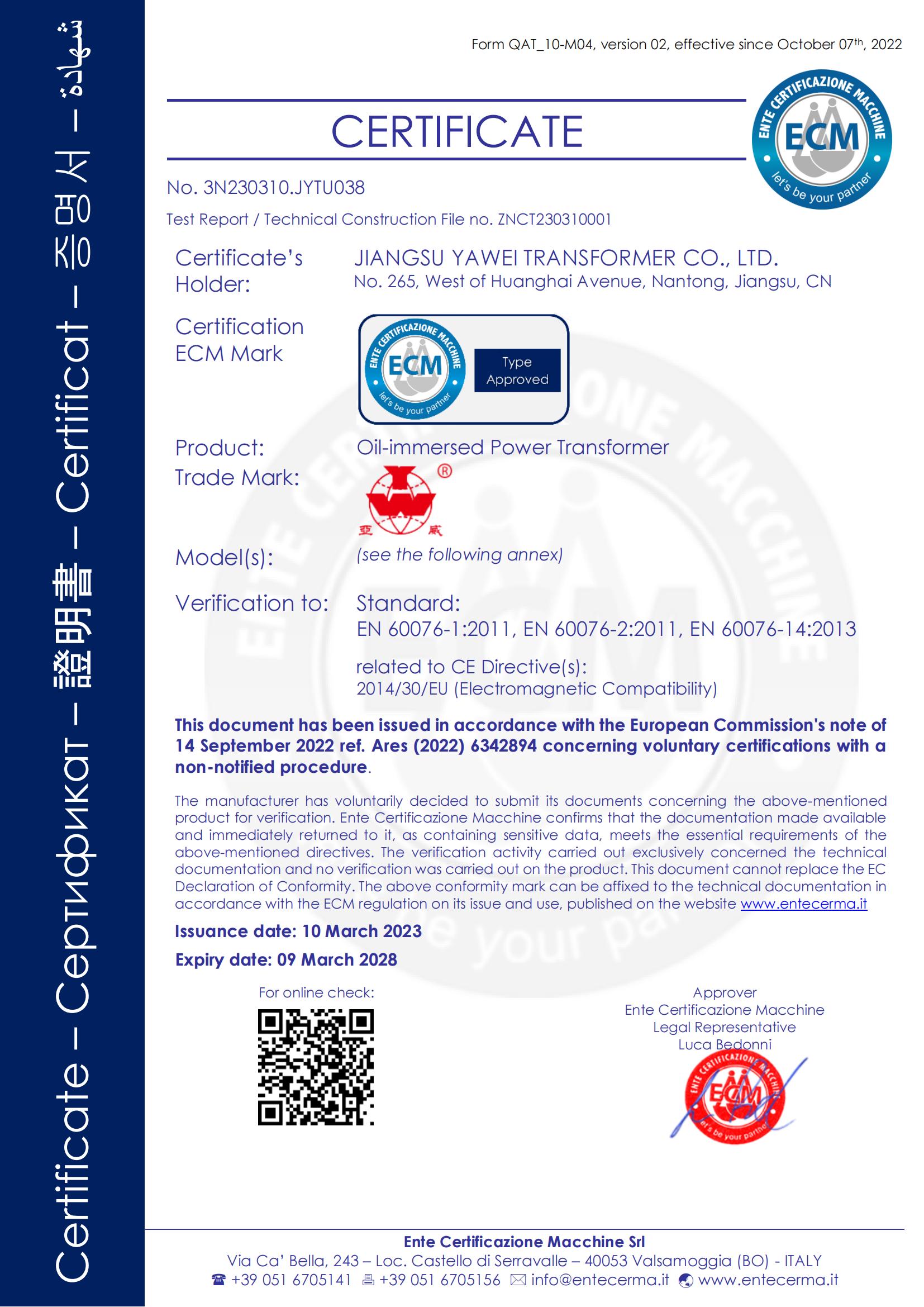
CE · Power Transformer
Oil-immersed power transformer · No. 3N230310.JYTU038
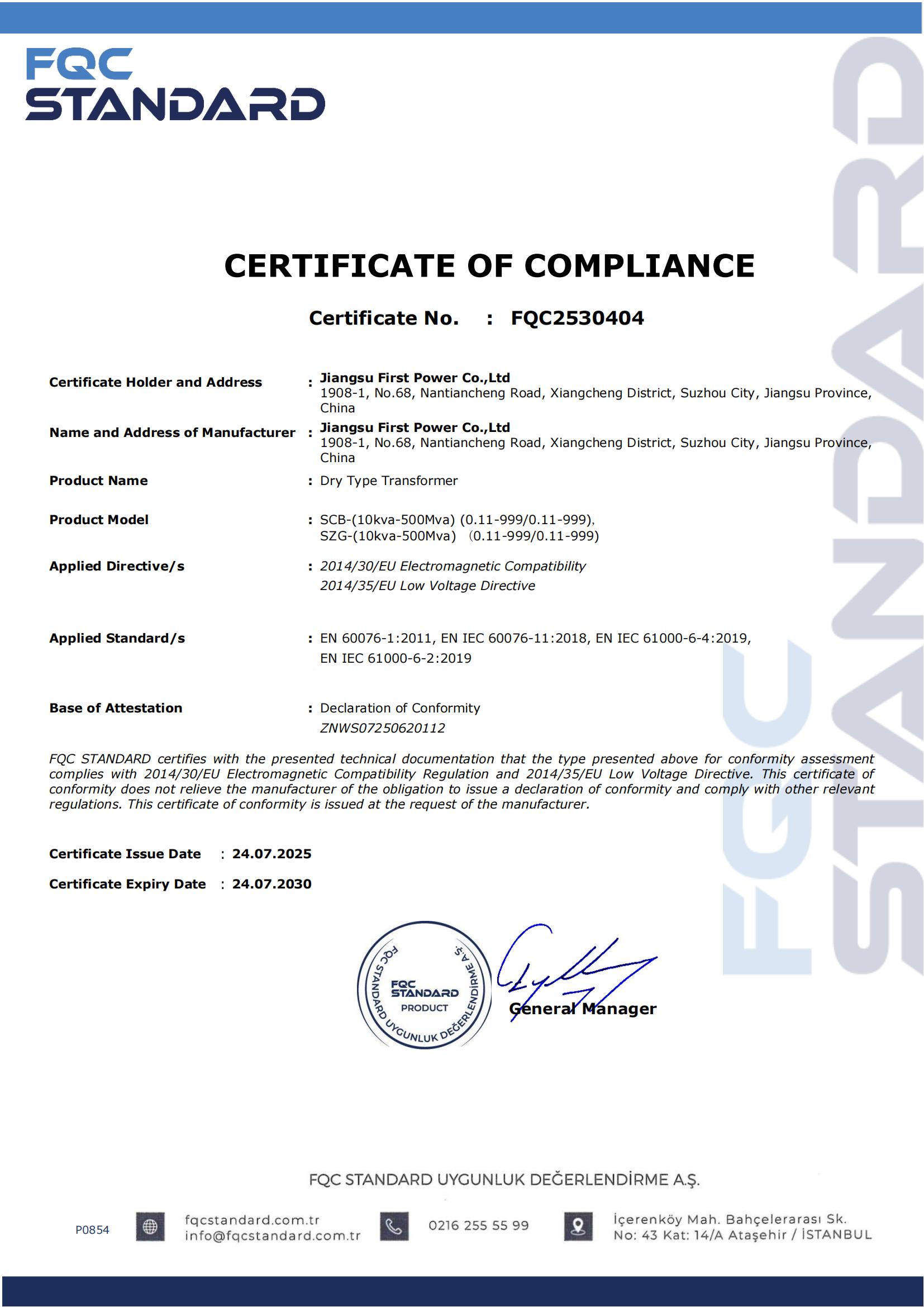
CE · Dry Type
Dry type transformer · No. FQC2530404
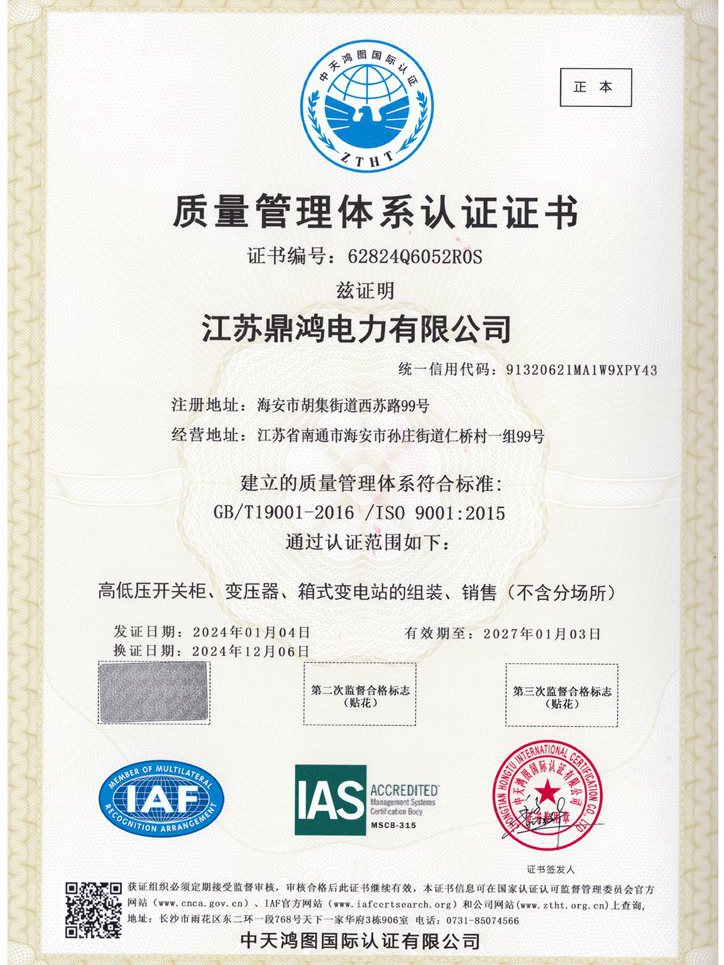
ISO 9001
Quality management system · No. 62824Q6052R0S
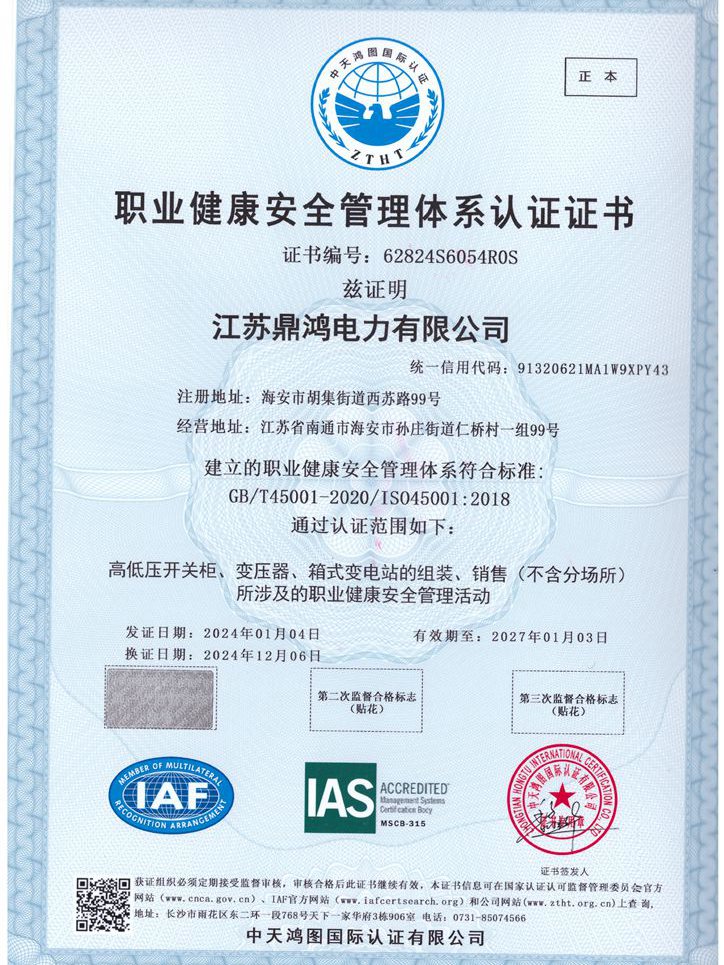
ISO 45001
Health and safety management · No. 62824S6054R0S
Export Support Built Around Real Procurement Requirements
Cable boxes, bushings, nameplates, documentation and protection class need to match the destination market, not only the factory standard. Wisegj supports 50 Hz and 60 Hz designs, IEC and ANSI/IEEE specifications, and export documentation for projects in the Americas, Europe, Asia, the Middle East and Africa.
Delivery Terms
FOB, CFR, CIF, EXW, FAS, FCA, CPT, CIP, DDP, DDU and express delivery options can be discussed according to project location and buyer preference.
Payment Methods
T/T, L/C, D/P, D/A, escrow and other secure arrangements can be agreed per contract. Currency and payment milestones should be confirmed before production.
Packing and Documentation
Sea-worthy packing, impact indicators, packing lists, GA drawings, nameplate drafts, routine test reports and O&M manuals support smooth customs clearance and site acceptance.
Transformer Procurement FAQ for OEM Buyers
These are the questions engineering and export teams most often receive from utilities, EPC contractors, distributors and industrial buyers.
What does “custom OEM” mean for an electric power transformer?
What voltage and capacity range can Wisegj supply?
Which standards and certificates should a supplier provide?
Which factory tests are performed before shipment?
How should buyers compare first cost with lifetime cost?
Can transformers be customized for my project drawings and local grid code?
What information is needed for a fast and accurate quotation?
How can I start an OEM transformer project with Wisegj?
Send Your Transformer Datasheet for Engineering Review
Share your rated power, voltage class, frequency, vector group, impedance, tap range, cooling method and installation environment. A transformer engineer will review the requirement and help you define a compliant custom OEM configuration with documented testing and export support.
Get a QuotePrefer email? Send project documents to [email protected]