8 Distribution Products Integrated with Low Voltage Switchgear Cabinets
A low voltage switchgear cabinet is not an isolated box. Its safety, selectivity and thermal performance depend on upstream transformers, pad-mounted equipment, protection settings, cable interfaces and documentation. The eight product families below are relevant to Bologna EPCs, integrators and facility teams that specify LV assemblies alongside medium-voltage and distribution equipment. Product links and catalogue images are retained from the original range.
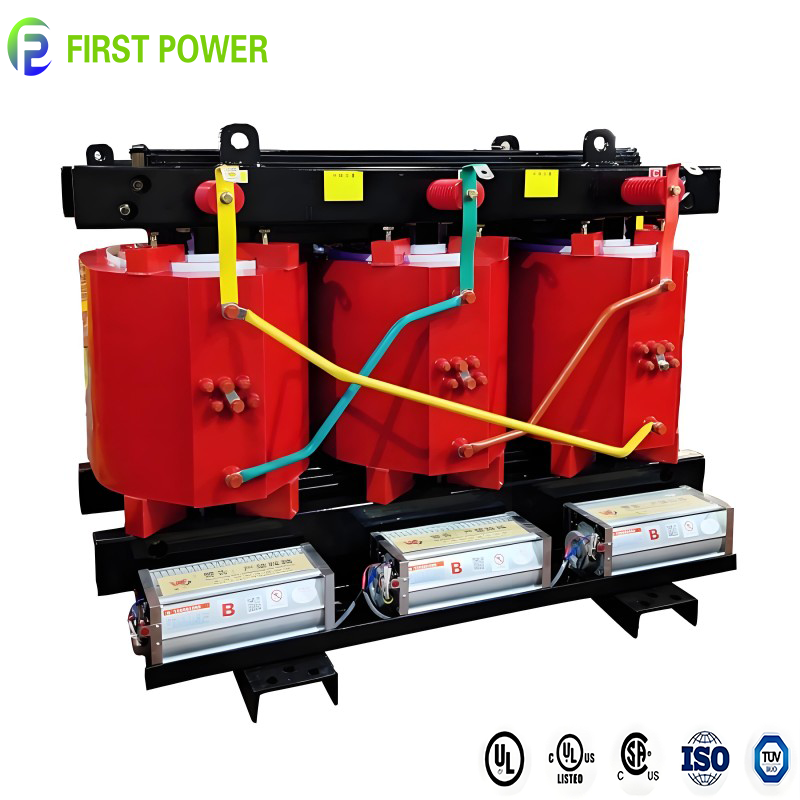
C CE Certification IEEE Standard 50/60HZ 5MVA 6MVA 6KV 35KV 3 Phase Dry Type Transformer for Electric Power Distribution
Oil-free transformer family for indoor electrical rooms, tunnels and fire-sensitive buildings where LV cabinets are installed close to the load.
View product specification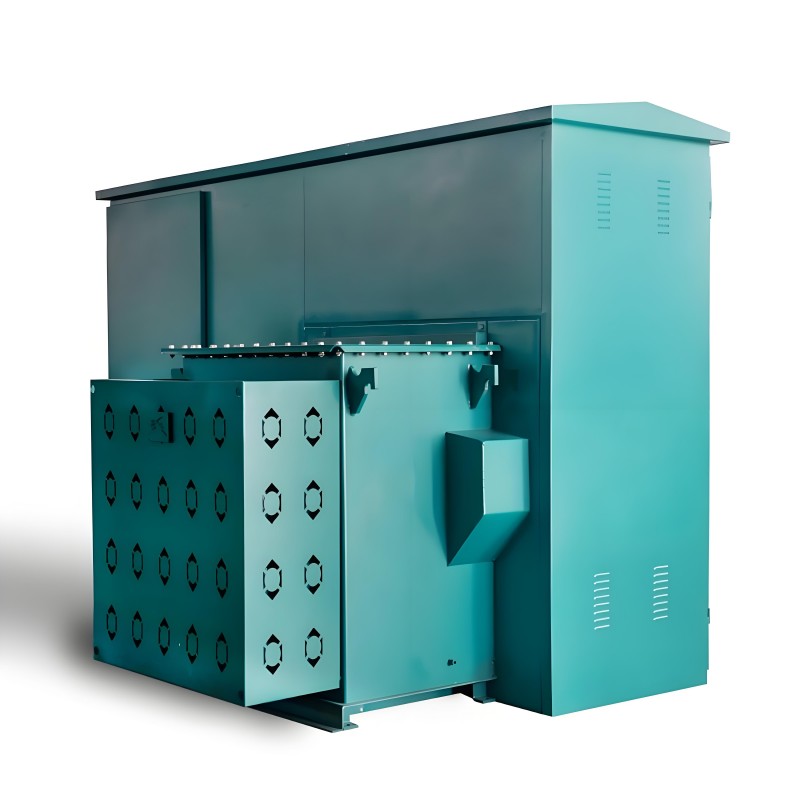
C Certified Oil-Type Cooper 75-2500kVA Pad Mounted Transformer 6kV-34.5kV 50/60Hz Dead Front Three Phase
Dead-front pad-mounted design for underground distribution, commercial campuses and utility interfaces that feed LV distribution cabinets.
View product specification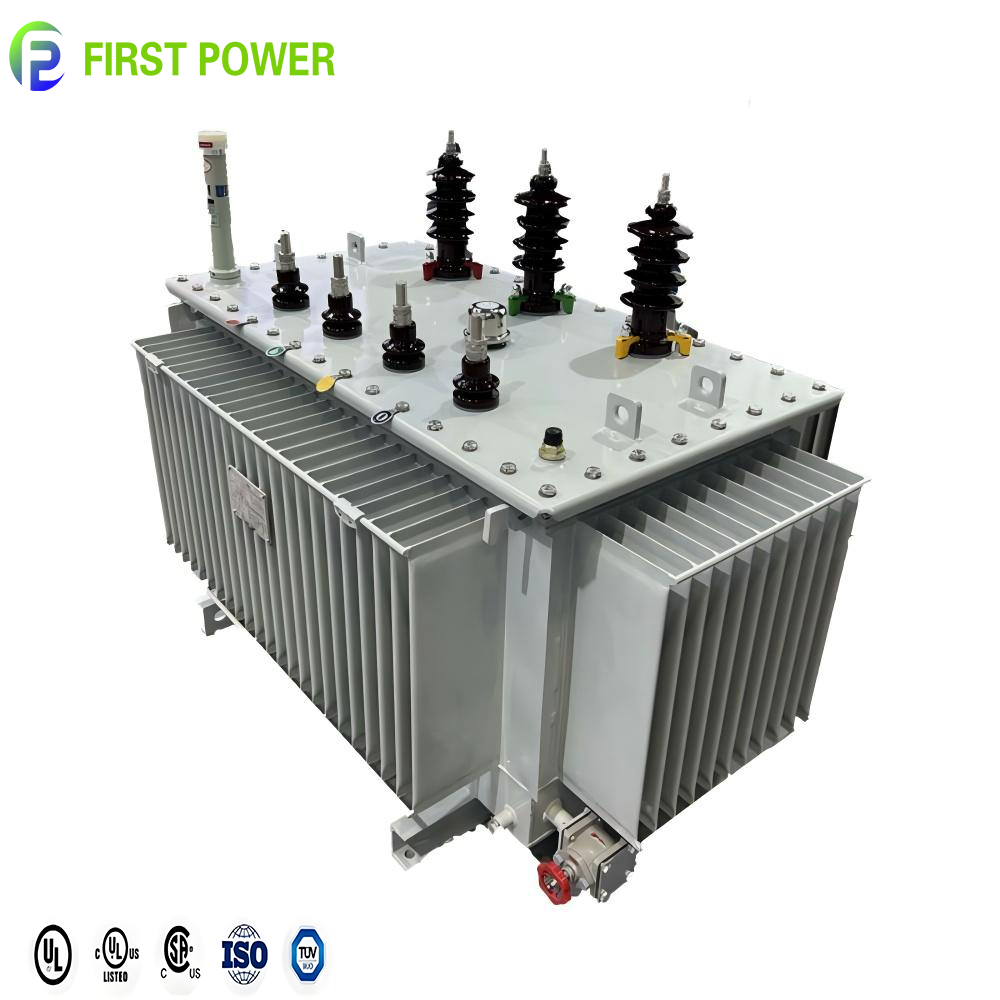
C CE 50/60HZ S11 10KV 20KV 35KV 50KVA 100KVA 200KVA 3 Phase Electrical Oil Immersed Transformer for Distribution System
Distribution transformer for utility networks, industrial plants and mixed-use developments where low losses and proven protection coordination matter.
View product specification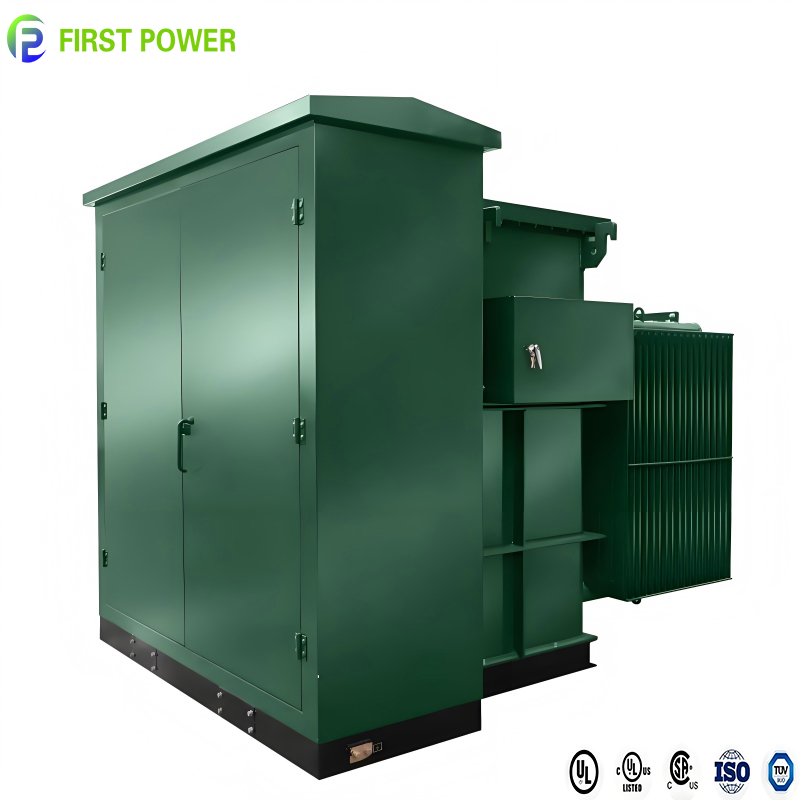
C CE 50/60HZ 6KV 10KV 15KV 20KV 35KV 100KVA 300KVA 500KVA 630KVA 3 Phase Pad Mounted Pedestal Transformer for Industrial
Pedestal transformer for industrial sites with constrained footprints and underground cable feed to LV main switchboards.
View product specification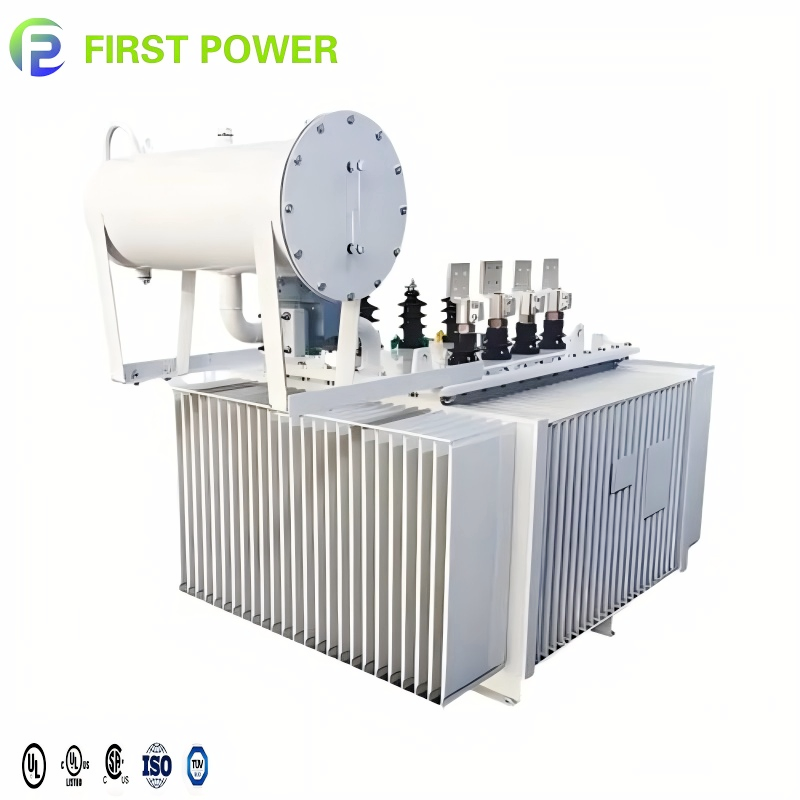
C CE 10KV 20KV 35KV 1000KVA 2000KVA 2500KVA 3 Phase Oil Type on Load Tap Changer Transformer for Industrial Power Supply
On-load tap changer transformer for industrial supply conditions where voltage regulation must remain stable under changing load.
View product specification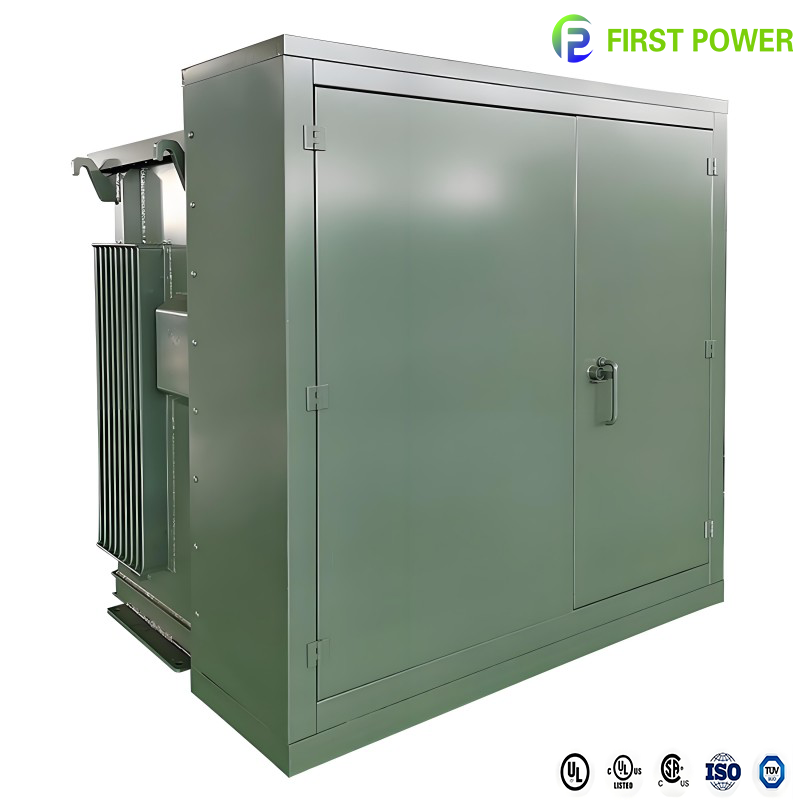
C CE MV&HV ZGS11 75-2500KVA 10KV 20KV 35KV Pad Mounted Three Phase Transformer for Electric Power Distribution
Compact pad-mounted platform for urban and commercial distribution where LV cabinet rooms are land-constrained.
View product specification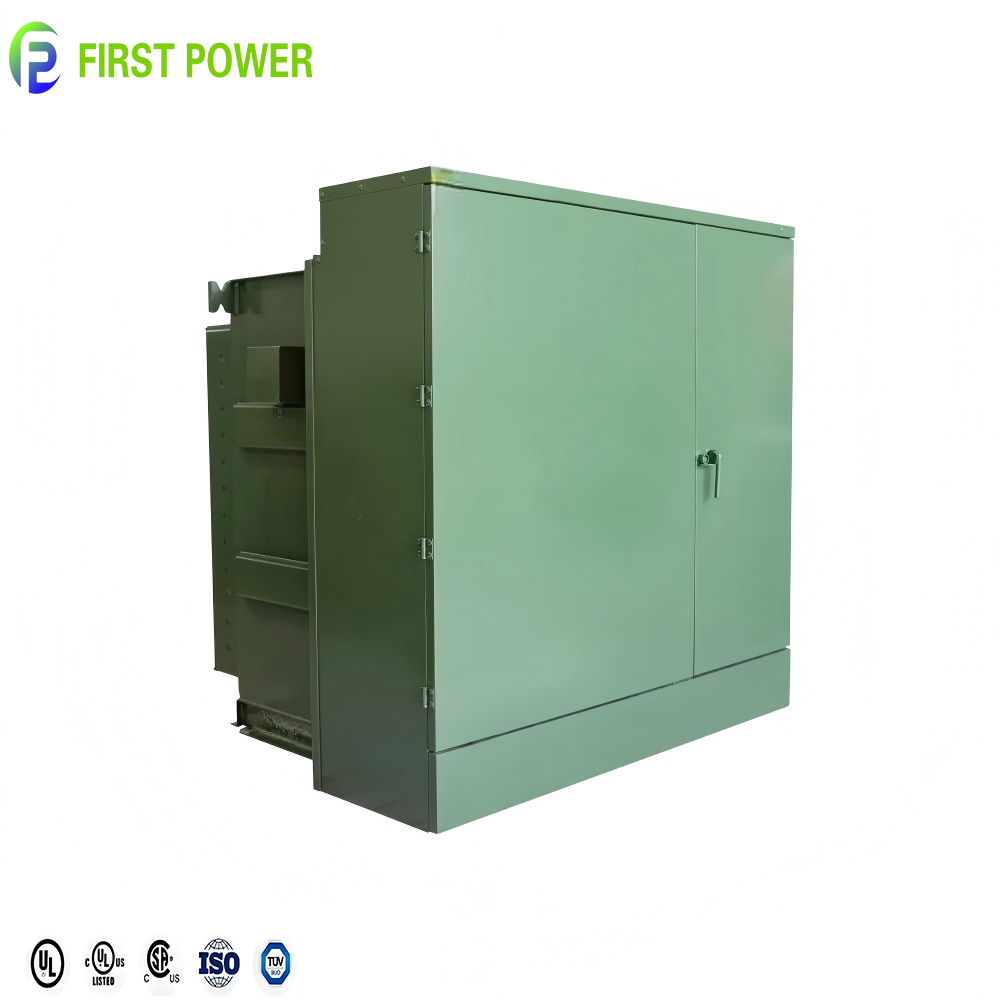
C CE MV&HV 50/60HZ 750KVA 1250KVA 1500KVA 2000KVA 2500KVA 3 Phase Pad Mounted Transformer for Industrial Power Supply
High-capacity pad-mounted transformer for industrial power supply, larger campuses and process plants with defined load growth.
View product specification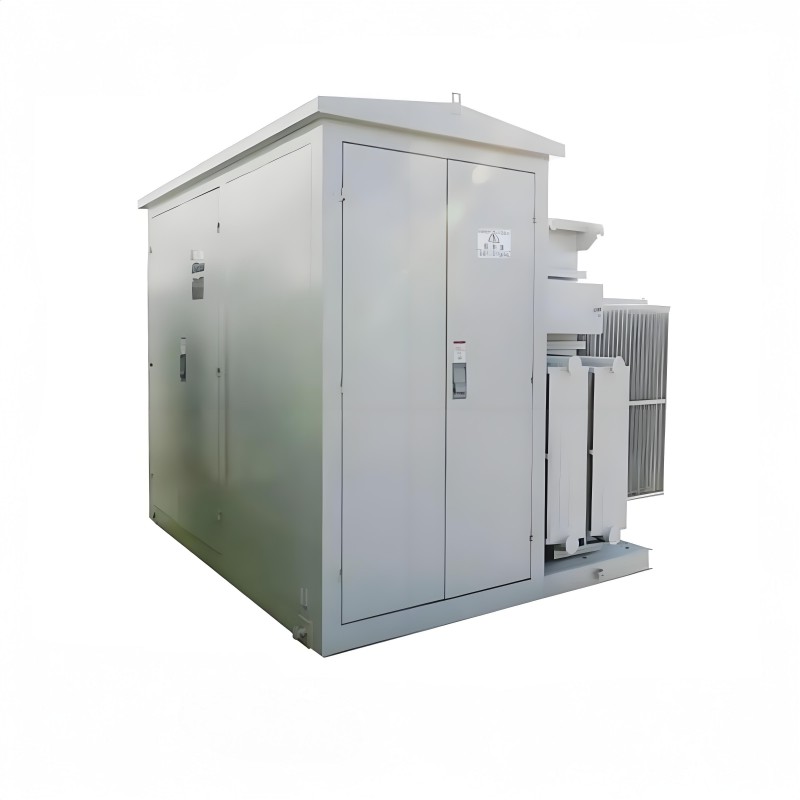
American Standard /C Certification 75-2500KVA Oil Type Three Phase 13.8KV Pad Mount Transformers for Power Generation
Oil-filled pad-mount transformer for power generation and grid-interface projects requiring 13.8 kV coordination.
View product specificationLooking for the low voltage switchgear cabinet itself? Share your single-line diagram, short-circuit study, IP rating, ambient conditions and preferred component brands. Wisegj’s engineering team can review the cabinet scope together with the upstream transformer interface.
Inquire NowLow Voltage Switchgear Cabinets for Bologna: Standards, Fit and Search Intent
This section is written for procurement teams, electrical designers and EPC buyers who compare a China factory with a local Bologna supplier. The objective is not to repeat catalogue language, but to show what must be checked before a cabinet is approved for an Emilia-Romagna project.
What “low voltage switchgear cabinet” means in a Bologna tender
In Bologna, the term is normally used for a factory-built low voltage assembly operating at up to 1,000 V AC. It contains busbars, circuit breakers, fuses, contactors, metering, protection relays, surge protection, cable compartments and control wiring. The assembly may be a main distribution board, a sub-distribution cabinet, a motor control centre, a capacitor compensation panel or an interface cabinet for a transformer or compact substation.
The decisive reference is usually IEC 61439-1 and IEC 61439-2, adopted in Italy as CEI EN 61439. A responsible supplier should be able to explain whether the design is a type-tested assembly, a verified design or a partially tested assembly, and which clauses were covered. CE marking alone is not a substitute for a project-specific design verification file. For grid-connection interfaces, the electrical designer also needs to check the applicable CEI 0-16 or CEI 0-21 requirements, protection settings and utility approval workflow.
Search intent is important. A buyer typing “low voltage switchgear cabinet factory in Bologna” may want a local workshop with stock, a European distributor, or a China-based manufacturer that can deliver a custom assembly to Bologna. These are different supply models. A local supplier may offer faster site attendance, while a China factory can offer deeper customization, competitive component sourcing and integrated transformer coordination. The correct comparison should include factory acceptance testing, documentation language, spare-parts strategy, warranty handling and who will attend commissioning.
For a Bologna project, the quotation should be built around the whole electrical interface: transformer vector group, LV busbar rating, short-circuit withstand, protection selectivity, cable entry, IP rating, ventilation, seismic fixing and communication protocol. A cabinet that is compliant on paper but incompatible with the upstream transformer or building services can create costly site changes. This is why the technical review should happen before price comparison, not after purchase order.
Wisegj’s relevant experience comes from manufacturing transformers, compact substations and high and low voltage switchgear for export projects. Its factory data includes more than 20 years of team experience, 6,847 m² of verified production floorspace, 50+ R&D and technical engineers, 211 qualified supply-chain partners and ISO 9001, ISO 14001 and ISO 45001 systems. These facts are useful only when they are tied to documents: drawings, routine test reports, CE declarations, component certificates and a named engineer who answers technical questions.
Bologna Buyer’s Non-Negotiables
- Confirmed IEC/CEI EN 61439 design verification and short-circuit rating.
- CE marking, declaration of conformity and component traceability.
- 230/400 V, 50 Hz design review for Italian grid conditions.
- IP rating, anti-condensation and ambient temperature agreed in writing.
- Selectivity study, protection settings and utility interface requirements.
- FAT plan, packing inspection, shipping terms and commissioning responsibility.
Where Low Voltage Switchgear Cabinets Are Specified in and around Bologna
Bologna’s economy combines advanced manufacturing, packaging machinery, automotive supply, agri-food, logistics, public buildings and a growing renewable and data infrastructure base. Each environment changes the cabinet brief.
Industrial Automation & Packaging Plants
Motor control centres and drive cabinets need high short-circuit withstand, harmonic awareness, clean cable segregation and spare capacity for line expansions. IP54 and filtered ventilation are often discussed where dust or washdown risk exists.
Commercial and Public Buildings
Main LV distribution, sub-distribution and metering cabinets for offices, hospitals, schools and urban regeneration projects prioritise selectivity, fire safety, low noise and clear energy reporting for facility managers.
Renewables, Storage and EV Charging
PV inverters, battery storage and EV charging hubs require bidirectional metering, surge protection, DC/AC protection coordination and grid-connection settings aligned with Italian utility requirements.
Data, Telecom and Critical Facilities
Redundancy, form separation, thermal management, remote monitoring and fast fault isolation matter more than first cost. The cabinet must fit the maintenance strategy, not only the electrical schematic.
What Is Changing in Bologna’s LV Switchgear Procurement
Bologna buyers are not only replacing old cabinets. They are adapting distribution systems to electrification, digital operation and stricter documentation. These trends affect how a China factory should quote and how a local supplier should support the project.
Digital Monitoring and Power Quality
Temperature sensors, electronic meters, communication gateways and power-quality analytics are increasingly requested at tender stage. Buyers should define the protocol, data ownership and cybersecurity responsibility before the cabinet is built.
Prefabricated and Modular Delivery
Off-site assembly reduces site labour and improves inspection quality. Modular cabinets, compact substations and plug-and-play interfaces are attractive where Bologna city-centre access, noise and working-hour restrictions affect installation.
Energy Efficiency and Sustainability
Low-loss transformers, natural ester fluids, recyclable enclosures and energy monitoring are being reviewed together. The cabinet should not undermine the efficiency target of the upstream transformer or the building’s energy model.
Compliance Evidence and Digital Files
Procurement teams increasingly expect structured document packages: drawings, bill of materials, type-test references, routine test reports, CE declarations, O&M manuals and as-built files in English and, where required, Italian.
Wisegj Capability Data That Bologna Buyers Can Verify
The numbers below come from the company profile and third-party assessment information in the original website. They are not a substitute for project-specific audits, but they give a starting point for supplier due diligence.
Why Wisegj Is Relevant to Integrated LV Switchgear Projects
Jiangsu Wisegj Power Co., Ltd. combines transformer manufacturing, compact substation integration and high and low voltage switchgear experience. For Bologna buyers, the value is in coordinating interfaces and documents rather than sending separate purchase orders to unrelated suppliers.
Own Production Base and Certificates
Production is managed under ISO 9001, ISO 14001 and ISO 45001 systems. CE certificates cover multiple product families, and the company profile states that production capability and inspection were verified by TÜV Rheinland.
Custom Design and Interface Review
OEM, ODM, design-based and sample-based customization are available. Ratings, vector group, impedance, tap range, bushings, cooling, insulating fluid, enclosure colour and nameplate language can be aligned with a Bologna project specification.
Routine Testing and Documentation
Routine tests include winding resistance, ratio and vector group, impedance and load loss, no-load loss and current, applied and induced voltage tests, plus oil dielectric checks for liquid-filled units. Witness testing can be discussed.
Supply-Chain Depth
211 qualified supply-chain partners support stable lead times for silicon steel, copper, bushings and accessories. This matters when an LV cabinet package is tied to transformer delivery and site commissioning dates.
Export Logistics and Trade Terms
FOB, CFR, CIF, EXW, FCA, CIP, CPT, DDP and other Incoterms can be discussed, with T/T, L/C, D/P and D/A among payment options. Seaworthy packing and export documentation are part of the quotation review.
Responsive Engineering Support
The company states 24-hour pre-sale and after-sale response targets, Fortune 500 customer experience and complete documentation in English. For Bologna buyers, response quality should be tested during the RFQ stage.
Images and Certificates Behind the Supplier Claim
The original website includes factory, workshop and certificate images. For a Bologna tender, those images should be supported by current certificate numbers, scope statements and the name of the legal entity that will issue the declaration of conformity.


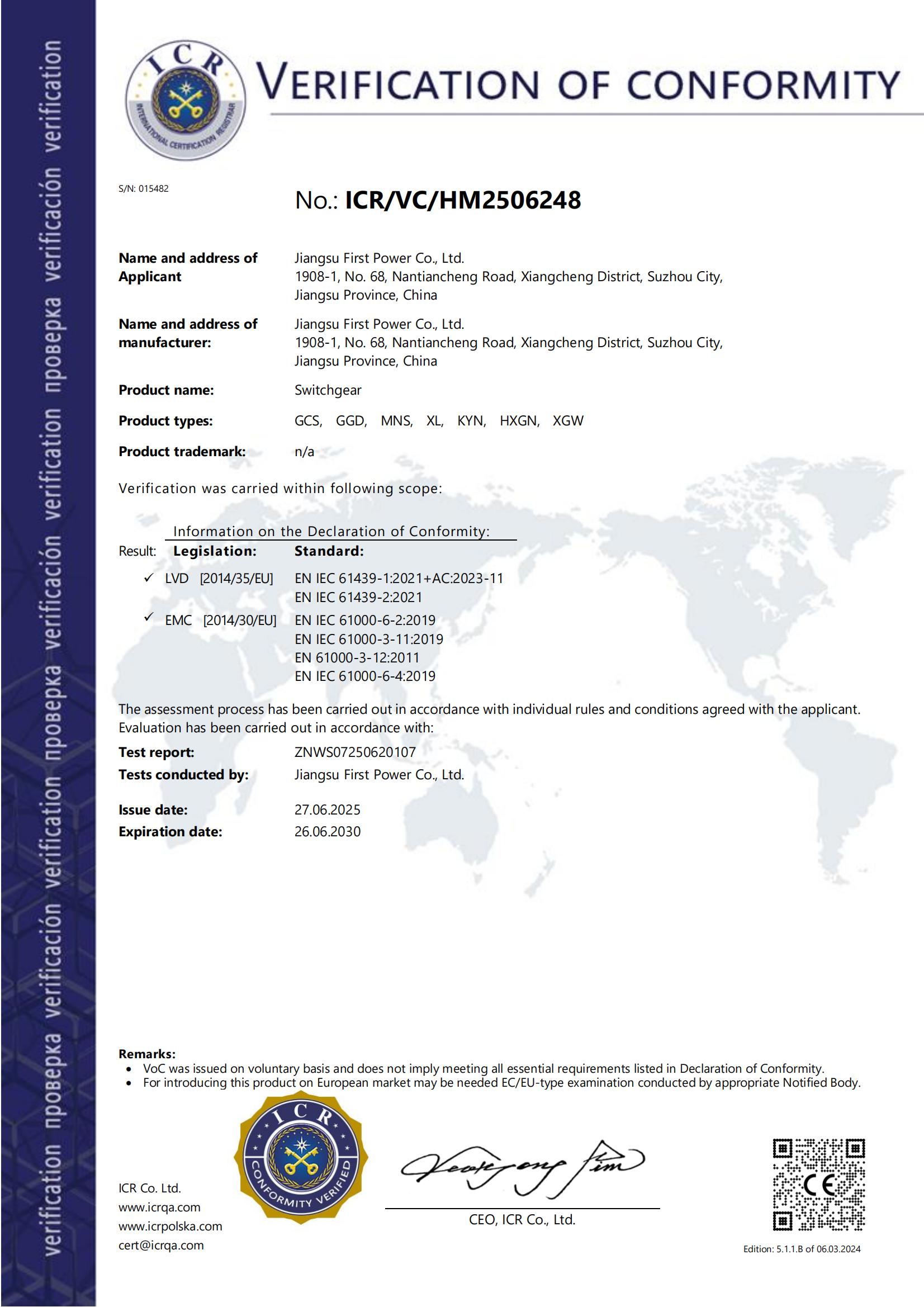
What to verify before accepting a China factory quotation
Ask for the certificate scope, not only a logo. The CE certificate for switchgear shown in the original material references certificate No. ICR/VC/HM2506248. The ISO 9001, ISO 14001 and ISO 45001 systems are identified by certificate numbers in the company data. A serious supplier will let your compliance team verify the issuing body and the product scope.
- Legal entity name, factory address and certificate holder must match.
- IEC 61439 verification file, single-line diagram and short-circuit study should be project-specific.
- Component brands, breaking capacities and derating assumptions should be listed in the BOM.
- Routine test reports, FAT checklist and packing inspection photos should be available before shipment.
- Warranty, spare parts and commissioning support must be assigned to a named contact.
How to Compare a China Factory with a Bologna-Area Supplier
Use the same evidence request for every supplier. This keeps the comparison focused on total project risk rather than headline price.
| Due-Diligence Area | Question to Ask | Evidence Expected | Bologna Impact |
|---|---|---|---|
| Standard compliance | Is the LV assembly designed to IEC 61439-1/-2 and CEI EN 61439? | Design verification file, type-test references, CE declaration | Supports local approval and reduces rework during electrical inspection |
| Grid interface | How will protection settings align with CEI 0-16 or CEI 0-21 requirements? | Protection coordination study and utility interface comments | Reduces delay at grid-connection approval stage |
| Short-circuit and selectivity | What is the rated short-time withstand current and selectivity limit? | Calculations, breaker settings and component certificates | Protects upstream transformers and avoids nuisance tripping |
| Environmental fit | What IP rating, ambient range, ventilation and anti-condensation design apply? | IP test reference, thermal calculation and enclosure drawing | Addresses Bologna humidity, summer heat and indoor/outdoor installation |
| Factory acceptance | Can the buyer witness FAT or appoint a third-party inspector? | FAT plan, routine test report and photo record | Reduces risk before sea freight and site installation |
| Delivery and support | Who handles shipping, customs, commissioning and warranty? | Incoterm proposal, service scope and named contact | Clarifies the real landed cost for a Bologna project |
Note: the table is a procurement framework, not a substitute for the project’s electrical design. Final compliance must be confirmed by the responsible engineer, utility and notified body where applicable.
Questions Local Buyers Ask About Low Voltage Switchgear Cabinets
These answers reflect common search intent around “China factory”, “Bologna suppliers”, “LV switchgear cabinet price” and “CEI EN 61439 compliance”. They are written to help buyers ask better questions.
Do I need a Bologna-based supplier, or can I buy directly from a China factory?
Which standards should a low voltage switchgear cabinet for Bologna meet?
What voltage, frequency and short-circuit values are typical?
What documents should I request with the quotation?
How should FAT, shipping and commissioning be organized for a Bologna project?
Are Bologna humidity, summer heat and seismic requirements relevant to cabinet design?
Can Wisegj supply the LV cabinet and the upstream transformer together?
What is the fastest way to get a useful quotation?
Send Your Bologna LV Switchgear Cabinet Specification for Engineering Review
Share your single-line diagram, short-circuit study, IP and ambient requirements, preferred component brands and delivery terms. A transformer and switchgear engineer can review the interface and respond with a document-focused quotation.
Inquire Now Jiangsu Wisegj Power Co., Ltd. · Transformers, compact substations and high and low voltage switchgear · [email protected]