Oil Immersed Distribution Transformers Recommended for Utility, Industrial, and Solar Projects
Instead of treating “Top 10” as a popularity badge, serious buyers use a shortlist built on standards evidence, loss economics, test records, customization capability, and delivery control. The eight families below cover the application patterns that appear most often in oil-immersed distribution transformer RFQs from utilities, EPC contractors, data centers, industrial plants, and renewable developers.
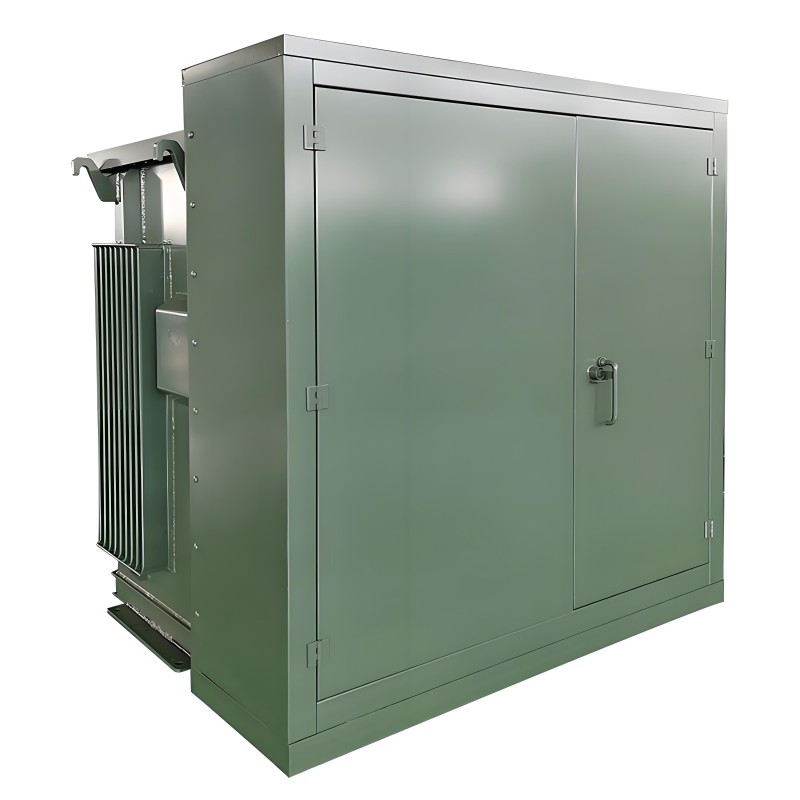
C Certified 75–2500 kVA Oil Type Three-Phase Pad-Mounted Transformer
This pad-mounted three-phase family covers 75–2500 kVA with 35 kV input and 480 V output options. It is a practical choice where underground service, tamper-resistant access, and a compact footprint matter more than a conventional fenced substation.
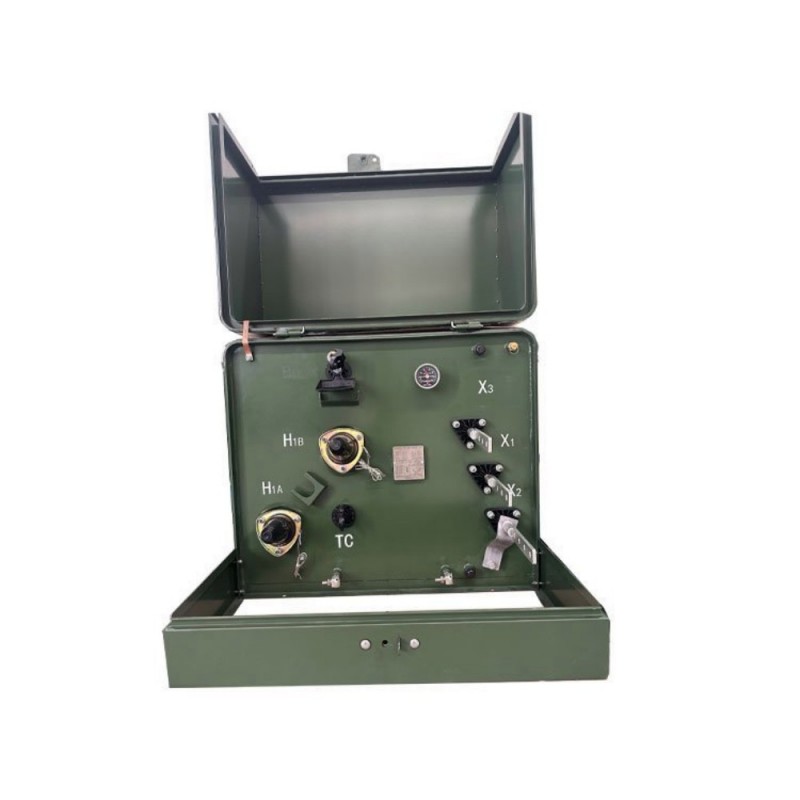
C Certification 6–34.5 kV Oil Type Single Phase 75 kVA Pad Mounted Transformer
A single-phase, 75 kVA class pad-mounted transformer for 6 kV, 10 kV, 13 kV, 20 kV, and 34.5 kV systems at 50/60 Hz. It suits residential subdivisions, rural underground loops, and utility programs that standardize single-phase service.
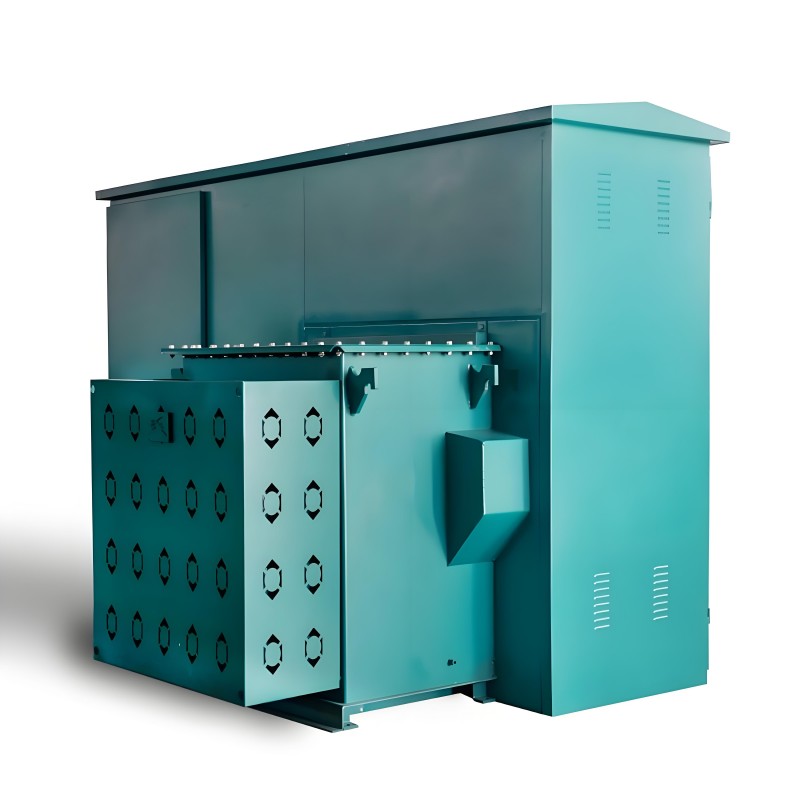
C Certified Oil-Type Cooper 75–2500 kVA Dead Front Three-Phase Pad-Mounted Transformer
The Cooper-style dead-front three-phase pad-mounted design is aimed at utilities and EPCs that require a familiar North American layout, separable connectors, coordinated protection, and a 75–2500 kVA oil-immersed platform.
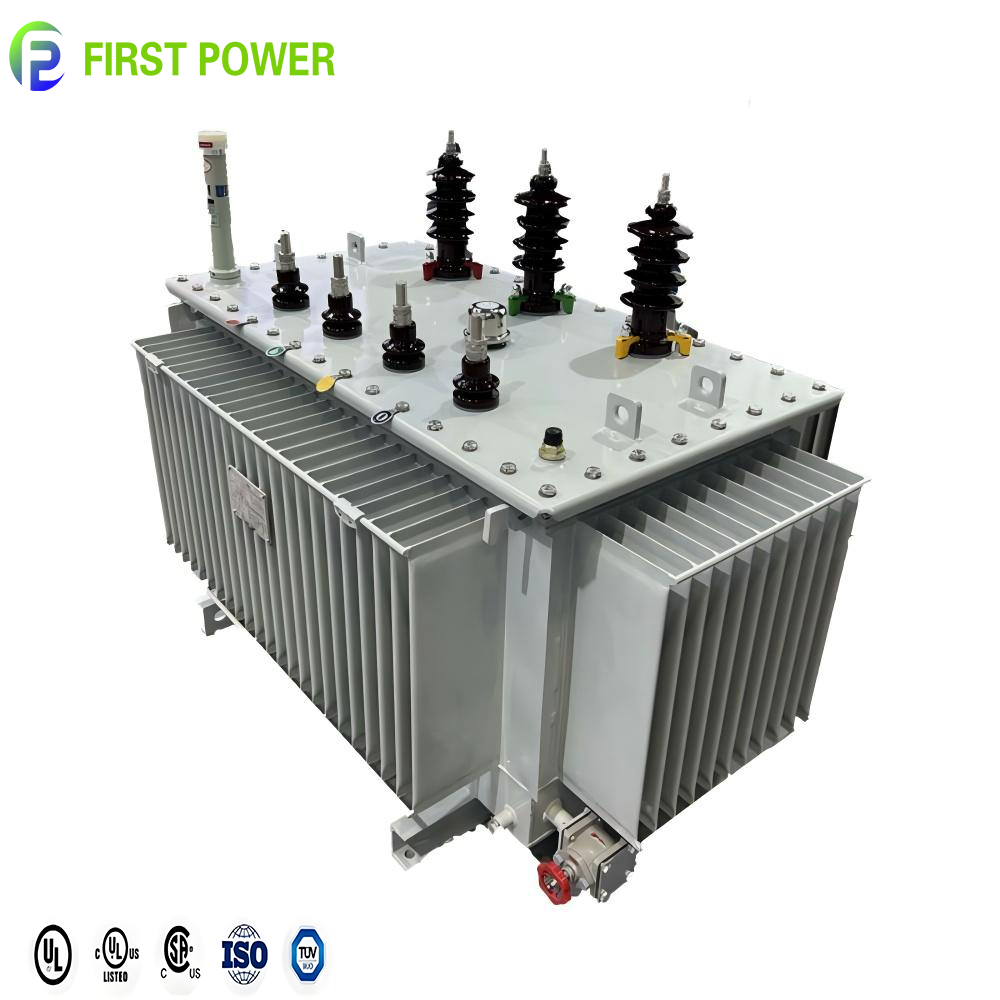
C CE S11 10–35 kV Three-Phase Oil Immersed Distribution Transformer
S11 three-phase oil-immersed distribution transformer for 10–35 kV networks. Low-loss core and coil construction supports utility distribution, industrial plants, and commercial complexes where efficiency and thermal margin affect lifecycle cost.
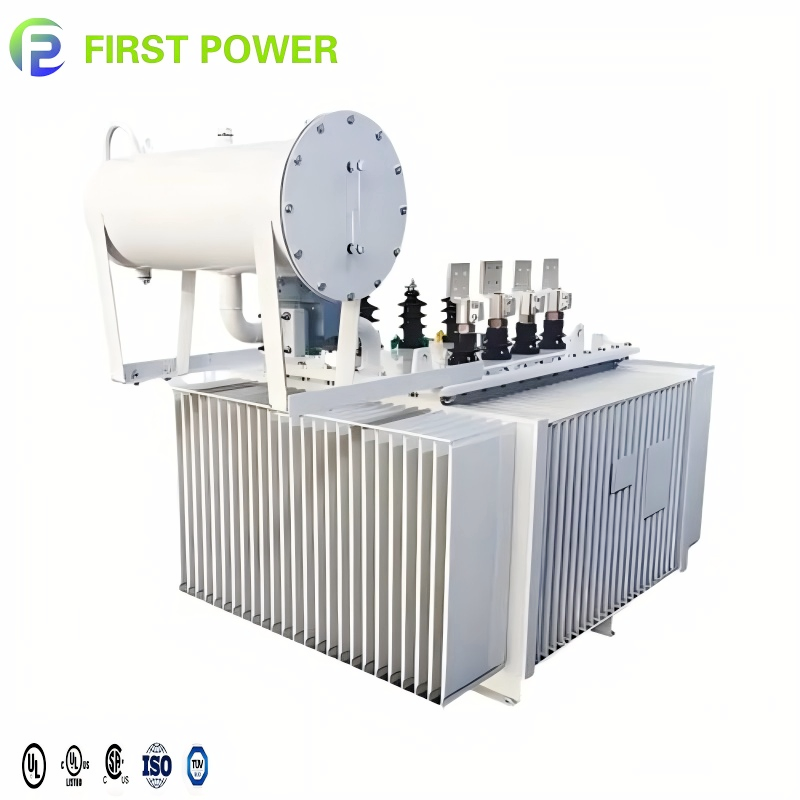
C CE 10–35 kV 1000–2500 kVA Oil Type On-Load Tap Changer Transformer
A 1000–2500 kVA oil-type transformer with on-load tap changer for industrial power supply. It is recommended where voltage fluctuation, motor starting, or process continuity requires tap adjustment without de-energizing the load.
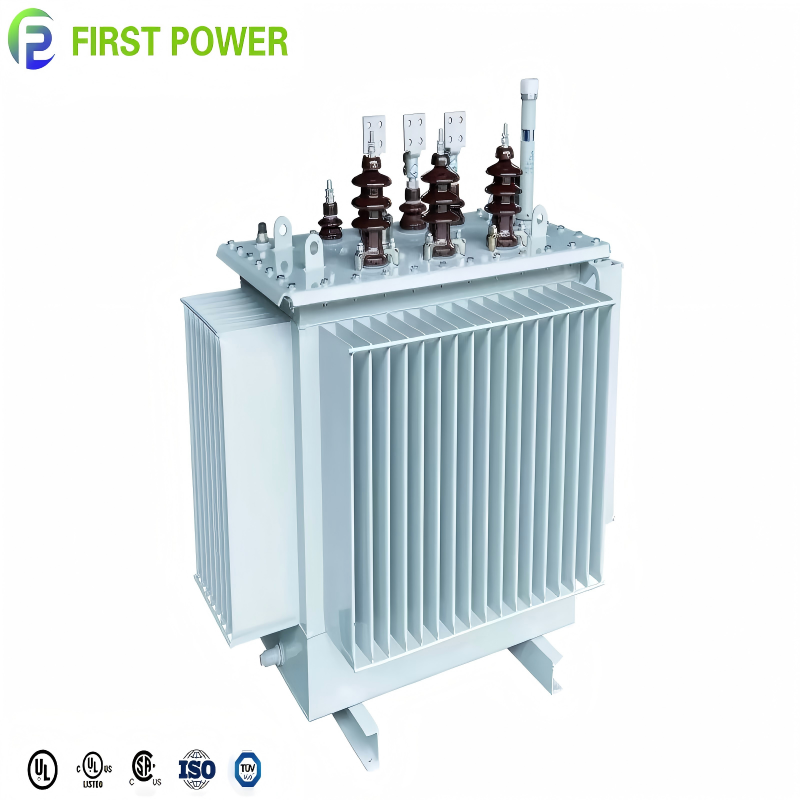
C CE S11 6–35 kV 50–300 kVA Three-Phase Oil Immersed Transformer
S11 three-phase oil-immersed transformer in the 50–300 kVA range for 6–35 kV distribution. A compact, low-loss solution for smaller substations, commercial buildings, and rural electrification programs.
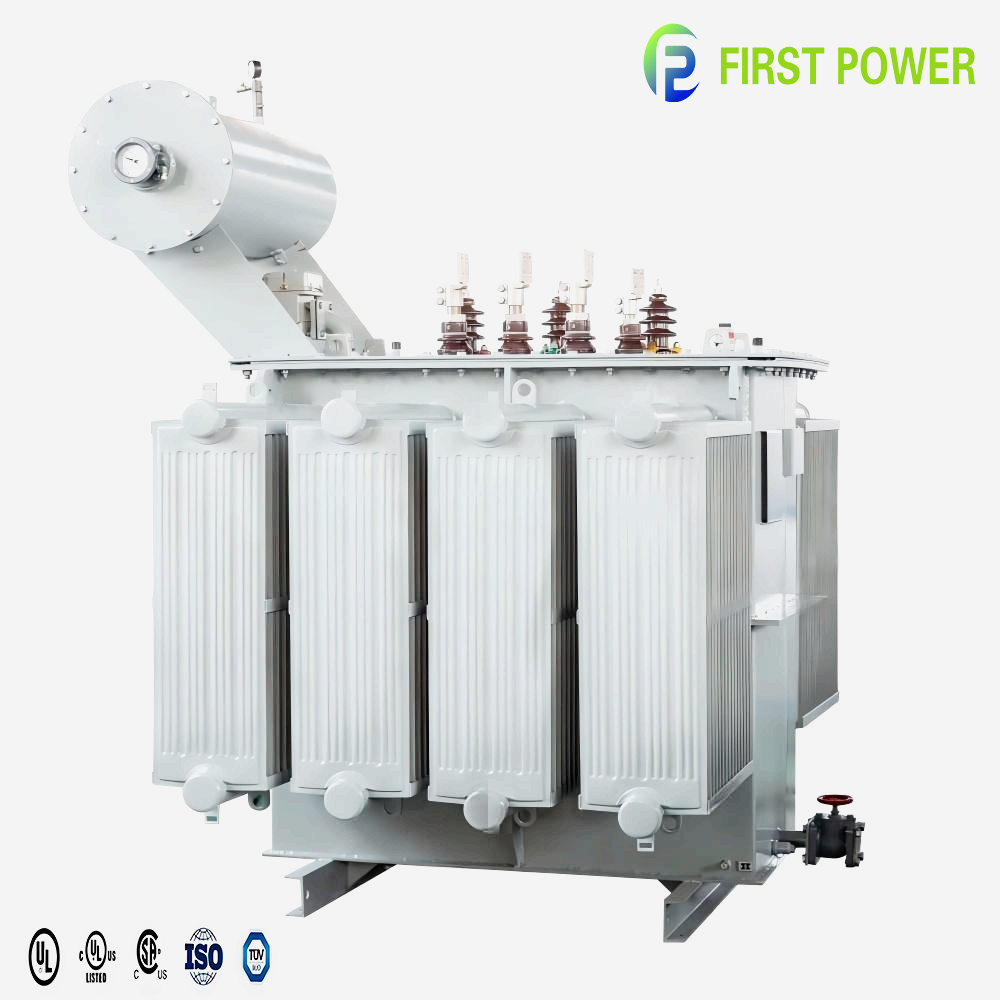
C Certification 35 kV 1000 kVA Three-Phase Oil Immersed Solar PV Transformer
A 35 kV, 1000 kVA class oil-immersed solar PV transformer designed for renewable generation. It supports collector-system step-up and grid interconnection where harmonics, reverse power flow, and outdoor duty must be addressed.
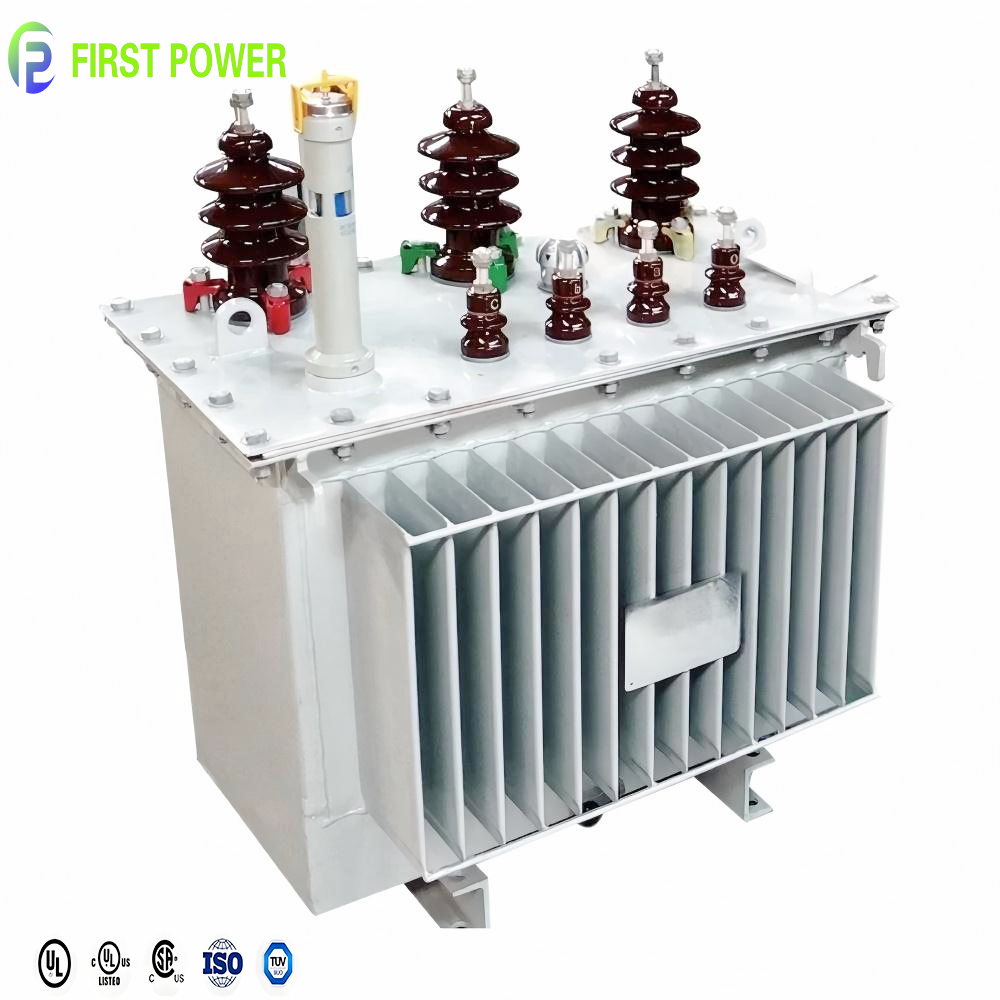
C CE 10–35 kV 50–500 kVA Electric Oil Immersed Transformer
A 50–500 kVA electric oil-immersed transformer for 10–35 kV industrial power supply. It fits plant distribution, packaged substations, and projects that need an IEC-oriented unit with flexible vector group and protection options.
Manufacturing Capacity at a Glance
For high-value electrical equipment, “experience” is not a slogan. It must appear as audited floorspace, engineering headcount, test capability, supply-chain depth, export records, and documented customer response performance.
Years of combined team experience in transformer design, production, testing, and export projects.
Voltage range referenced in the manufacturer’s published capability profile, from distribution equipment to high-voltage systems.
Verified production floorspace covering winding, core assembly, drying, tanking, testing, and packing activities.
R&D and technical engineers supporting specification review, drawings, customization, testing, and after-sales response.
Qualified supply-chain partners for silicon steel, copper, bushings, insulation, oil, and critical accessories.
Average buyer rating shown in the company profile, supported by documented export and after-sales service processes.
Ten Signals That Separate a Top-Tier Oil-Immersed Transformer Exporter
A credible “Top 10 Oil Immersed Distribution Transformer Manufacturer & Exporter” shortlist should be built from evidence, not directory placement. The ten signals below are the practical E-E-A-T filter: experience is visible in test records, expertise in design calculations, authority in certificate scope, and trust in how a supplier answers uncomfortable technical questions.
Standard-specific design
The design should reference IEC 60076 or IEEE C57.12 clauses, not only a generic “CE certificate” statement.
Loss and impedance guarantees
Ask for no-load loss, load loss, impedance, and tolerance values that can be compared with your TCO model.
Routine test capability
Ratio, winding resistance, no-load and load loss, impedance, applied voltage, induced voltage, and oil BDV tests should be routine.
Material traceability
CRGO core, copper conductor, insulating oil, bushings, tap changer, and gaskets should be traceable to approved sources.
Engineering customization
Vector group, tap range, impedance, cooling, enclosure, altitude, ambient, and 50/60 Hz adaptation should be reviewed by engineers.
Certificate validity and scope
ISO and CE documents should be current, product-linked, and verifiable by certificate number with the issuing body.
Third-party inspection
Witness testing by SGS, TÜV, BV, or the buyer’s representative should be welcomed before shipment.
Export packing and logistics
Seaworthy packing, shock indicators, clear Incoterms, and port-specific documentation reduce hidden project risk.
After-sales response
Spare-part lists, O&M manuals, commissioning support, and a 24-hour technical response process should be written into the offer.
Documentation and traceability
GA drawings, nameplate drafts, routine test reports, packing lists, and serial-number records should match the delivered unit.
Future Procurement Trends Reshaping Oil-Immersed Distribution Transformer Buying
The buying conversation is moving away from “lowest price per kVA” toward evaluated cost, delivery resilience, grid-code compliance, and transparent quality evidence. For a utility or EPC buyer, the transformer is no longer a standalone box; it is a data-rich asset in a renewable-heavy, digitalized distribution network.
TCO and loss capitalization
Buyers increasingly add capitalized no-load and load losses to the bid price. A lower-loss transformer can win even when the initial quotation is higher.
Certificate and test transparency
Procurement teams now request live certificate numbers, type-test reports, serialized routine tests, and witness inspection before release.
Renewables, EV, and data centers
Solar PV, EV charging, and data-center loads create reverse power flow, harmonics, and high ambient conditions that must be designed in.
Lead-time resilience
Dual sourcing of long-lead bushings, tap changers, and core steel is becoming a board-level supply-chain requirement, not a purchasing detail.
Information gain for RFQ evaluation: the loss-capitalization formula buyers actually use
Evaluated cost = bid price + capitalized no-load loss + capitalized load loss + freight + commissioning + maintenance + outage risk. A transformer with a slightly higher purchase price but a lower evaluated cost over 20–30 years is often the better utility purchase. That is why serious buyers ask for guaranteed losses, loss tolerances, and test verification before comparing quotations.
What the Next Oil-Immersed Distribution Transformer Fleet Must Deliver
The next generation of distribution transformers will be judged on efficiency, fire safety, space efficiency, digital traceability, and integration with renewable and modular substations. For manufacturers, this means engineering flexibility rather than one fixed catalog design.
Low-loss and amorphous core options
Utilities and industrial buyers are specifying lower no-load loss, higher-grade CRGO, and amorphous-core alternatives where part-load efficiency matters.
Natural ester and fire-safety fluids
Natural ester fluids are increasingly evaluated for fire-sensitive sites, environmentally sensitive areas, and projects that value higher flash points.
Compact high-temperature designs
Space-constrained urban and industrial projects are pushing insulation systems, cooling design, and tank geometry toward smaller footprints.
Digital monitoring and sensors
Temperature, oil level, pressure, and partial-discharge indicators are moving from special options toward digital asset-management features.
Integrated compact substations
Transformer, MV switchgear, and LV distribution are increasingly factory-assembled to cut site work, commissioning time, and interface risk.
Circularity and lifecycle data
Buyers want material declarations, recyclability data, loss curves, maintenance intervals, and end-of-life guidance alongside the nameplate.
Why Jiangsu Wisegj Power Belongs on a Verified Shortlist
Jiangsu Wisegj Power Co., Ltd. is a Suzhou-based manufacturer and exporter of transformers, compact substations, switchgear, and related power-distribution equipment. Its published capability profile, certificate numbers, and third-party inspection evidence give procurement teams concrete points to audit before placing an oil-immersed distribution transformer order.
20+ years and 50+ engineers
Engineering-led review of transformer ratings, vector groups, losses, cooling, and site conditions before quotation.
Verified 6,847 m² production base
Dedicated areas for winding, core assembly, drying, tanking, testing, and export packing, verified by TÜV Rheinland.
In-house routine testing
Each transformer receives documented routine tests, and third-party witness inspection is welcome before shipment.
ISO, CE, and TÜV evidence
ISO 9001, ISO 14001, ISO 45001 management systems and product-linked CE certificates are available for verification.
211 qualified supply partners
Qualified sources for core steel, copper, bushings, oil, insulation, and accessories help stabilize quality and lead time.
OEM, ODM, and design-based customization
Ratings, taps, impedance, bushings, enclosure color, nameplate language, and protection configuration can be adapted.
Export terms and 24-hour response
FOB, CFR, CIF, EXW, FCA, CIP, CPT, DDP and other Incoterms, plus T/T, L/C, D/P, and D/A payment options.
Utility and Fortune 500 experience
The company profile references supply to Fortune 500 companies and a 4.9/5 average buyer rating across export projects.

What the evidence means for an oil-immersed transformer buyer
Wisegj’s product scope spans power transformers, distribution transformers, pad-mounted transformers, dry-type transformers, compact substations, switchgear, distribution boxes, and voltage stabilizers from 220 V to 500 kV. For an oil-immersed distribution transformer project, that breadth matters when the scope includes pad-mounted equipment, MV switchgear, protection, and export documentation in one package.
The practical difference appears during technical review. A qualified manufacturer should challenge incomplete specifications, explain loss trade-offs, confirm the vector group and impedance, and show how routine testing will prove the delivered unit matches the approved drawings.
- ISO 9001, ISO 14001, and ISO 45001 systems
- CE certificates linked to transformer product families
- Routine test reports with serial-number traceability
- TÜV Rheinland onsite verification evidence

Production capability, floorspace, and quality inspection verified onsite by TÜV Rheinland, an independent third-party inspection body.
CE · Oil Immersed Transformer
Certificate No. M.2025.206.C121882 · validity 2025–2030 · product-linked compliance evidence for oil-immersed transformer supply.
CE · Power Transformer
Certificate No. 3N230310.JYTU038 · validity 2023–2028 · supports high-voltage and power transformer export projects.
ISO 9001 Quality Management
Certificate No. 62824Q6052R0S · validity 2024–2027 · covers production quality control and inspection processes.
ISO 14001 & ISO 45001
ISO 14001 No. 62824E6053R0S and ISO 45001 No. 62824S6054R0S · validity 2024–2027 · environmental and occupational safety management.
How to Match the Right Oil-Immersed Distribution Transformer to Your Project
Use this matrix to narrow the product discussion before requesting a quotation. The correct choice is not always the largest kVA rating; it is the design that matches the load profile, fault level, voltage regulation, installation space, environmental conditions, and local grid code.
| Application | Recommended product | Why it fits | Specification check |
|---|---|---|---|
| Residential underground service | Single-phase 75 kVA pad-mounted transformer | Single-phase service with multi-voltage primary options for residential subdivisions and rural loops. | Primary voltage, 50/60 Hz, secondary voltage, loop or radial feed, fuse protection. |
| Commercial underground distribution | Three-phase pad-mounted transformer | Tamper-resistant pad-mount layout with 75–2500 kVA range and 480 V output options. | kVA, 35 kV input, 480 V output, dead-front configuration, enclosure finish. |
| Utility 6–35 kV distribution | S11 oil-immersed distribution transformer | Low-loss three-phase distribution for utility networks, industrial plants, and commercial complexes. | No-load and load loss limits, impedance, vector group, tap range, cooling class. |
| Industrial voltage regulation | On-load tap changer transformer | 1000–2500 kVA oil-type unit for processes where voltage must be adjusted without interrupting load. | OLTC type, tap range, motor drive, control interface, protection coordination. |
| Solar PV interconnection | 1000 kVA solar PV transformer | 35 kV class oil-immersed transformer for renewable collector systems and grid interconnection. | Harmonic duty, reverse power flow, ambient temperature, inverter compatibility. |
| Small industrial plant distribution | 50–500 kVA industrial oil-immersed transformer | Flexible 10–35 kV unit for plant distribution, packaged substations, and retrofit projects. | Vector group, protection, cable box orientation, altitude, enclosure, delivery port. |
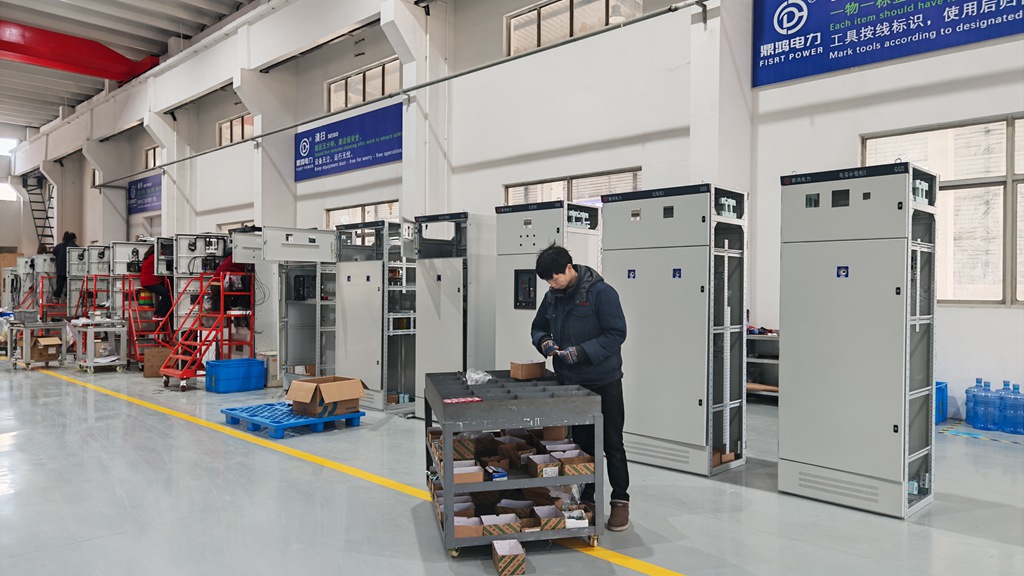
Production facility overview

Transformer testing laboratory
Export packing and loading
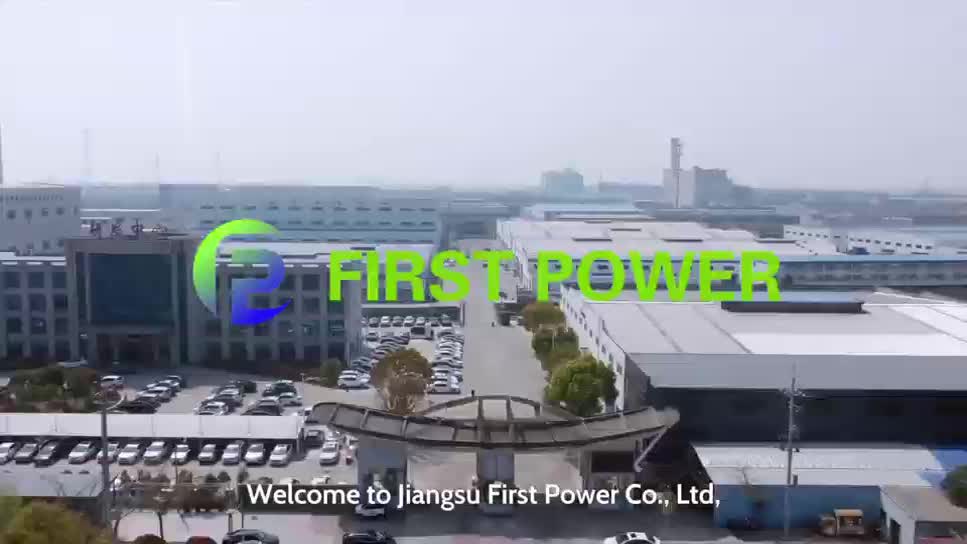
Engineering and factory tour
Common Questions About Buying Oil-Immersed Distribution Transformers
These answers reflect the technical and commercial questions that appear repeatedly in transformer RFQs, utility tenders, and EPC procurement reviews.
What should a buyer verify first in a Top 10 oil immersed distribution transformer manufacturer?
Start with the legal entity, the factory address, and the scope of the certificates. Then request type-test reports and the routine-test procedure for the exact product family you are buying. A credible manufacturer can provide GA drawings, nameplate drafts, loss calculations, and serial-number test records. If a supplier cannot explain which IEC 60076 or IEEE C57.12 clauses apply to your unit, the “Top 10” claim is not yet meaningful for procurement.
Which standards should an oil-immersed distribution transformer meet?
Most international projects reference IEC 60076 for power transformers, while North American projects often reference IEEE C57.12 series standards. The final specification should also reflect the destination grid code, local utility requirements, CE marking where applicable, and any project-specific rules for loss limits, impedance, clearances, and protection. A good quotation lists the exact standard edition and the test clauses used, rather than a generic compliance sentence.
How should I calculate total cost of ownership for an oil-immersed transformer?
Use evaluated cost rather than purchase price alone: bid price plus capitalized no-load loss, capitalized load loss, freight, commissioning, maintenance, and outage risk. Loss capitalization factors vary by utility and country, so ask for the formula used by the project owner. Then compare guaranteed losses with tested values. A low-loss transformer with slightly higher first cost may deliver a lower lifecycle cost, especially on 24/7 industrial or distribution duty.
Which routine tests should be performed before shipment?
Typical routine tests include winding resistance, voltage ratio and vector group, impedance and load loss, no-load loss and current, applied voltage withstand, induced voltage withstand, and oil dielectric strength for liquid-filled units. Buyers should also confirm the serial number on the test report matches the delivered transformer. For larger or critical projects, witness inspection by a third party such as SGS, TÜV, BV, or the buyer’s engineer should be included in the purchase order.
Can the transformer be customized for my grid, climate, or project?
Yes. Common customizations include 50/60 Hz adaptation, primary and secondary voltage, vector group, impedance, tap range, on-load or off-circuit tap changer, cooling method, bushing configuration, cable box orientation, enclosure color, protection accessories, and nameplate language. For high-altitude, high-ambient, coastal, desert, or seismic sites, the design review should explicitly address temperature rise, insulation level, corrosion protection, and mechanical strength.
What is the difference between pad-mounted and conventional oil-immersed distribution transformers?
Pad-mounted transformers are designed for ground-level installation, usually with underground cable feed and tamper-resistant enclosures. They are common in commercial areas, residential subdivisions, campuses, and renewable projects. Conventional oil-immersed distribution transformers may be installed on platforms, poles, or in small substations. The choice depends on local utility practice, available space, cable routing, public safety, and maintenance access—not only on kVA rating.
How long does production and delivery usually take?
Lead time depends on kVA rating, voltage class, tap changer, core material, test requirements, witness inspection, and destination port. A practical RFQ should ask for a milestone schedule covering drawing approval, material release, in-process inspection, routine testing, third-party inspection, packing, and shipment. For utility projects, the buyer should also confirm documentation timing, because a test report or certificate delay can affect energization even when the transformer itself is ready.
What trade terms, documents, and after-sales support should be agreed?
Standard export discussions may include FOB, CFR, CIF, EXW, FCA, CIP, CPT, and DDP, with payment by T/T, L/C, D/P, or D/A depending on the contract. The shipping package should include the packing list, test reports, nameplate record, O&M manual, warranty statement, and any required certificate copies. After-sales support should include a technical response process, spare-parts recommendation, commissioning guidance, and a clear point of contact for warranty issues.
Send Your Oil-Immersed Transformer Specification for a Compliant Quotation
Share kVA, primary and secondary voltage, frequency, vector group, impedance, tap changer type, loss target, applicable standard, altitude, ambient range, installation type, destination port, and inspection requirements. A complete data sheet shortens the engineering review and reduces the risk of an inaccurate quotation.