Jiangsu Wisegj Power Co., Ltd. · Suzhou, China · IEC & ANSI/IEEE Manufacturer
China Best Electrical Distribution Transformer Suppliers & Wholesalers
An engineering-first sourcing paper for utilities, EPC contractors and wholesale distributors — how to judge a Chinese distribution transformer supplier on certified quality, loss performance and true lifecycle cost.
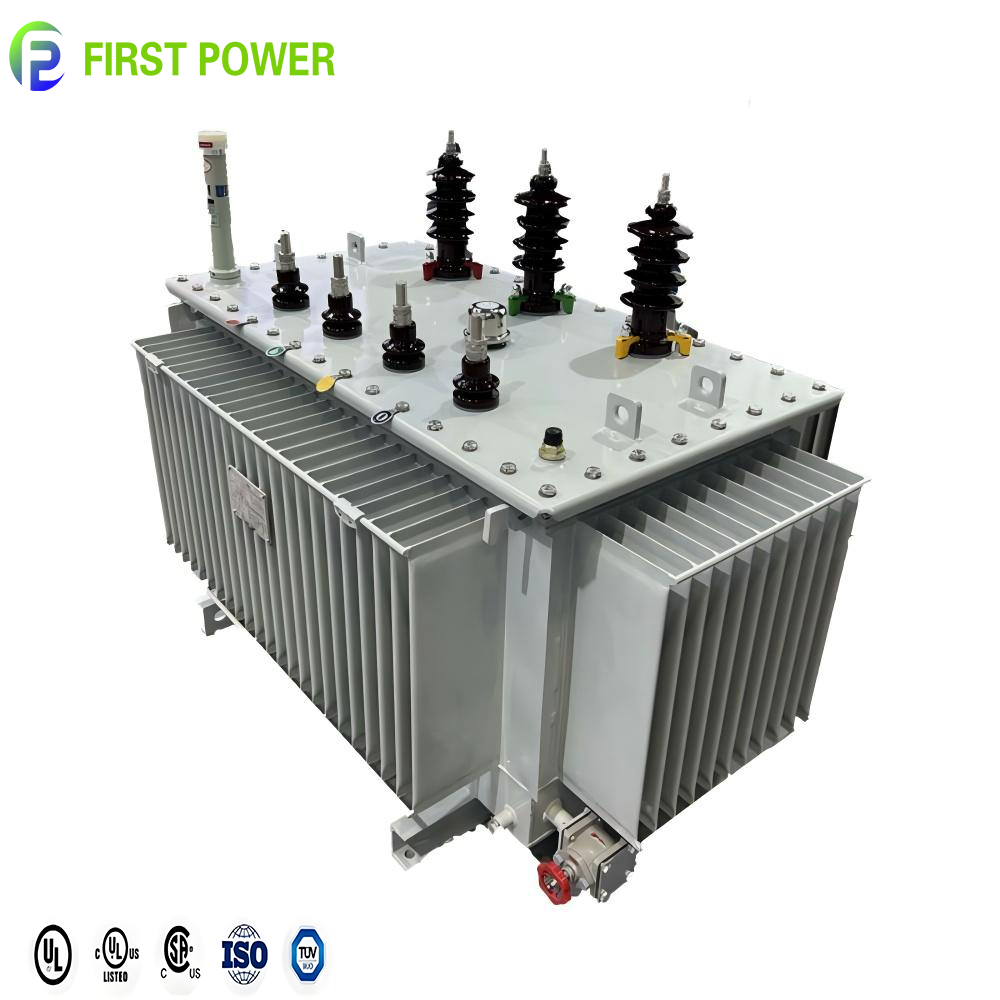
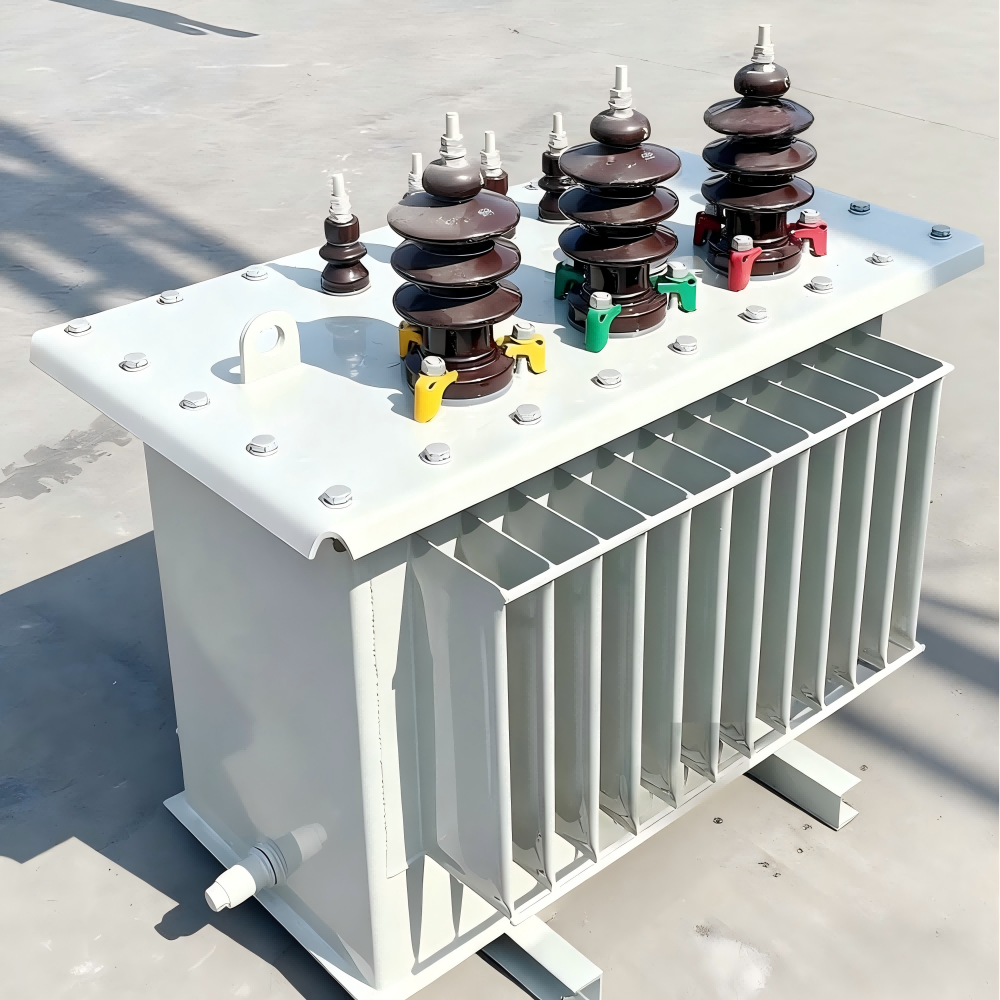
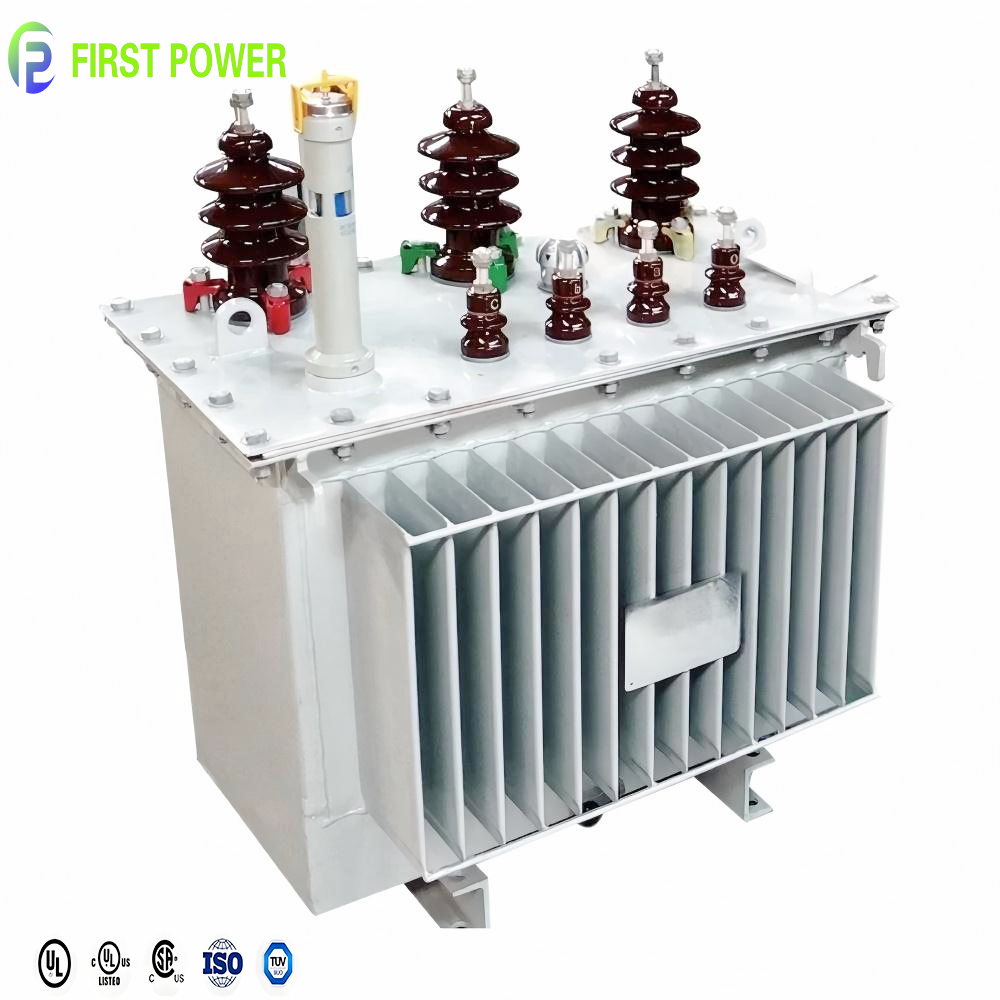
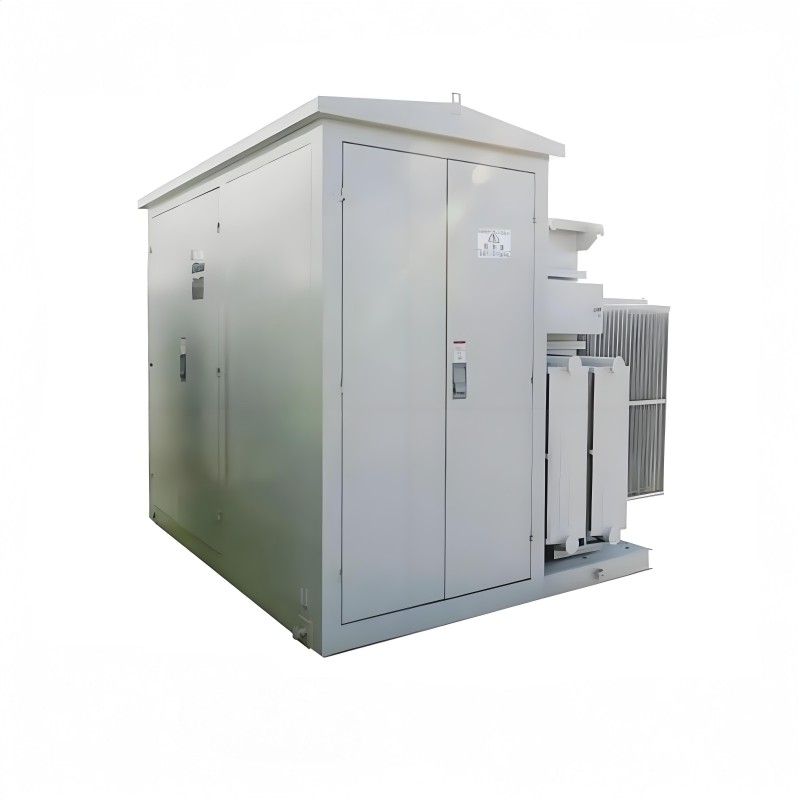
Eight Distribution Transformers Buyers Order Most Often
Each unit below is engineered to order, built under ISO 9001 control and routine-tested before dispatch. Capacities, voltage classes and standard compliance are stated so your specifications team can shortlist without a second round of emails.
Three Different Buyers Hide Behind One Search Query
When a procurement manager types “China best electrical distribution transformer suppliers and wholesalers”, the words are identical but the job to be done is not. Treating these three intents as one is the single most common reason RFQs stall.
China remains a dominant manufacturing base for the 10 kV to 35 kV distribution class because grain-oriented silicon steel, copper winding, insulating fluid, bushings and tank fabrication sit inside a handful of industrial belts. That density delivers two practical advantages for overseas buyers: unusual specification flexibility without a multi-quarter lead time, and loss performance that can be compared line by line across quotations, since most factories work from the same steel coil grades and the same IEC 60076 test sequence.
But density is not uniformity. A factory with winding, core-stacking, vacuum drying, oil filling and its own test bay will issue a routine test report per serial number and will welcome a third-party witness. A trading office will not. A wholesale distributor holding stock is excellent for emergency replacement of standard ratings, and a poor fit for a custom vector group or a non-standard enclosure. The sourcing decision starts with knowing which of the three you are actually buying from.
Specification-driven intent
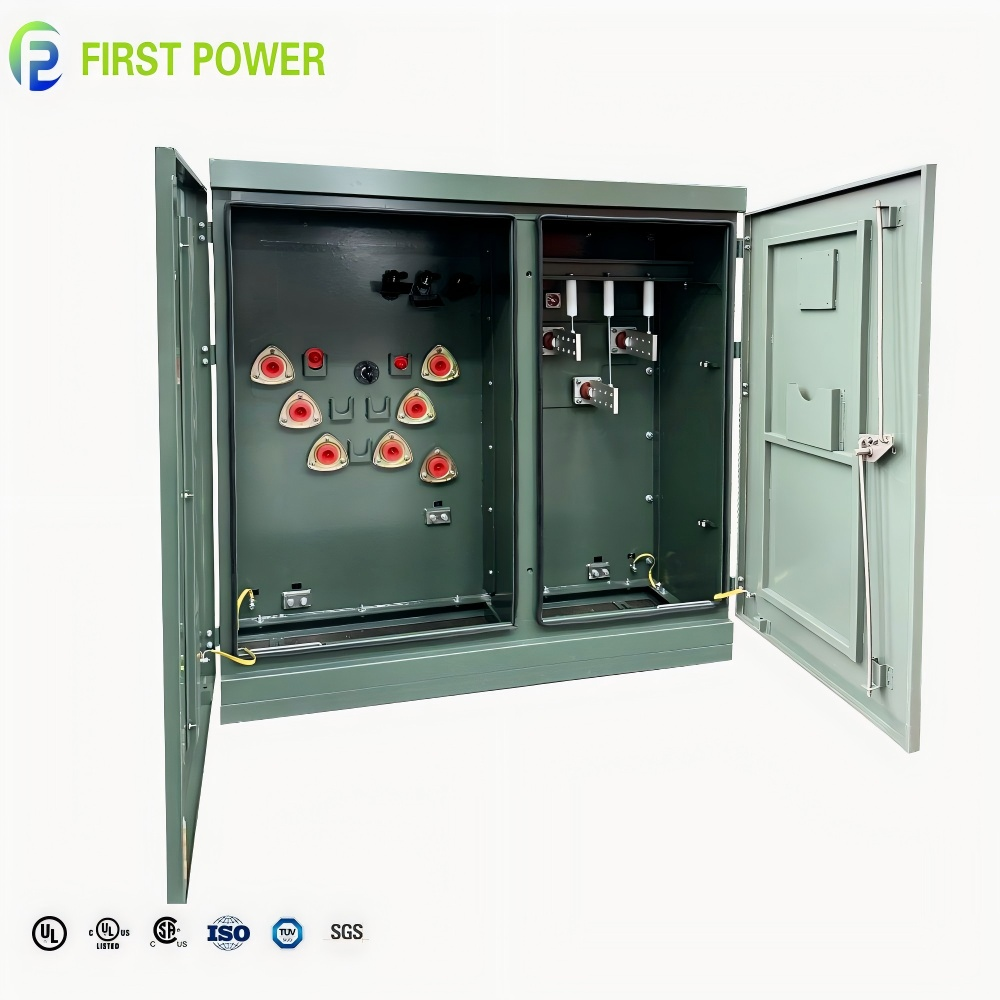
“750 kVA loop feed pad mounted transformer supplier” — the engineer already knows the rating and wants confirmation that the factory builds to both IEEE C57.12.34 and IEC 60076 without redesigning the core.
Verification-driven intent
“Chinese transformer manufacturer ISO certificate check” — the compliance team wants certificate numbers it can validate with the issuing body, plus an independent factory audit rather than a logo on a PDF.
Commercial & wholesale intent
“distribution transformer wholesale price FOB China” — the buyer wants volume tiers, MOQ logic, Incoterms coverage and a realistic delivery window, not a catalogue of every product the factory has ever built.
Market Intelligence
Six Forces Reshaping Distribution Transformer Procurement, 2025–2030
These are the forces that will decide whether last year’s specification still produces the lowest lifecycle cost on your next project.
Efficiency rules became capital decisions
DOE limits in the United States, EU Ecodesign Tier 2 and China’s GB 20052-2020 all push no-load and load losses down. Evaluating a transformer on purchase price alone now hides the largest cost line. Capitalised loss evaluation — weighting watts of no-load loss and watts of load loss against your own discount rate over 20 years — routinely reverses the ranking of two quotes that differ by less than 10% in price.
The grid turned bidirectional
Rooftop solar, utility-scale storage and clustered EV charging have turned passive step-down duty into active two-way flow. Distribution transformers now see reverse power export, elevated harmonic content and daily thermal cycling that older specifications never anticipated. Buyers are writing load profiles into tender documents instead of a single kVA figure.
Fire code is steering the fluid choice
Urban substations, tunnels, data centres and rooftop plant rooms increasingly cannot accept a mineral-oil pool fire scenario. Natural ester liquids and cast-resin dry-type designs move the risk profile below the threshold of local fire codes, and the premium is now small enough that it is frequently cheaper than the civil protection measures mineral oil would require.
Digital requirements moved into the RFQ
Temperature, dissolved-gas and partial-discharge sensing is shifting from pilot projects into mainstream specifications. Procurement teams are asking for data-ready transformers with documented communication protocols, because the cost of retrofitting sensors onto an energised unit far exceeds the cost of including them at build time.
Lead time became a balance-sheet item
Global transformer capacity tightened as grid investment accelerated. Projects are now delayed by equipment, not by civil works. Buyers who reserve annual capacity under a framework agreement, with a rolling 12-month forecast, consistently receive shorter windows than buyers who send one-off enquiries and accept whatever slot remains.
Total cost of ownership replaced landed cost
Respected utilities now award on evaluated cost: purchase price plus capitalised losses plus maintenance plus expected service life plus outage risk. For a 750 kVA distribution unit on a high-load-factor feeder, the loss component can outweigh the price difference between a standard-efficiency and a low-loss design within four to six years of operation.
Technical Direction
Distribution Transformer Product Trends Worth Writing Into Today’s Specification
Each of these design directions is already in volume production. Specifying them now avoids a mid-life retrofit or a non-compliant asset on the register.
The transformer itself is a mature machine; what changes is the material grade, the insulation system and the data it can produce. Amorphous alloy cores cut no-load loss sharply for distribution transformers that spend most of the day lightly loaded — the exact duty cycle of a residential feeder or a commercial building service. High-grade grain-oriented silicon steel with step-lap mitered joints remains the mainstream choice where load loss dominates the evaluation. Sealed corrugated tanks have largely displaced conservator designs in the distribution class because they remove oil-to-air contact entirely and eliminate routine oil testing from the maintenance budget.
On the winding side, the copper-versus-aluminium question deserves a lifecycle audit rather than an instinct. Aluminium is a legitimate engineering choice for smaller distribution ratings when the design is compensated with larger conductor cross-sections, but comparable quotes must be compared on guaranteed losses and temperature rise, not on metal weight. A quote that looks 8% cheaper can lose that advantage in the second year of operation if the loss guarantees are weaker.
Low-loss cores as standard
Amorphous alloy and high-grade CRGO options quoted side by side, with guaranteed no-load and load loss values on the nameplate.
Sealed corrugated tanks
Vacuum oil filling and full sealing remove oxidation and moisture ingress, extending service life and cutting maintenance visits.
Ester liquid and dry-type options
Natural ester fluid and cast-resin designs for fire-sensitive and environmentally regulated installation sites.
Sensor-ready secondary terminals
Provision for temperature and gas sensing at build time, so condition monitoring can be added without an outage.
Prefabricated compact substations
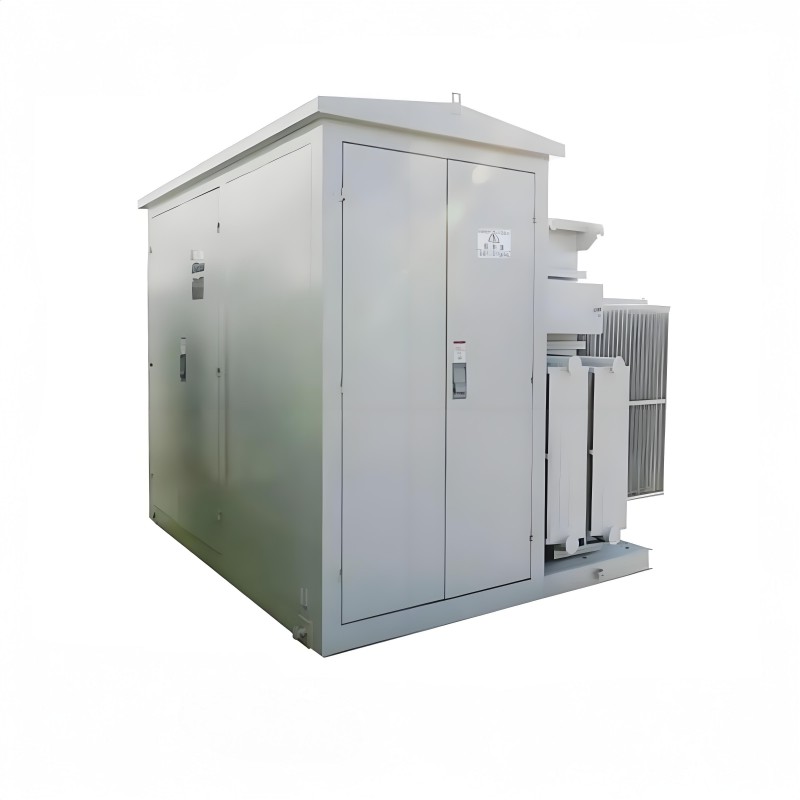
MV switchgear, transformer and LV distribution assembled and tested in one enclosure, cutting site commissioning time.
Documented digital data packages
GA drawings, nameplate drafts, routine test reports and O&M manuals delivered in English with every shipment.
Procurement Outlook
How Your Team Will Be Buying Transformers in Five Years
The transaction is shifting from a one-off purchase order to a managed supplier relationship with auditable data attached.
Framework agreements over spot buying
Multi-year capacity reservations with indexed pricing replace project-by-project enquiries, because capacity — not price — is now the binding constraint.
Witnessed testing as a contract clause
Third-party or buyer-witnessed routine testing, with the signed report as a payment milestone condition, becomes standard practice rather than an exception.
Approved vendor lists, not one-off checks
Auditing a factory once and placing it on an approved list is cheaper and safer than repeating due diligence on every individual order.
Regional stock and spare strategy
Distributors hold fast-moving standard ratings locally while custom units are built to order, splitting the risk between availability and specification.
Standard families per market
Buyers stop forcing a single design across continents and maintain an IEC family and an ANSI/IEEE family, each optimised for its grid code.
ESG criteria inside the RFQ
Fluid biodegradability, recyclability of core and winding metals and factory environmental certification enter the scoring matrix alongside price and losses.
Supplier Credentials
Why Jiangsu Wisegj Power Ranks Among China’s Best Distribution Transformer Suppliers
Wisegj is a Suzhou-based manufacturer and exporter of power transformers, distribution transformers, pad mounted transformers, dry type transformers, compact substations, switchgear and voltage stabilisers from 220 V to 500 kV — built to IEC 60076 and ANSI/IEEE C57.12 series standards.
The team behind the company has more than 20 years of hands-on transformer experience, and every enquiry is reviewed by an engineer before a commercial quotation is issued. That single process decision removes the most common failure mode in cross-border sourcing: a price that cannot be manufactured at the specification attached to it. Production runs in a 6,847 m² inspected facility with dedicated winding, core assembly, vacuum drying, tanking and test bays, supported by 50-plus R&D and technical engineers and 211 qualified supply-chain partners for silicon steel, copper, bushings and accessories.
Quality management runs on ISO 9001, ISO 14001 and ISO 45001 systems, and the product families carry CE certification for oil-immersed power transformers, dry type transformers and compact substations. Production capability, floorspace and inspection processes have been verified onsite by TÜV Rheinland, an independent third-party body, so the claims on this page can be checked by your compliance team rather than taken on trust. Each finished unit receives routine tests — winding resistance, ratio and vector group, impedance and load loss, no-load loss and current, applied and induced voltage withstand, plus oil dielectric strength for liquid-filled designs — and third-party witness inspection is welcomed.
Audited manufacturing base
6,847 m² of verified floorspace covering winding, core stacking, drying, tank fabrication, assembly and testing.
In-house routine testing
Every serial number leaves with a documented test report; type test data and witness inspection are available on request.
OEM, ODM and design customisation
Ratings, vector group, impedance, tap range, bushings, cooling method, enclosure colour and nameplate language adapted to your market.
Verifiable certifications
ISO 9001: 62824Q6052R0S · ISO 14001: 62824E6053R0S · ISO 45001: 62824S6054R0S · CE oil-immersed: 3N230310.JYTU038 · CE dry type: FQC2530404 · CE compact substation: M.2025.206.C121884.
Export coverage on five continents
Equipment configured for North America, South America, Western Europe, the Middle East, Southeast and Central Asia, and Africa.
24-hour engineering response
Technical questions, drawing approvals and after-sales issues receive a qualified reply within one working day.
FOB, CFR, CIF, EXW, FCA, CIP, CPT and DDP terms
T/T, L/C, D/P and D/A payment options
USD, EUR, GBP, CAD and AUD invoicing
Seaworthy packing with impact recorders
English GA drawings and nameplate drafts
Third-party witness inspection welcome
Engineering Comparison
Choosing the Right Distribution Transformer Type
A comparison matrix our application engineers use with utilities and EPC contractors when shortlisting equipment for a project.
Transformer type
Typical rating
Installation
Best application
Key standard
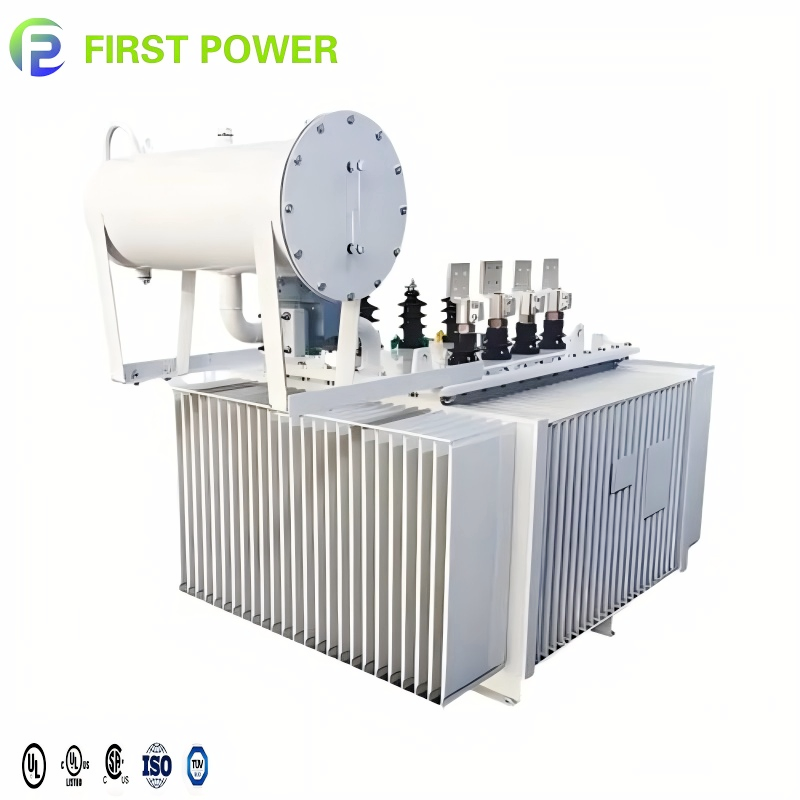
Three-phase oil immersed
30–2,500 kVA, 6–35 kV
Outdoor platform or pole
Utility distribution, industrial plants, mining
IEC 60076
Three-phase pad mounted
45–5,000 kVA, up to 34.5 kV
Ground pad, underground cable
Commercial sites, solar, data centres, campuses
IEEE C57.12.34
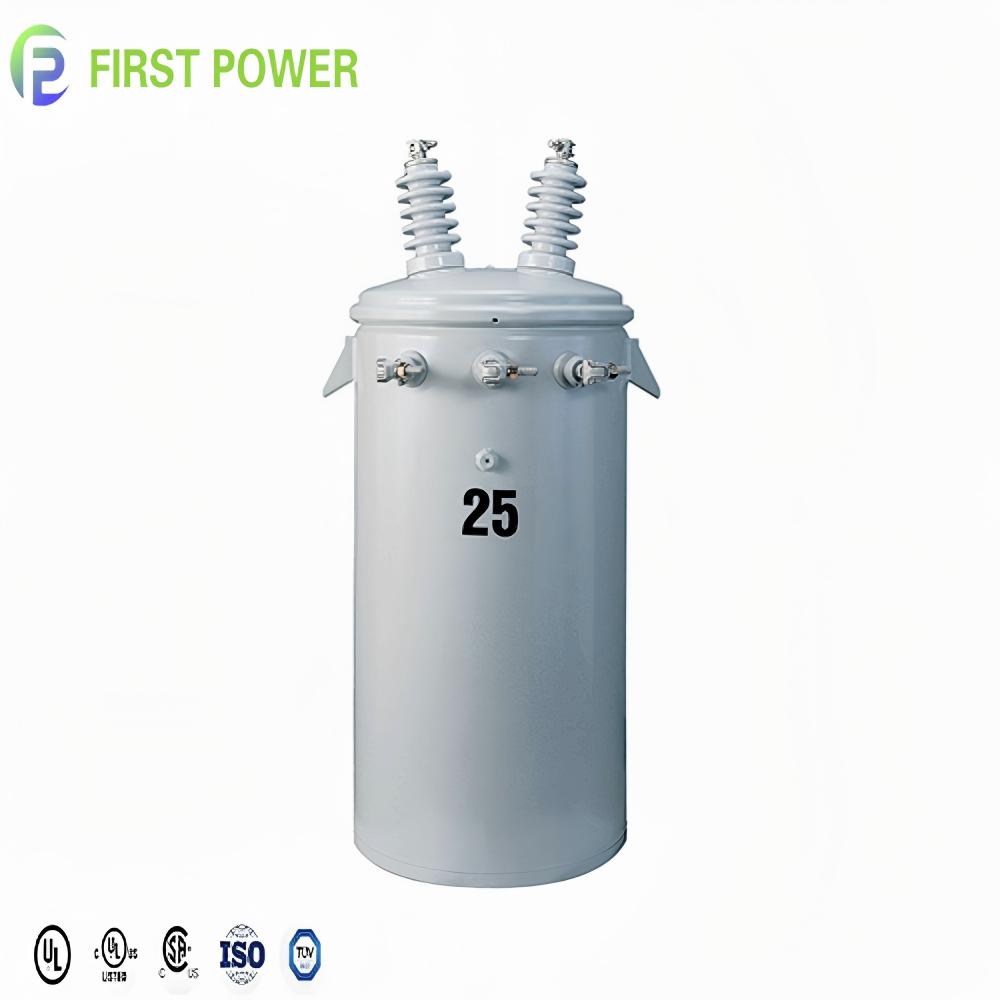
Single-phase pad mounted
10–250 kVA
Residential easement
Housing developments, rural underground loops
IEEE C57.12.38
Loop-feed pad mounted
500–2,500 kVA
Underground loop network
High-reliability urban and industrial districts
IEEE C57.12.34
Cast-resin dry type
30–2,500 kVA, up to 35 kV
Indoor, close to load
Hospitals, high-rise, tunnels, fire-sensitive areas
IEC 60076-11
On-load tap changer
1,000–2,500 kVA, 10–35 kV
Industrial substation
Plants with unstable grid voltage or varying load
IEC 60076-1
Ranges shown are typical production ranges. Ratings outside these values can be engineered to order.
Frequently Asked Questions
What Procurement Teams Ask Before They Place an Order
Direct answers from our engineering and export departments, written so they can be copied into a tender clarification sheet.
What is the real difference between a Chinese transformer manufacturer and a wholesale trader?
A manufacturer owns winding, core stacking, vacuum drying, oil filling and the test bay, issues a routine test report per serial number and can adjust the core design or loss guarantee on request. A trader can only resell a fixed design, and a wholesale distributor holding stock is ideal for standard ratings but slow for custom vector groups or non-standard enclosures. For 10–35 kV distribution equipment, insist on factory-level traceability.
How do I verify that a Chinese supplier’s ISO and CE certificates are genuine?
Validate the certificate number with the issuing body rather than trusting a PDF. Wisegj’s ISO 9001 is 62824Q6052R0S, ISO 14001 is 62824E6053R0S and ISO 45001 is 62824S6054R0S. CE coverage is issued per product family: 3N230310.JYTU038 for oil-immersed power transformers, FQC2530404 for dry type transformers and M.2025.206.C121884 for compact substations. Also request the independent factory audit report.
Which parameters should I send to get an accurate quotation quickly?
Rated power in kVA or MVA, primary and secondary voltage, frequency (50 or 60 Hz), vector group and impedance, tap changer type and range, cooling method, insulating fluid, applicable standard (IEC 60076 or ANSI/IEEE C57.12), site altitude and ambient temperature range, and your guaranteed loss or efficiency target. A single-line diagram is enough if the full datasheet is not ready.
What are realistic lead times for distribution transformers exported from China?
Standard pad mounted and oil-immersed distribution ratings move quickly when silicon steel and copper are in stock, while custom ratings, large power transformers and on-load tap changer units depend on drying oven and test bay scheduling. In a tight global market, the reliable strategy is an annual framework with a rolling forecast, so capacity is reserved before individual purchase orders arrive.
Can you manufacture under our own brand and drawing format?
Yes. OEM, ODM, design-based and sample-based customisation are all available: nameplate language, enclosure colour, drawing templates, packaging marks and documentation format can follow your standard. ODM engagements can begin at the electrical design stage, including loss-grade selection and structural layout.
Which trade and payment terms do you accept?
FOB, CFR, CIF, EXW, FCA, CIP, CPT, DDP and other Incoterms are available. Payment can be arranged by T/T, L/C, D/P or D/A, and invoices can be issued in USD, EUR, GBP, CAD, AUD and other major currencies.
How are factory tests and warranty handled?
Every unit receives routine tests including winding resistance, ratio and vector group, impedance and load loss, no-load loss and current, applied and induced voltage withstand, plus oil dielectric strength and moisture content for liquid-filled units. Third-party witness inspection can be scheduled in advance, and the signed report travels with the shipment.
Is there a minimum order quantity for wholesale orders?
Standard ratings can be supplied from a single unit. Volume tiers, production priority and pricing are linked to annual framework quantities, so consolidating demand into a yearly or half-yearly schedule normally produces a better price and a firmer delivery date than separate one-off enquiries.
Share a datasheet, a single-line diagram or a tender document. A transformer engineer — not a scripted sales agent — will review the rating, loss requirement and standard compliance, then respond within one working day with a compliant design and guaranteed losses.