0%

Choosing a Power Transformer supplier is a long-term engineering decision, not a simple price comparison. A transformer may stand beside a substation for decades, carrying heavy loads through heat, rain, and daily switching. Buyers must assess proven designs, factory testing, delivery capacity, service support, and access to replacement parts. Small differences matter.

The International Energy Agency’s 2023 report, Electricity Grids and Secure Energy Transitions, says the world may need to add or replace 80 million kilometres of grids by 2040. It also estimates annual grid investment must exceed USD 600 billion by 2030. These figures point to growing pressure on equipment makers, including transformer suppliers. IEA Executive Director Fatih Birol put the wider challenge plainly: “We need to build more grids, and we need to build them faster.” Power transformers are one critical part of that work.

This guide reviews ten suppliers for global buyers, focusing on capabilities that can be checked: product range, manufacturing footprint, certifications, project references, and after-sales support. A supplier’s brochure is not enough. Ask for test records, clear delivery assumptions, and evidence from comparable installations. Then compare the answers.

The ranking has limits. Supplier strengths vary by voltage class, region, and project conditions; one list cannot settle every procurement decision. A manufacturer with a strong global presence may still be a poor fit for a specific site. Treat these profiles as a starting point, and verify each claim directly before shortlisting.
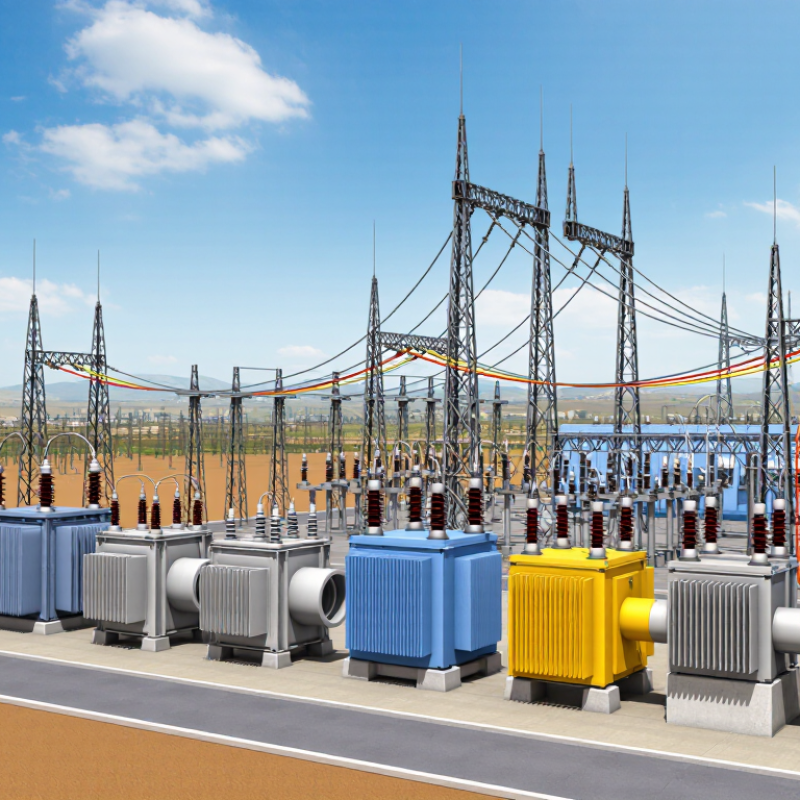
10 Best Power Transformer Suppliers for Global Buyers

Power Transformers Defined: MVA Ratings and 50/60 Hz Systems

An MVA rating is a transformer’s apparent-power limit. It does not guarantee the same megawatt output in every installation. At a 0.9 power factor, 100 MVA corresponds to about 90 MW, before operating limits are considered. Cooling method, ambient temperature, and winding temperature rise can further constrain continuous loading. Check the nameplate and guaranteed-loss data, not just the headline rating.

Frequency matters just as much. At equal voltage, moving a 60 Hz design to 50 Hz raises its volts-per-hertz ratio by 20%. That can increase core flux, heat, and audible noise. The reverse conversion is not automatically safe; insulation, losses, and thermal design still need review. IEC 60076-1 provides a general framework, while project specifications define actual service conditions.

The IEA’s 2023 grid report calls for annual grid investment above USD 600 billion by 2030 in its net-zero pathway. That figure describes system-wide investment, not transformer procurement alone. Specify MVA, voltage ratio, frequency, tap range, cooling, and expected load profile in purchase documents. Small omission. Costly consequence.

Power Transformer Ratings: Representative MVA Examples

Illustrative nameplate ratings for grid power transformers. MVA measures apparent power capacity; the appropriate rating depends on the equipment design and operating conditions.

Frequency matters: 50 Hz and 60 Hz are the standard power-system frequencies in different regions. Transformers must be designed and rated for the system frequency; an MVA rating alone does not indicate frequency compatibility. The values shown are representative examples, not a required rating sequence.

Global Standards for Buyers: IEC 60076 and IEEE C57.12.00

For global buyers, IEC 60076 and IEEE C57.12.00 provide useful reference points when evaluating power transformer suppliers. IEC 60076 is a series covering matters such as ratings, temperature rise, insulation, and testing. IEEE C57.12.00 sets general requirements for applicable liquid-immersed transformers. Their scope and terminology differ, so matching standard numbers alone does not prove two offers are equivalent.

Ask suppliers to identify the exact edition and clauses used in their proposal. Compare rated voltage, frequency, cooling method, impedance, insulation levels, and permitted temperature rise on one shared data sheet. Request routine and type-test reports, and check that reported values match the offered design. A factory test can reveal details a quotation cannot. Still, documents need careful review; even experienced buyers can overlook a small difference in test conditions. Confirm local grid requirements and project specifications before approving deviations.

Tips: Ask for a clause-by-clause compliance schedule, not just a “compliant” statement. Clarify who witnesses tests and how exceptions are recorded. Keep the comparison practical. A neat table helps, but it may not capture every operating condition.

Supplier Evaluation: Voltage Class, Loss Data, Testing, and Service

A power transformer quote is only comparable when its voltage class, rating, vector group, impedance, and cooling method match the project specification. Check the highest system voltage and insulation level, not just the nominal voltage printed on the offer. The U.S. Department of Energy’s 2014 transformer supply-chain report estimated that about 70% of large power transformers in the United States were at least 25 years old. Aging equipment makes replacement planning urgent, but it does not justify skipping engineering checks. Small details matter.

Request guaranteed no-load and load-loss values, the test temperature, and the method used to calculate losses. Ask for routine test records and confirm whether required type or special tests are included. The International Energy Agency’s Electricity Grids and Secure Energy Transitions (2023) says annual grid investment must rise above USD 600 billion by 2030 to meet its transition pathway. That investment makes lifetime efficiency worth close scrutiny: a small loss difference can accumulate over years of operation. Still, spreadsheet comparisons can mislead if loading assumptions differ. Check the assumptions.

Service deserves the same scrutiny as factory data. Confirm spare-part availability, commissioning support, response times, and who handles warranty claims across borders. Ask for sample test reports before placing an order; vague assurances are not evidence. A supplier may offer excellent specifications yet lack local field support. That gap is easy to underestimate.

10 Leading Suppliers: Product Ranges, Markets, and Technical Strengths

Global buyers comparing ten leading power transformer suppliers should look beyond headline capacity. Product ranges may cover distribution units, medium-power transformers, and large grid autotransformers. Supplier markets vary, from utilities and factories to renewable-energy projects and rail networks. Technical strengths can include low-loss core designs, online temperature monitoring, or rigorous factory testing. Ask how each capability is verified.

A useful comparison spans suppliers focused on pad-mounted, dry-type, and oil-immersed units, alongside specialists in renewable step-up, traction, and furnace transformers. Other suppliers may offer phase-shifting, converter, or high-voltage grid equipment. Check voltage range, cooling method, insulation, and service support against the project specification. A polished brochure is not proof of field performance. No shortlist is perfect; rankings can shift when site conditions change.

Tips: Request test records, reference projects, delivery estimates, and spare-parts plans. Confirm installation support and maintenance intervals before comparing prices. Details matter. Ask for evidence.

10 Best Power Transformer Suppliers for Global Buyers - 10 Leading Suppliers: Product Ranges, Markets, and Technical Strengths

Comparison note: Supplier identities are intentionally omitted. The profiles below are illustrative, anonymized capability profiles—not a verified company-by-company ranking or claims about specific manufacturers. Confirm product ratings, certifications, manufacturing locations, and references directly with each prospective supplier.

Supplier Profile Typical Product Range Common Market Fit Relevant Technical Strengths Buyer Due-Diligence Checks
Profile 01 — Utility-scale portfolio Oil-immersed power transformers, autotransformers, and substation transformers Transmission and distribution utilities; large grid infrastructure projects High-voltage design, thermal performance, insulation coordination, and factory testing Verify voltage and MVA range, applicable IEC or IEEE requirements, test reports, and delivery schedule.
Profile 02 — Renewable-energy integration Generator step-up transformers, wind-farm transformers, and solar-plant transformers Wind and solar developers, independent power producers, and grid interconnection projects Designs for variable generation, harmonics assessment, overload requirements, and outdoor environments Check project-specific load profile, harmonic study, environmental rating, and grid-code requirements.
Profile 03 — Industrial and process applications Distribution and power transformers, rectifier transformers, and furnace transformers Mining, metals, chemical processing, and other energy-intensive industries Application-specific impedance, duty-cycle design, cooling options, and accessory configuration Confirm load-cycle assumptions, short-circuit withstand requirements, site conditions, and maintenance support.
Profile 04 — Compact urban substations Distribution transformers, compact substation units, and dry-type transformers Urban utilities, commercial buildings, transport facilities, and constrained sites Space-conscious layouts, low-noise options, indoor installation suitability, and fire-safety considerations Review enclosure and ventilation needs, noise limits, fire requirements, and installation clearances.
Profile 05 — Dry-type specialist Cast-resin and other dry-type transformers for indoor and selected outdoor applications Hospitals, data centers, commercial buildings, and industrial facilities Reduced reliance on liquid insulation, indoor deployment options, and application-specific thermal design Confirm insulation class, cooling method, partial-discharge criteria, and applicable fire and environmental standards.
Profile 06 — Grid-control applications Phase-shifting transformers, autotransformers, and network power transformers Transmission operators and grid projects requiring power-flow management Specialized winding and tap-changer arrangements for voltage or phase-angle control Validate system studies, control range, tap-changer duty, protection interfaces, and commissioning requirements.
Profile 07 — Converter and HVDC projects Converter transformers and associated high-voltage power transformers HVDC links, converter stations, and large power-electronics installations Converter-duty insulation design, harmonic-related considerations, and project-specific interfaces Request evidence of comparable converter projects and review harmonic, insulation, and transport requirements.
Profile 08 — Replacement and refurbishment projects Replacement power transformers, mobile units, and selected retrofit solutions Utilities and industrial owners replacing aging or failed equipment Dimensional adaptation, interface review, outage planning, and compatibility assessment Provide existing drawings and site measurements; confirm bushings, connections, footprint, and outage timing.
Profile 09 — Harsh-environment applications Oil-immersed power and distribution transformers with project-specific accessories Remote, coastal, high-temperature, cold-climate, and other demanding sites Environmental adaptation through suitable materials, coatings, cooling, and protection options Specify ambient range, altitude, corrosion exposure, seismic criteria, and transport constraints.
Profile 10 — Regional distribution networks Distribution transformers, pad-mounted units, and pole-mounted units Distribution utilities, rural electrification, and local infrastructure contractors Standardized configurations, network-specific connection options, and distribution-level deployment Check local utility specifications, efficiency rules, phase and vector-group requirements, and service coverage.

Global Sourcing Checklist: Grid Codes, Factory Tests, Logistics, and Lifecycle Cost

10 Best Power Transformer Suppliers for Global Buyers

Global Sourcing Checklist: Grid Codes, Factory Tests, Logistics, and Lifecycle Cost

A shortlist is only useful when each supplier can meet the project’s grid requirements. Confirm voltage, frequency, vector group, impedance, cooling method, tap range, and site conditions in a written technical schedule. Include altitude, ambient temperature, harmonics, and permitted noise levels where relevant. Ask the local utility to confirm acceptance criteria. A datasheet alone is not enough. Details matter.

Before placing an order, agree on factory acceptance tests and review sample reports. Check that routine test results match the guaranteed values and identify any required type or special tests. Set witness points, document how deviations will be handled, and ensure reports identify the transformer by serial number. Ask for evidence. A factory visit may help, but it does not replace clear acceptance criteria.

Logistics can change the real cost. Confirm shipping dimensions, lifting points, packing method, delivery route limits, and who handles oil filling and site assembly. Compare purchase price with expected losses, maintenance needs, spare-part availability, and lead time. A lower quote may not mean lower risk. Lifecycle estimates also depend on load patterns, so record assumptions. This step is easy to rush—and worth revisiting.

FAQS

What does a transformer’s MVA rating mean?

It indicates the apparent-power limit, not guaranteed megawatt output. Cooling and temperature can reduce continuous capacity.

How much real power can a 100 MVA transformer deliver?

At a 0.9 power factor, it corresponds to about 90 MW before operating limits. That is only a starting estimate.

Can a 60 Hz transformer operate at 50 Hz?

Not automatically. At the same voltage, its volts-per-hertz ratio rises by 20%, which may increase core flux, heat, and noise.

Is converting a 50 Hz design to 60 Hz always safe?

No. Insulation, losses, and thermal design still need review. Frequency alone does not settle the question.

Which details belong in a transformer purchase specification?

Include MVA, voltage ratio, frequency, tap range, cooling method, and expected load profile. Small omissions can become costly.

How should buyers compare transformer suppliers?

Match product ranges and technical capabilities to the site. Check voltage range, cooling, insulation, and service support.

What evidence should buyers request?

Ask for test records, project references, delivery estimates, and spare-parts plans. Brochures are not field proof.

Why do site conditions affect supplier rankings?

A solution suited to a factory may not fit a renewable-energy site or rail network. No shortlist is perfect; I may be oversimplifying.

Conclusion

A Power Transformer transfers electrical energy between voltage levels in power grids, with its MVA rating, operating voltage, and 50 or 60 Hz frequency defining key application requirements. Buyers should understand the relevant IEC 60076 and IEEE C57.12.00 standards, then compare suppliers on voltage-class experience, guaranteed loss data, design capabilities, factory testing, and after-sales service. The right supplier should be able to match the transformer to the project’s technical and operating conditions.

Evaluating leading suppliers involves looking beyond product ranges to consider the markets they serve, their technical strengths, and their ability to support projects across regions. Before sourcing, confirm grid-code compatibility, clarify factory acceptance tests, plan transport and installation logistics, and assess lifecycle costs such as energy losses and maintenance. A structured comparison helps global buyers select a Power Transformer solution that meets performance needs and supports reliable long-term operation.

Ethan

Ethan

Ethan is a marketing professional with a strong understanding of the company’s products and the needs they are designed to meet. Through his work, he helps explain product features, practical benefits, and relevant industry insights in a clear and useful way. He regularly contributes professional......