In 2026, choosing a Distribution Transformer is no longer a routine equipment purchase. Utilities, factories, data centers, and renewable projects need reliable voltage conversion amid rising demand and aging networks. The International Energy Agency’s Electricity Grids and Secure Energy Transitions (2023) estimates that roughly 80 million kilometers of grids must be added or refurbished by 2040. That is about the length of today’s entire global grid. The report also says annual grid investment must rise above $600 billion by 2030, nearly twice current levels. These figures point to a practical question: which transformer fits the site, not just the catalog?
There is no universal winner. Oil-immersed units often suit outdoor networks and higher capacities. Dry-type models may work better inside buildings, where fire risk, access, and maintenance matter. Yet the labels alone decide little. Load profile, ambient temperature, enclosure, efficiency requirements, noise limits, and expected service life can change the answer. A compact pad-mounted unit may fit a suburban feeder; a ventilated dry-type transformer may suit a hospital basement. Small details count. This guide compares common designs through real operating considerations, including purchase cost, energy losses, cooling, installation space, and resilience. It also examines trade-offs that product brochures may understate. No datasheet replaces a site study. Treat any recommendation as a starting point, then verify it against utility specifications and a qualified engineer’s assessment.
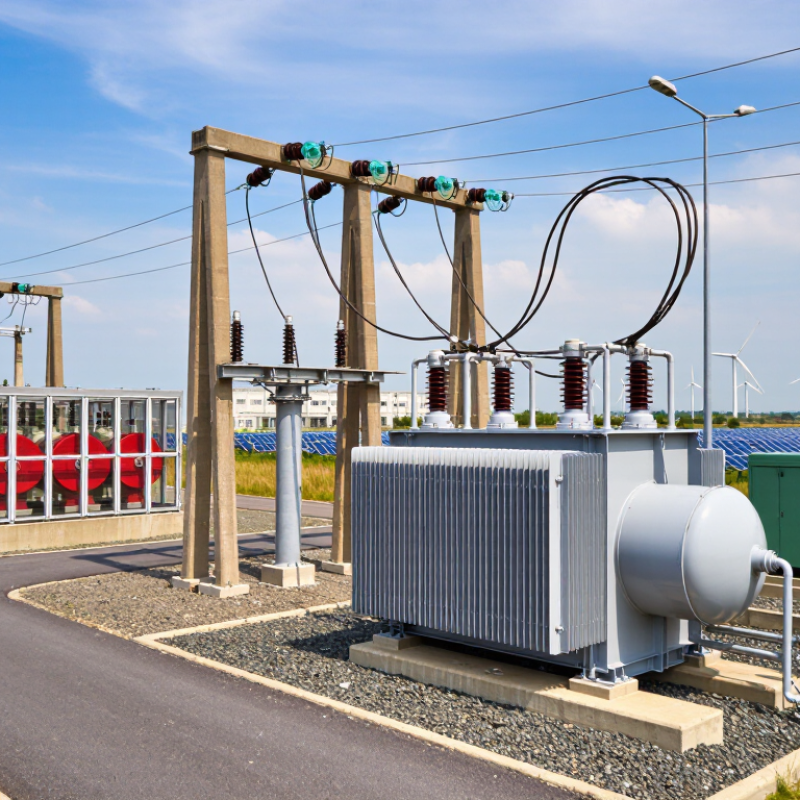
Match the Load: 1-Phase 120/240 V or 3-Phase 480Y/277 V
Which Type of Distribution Transformer Is Best in 2026?
Match the Load: 1-Phase 120/240 V or 3-Phase 480Y/277 V
For a small home or single-phase service, a 120/240 V transformer can supply 120 V branch circuits and 240 V equipment. The 240 V loads connect across the two hot legs; ordinary receptacles use one leg and neutral. This arrangement suits modest loads, but large motors or uneven leg loading can create problems. A 480Y/277 V three-phase system provides 480 V between phases and 277 V from phase to neutral. It often fits commercial buildings with three-phase motors, rooftop units, and 277 V lighting. Don’t choose by building size alone. Check equipment nameplates, measured peak demand, motor starting current, and expected expansion.
The U.S. Department of Energy’s 2024 distribution-transformer standards analysis estimates $15.8 billion in consumer energy-bill savings over 30 years. That figure concerns efficiency standards, not a promise that one voltage system is cheaper for every site. A load study still matters. A neat schedule may miss simultaneous starts, future chargers, or a heavily loaded phase; even a small imbalance deserves a second look. Confirm available service voltage, transformer kVA, protection, grounding, and utility requirements with a qualified electrical engineer.
Tip: List every major load and its voltage and phase. Compare peak demand with future plans, then verify the design against site measurements before ordering.
Compare Liquid-Filled and Dry-Type Designs Under IEEE C57.12 Standards
Choosing a distribution transformer in 2026 starts with the installation, not a universal winner.
Liquid-filled units transfer heat efficiently and can suit outdoor sites, heavy loads, or compact footprints. Their insulating fluid needs suitable containment and maintenance, including checks for leaks and fluid condition. Dry-type units use air for cooling and avoid liquid spills. They are often considered for indoor locations, but still need clear ventilation paths and attention to dust, temperature, and noise. Neither design is automatically safer or cheaper in every setting.
Tips: Confirm the exact IEEE C57.12 standard for the transformer’s design and rating. The series covers different equipment types; it is not one blanket approval. Check nameplate data, load profile, ambient temperature, installation clearances, and local requirements with a qualified engineer.
Compare lifecycle needs, not just purchase price.
A liquid-filled transformer may offer efficient cooling, yet site containment and inspection add work. A dry-type unit can simplify some indoor installations, though restricted airflow may raise operating temperatures. Both designs have losses, and actual performance depends on the specified ratings and conditions. Ask for test documentation tied to the applicable IEEE C57.12 requirements. Then compare expected maintenance, replacement access, and operating costs. Small details matter. I would also revisit assumptions about future load growth; estimates are often less certain than the specification makes them seem.
Compare Core Materials: Amorphous Steel Can Cut No-Load Losses by Up to 70%
Which Type of Distribution Transformer Is Best in 2026?
Core material matters most when a transformer stays energized around the clock. No-load losses occur even when customers draw little or no power. Amorphous steel can reduce these losses by up to 70% compared with conventional electrical steel, depending on the design and comparison baseline. That difference can add up across a utility network. Think of a lightly loaded unit humming beside a rural road overnight: its core still consumes energy.
Amorphous metal has a disordered atomic structure that makes it easier to magnetize and demagnetize. This reduces energy lost as heat during each magnetic cycle. The benefit is strongest where transformers spend many hours at low loads, such as residential feeders with overnight dips. Actual savings depend on core geometry, operating voltage, and local load patterns. Check certified test data, not just a headline percentage.
There are trade-offs. Amorphous cores can cost more, and their thin, brittle ribbons require careful handling during manufacturing. Some designs may also differ in size, sound, or short-circuit performance. A lower no-load figure does not automatically mean the lowest lifetime cost. Compare purchase price, expected loading, electricity costs, and maintenance assumptions across the same service period. It is easy to overlook one input. That can distort the result.
Which Type of Distribution Transformer Is Best in 2026? - Compare Core Materials: Amorphous Steel Can Cut No-Load Losses by Up to 70%
| Core material |
Typical construction |
Relative no-load loss |
Main advantages |
Trade-offs and selection notes |
Often suited to |
| Conventional grain-oriented electrical steel (GOES / CRGO) |
Laminated silicon-steel sheets; common sheet thicknesses are approximately 0.23–0.30 mm. |
Reference index: 100. Actual loss depends on core design, operating flux density, frequency, and manufacturing. |
Mature, widely available technology; established production methods and straightforward repair and sourcing. |
Generally has higher core-related no-load loss than an appropriately designed amorphous-core unit. Cutting, joints, and assembly affect performance. |
General-purpose distribution where proven construction, availability, and initial cost are key priorities. |
| High-permeability GOES |
A refined grain-oriented electrical steel grade, typically supplied as thin laminations; performance depends on grade and processing. |
Varies by grade and design; compare certified transformer no-load-loss figures rather than assuming a fixed reduction. |
Can reduce core losses compared with conventional GOES while retaining familiar laminated-core manufacturing. |
Benefits depend on careful cutting, joint design, clamping, and assembly; it does not guarantee a particular whole-transformer loss reduction. |
Projects seeking improved efficiency while staying with a laminated electrical-steel core design. |
| Amorphous metal |
A wound core made from very thin amorphous-alloy ribbon, commonly around 0.025 mm thick. |
Indicative index: about 30–50 in suitable designs versus the GOES reference of 100; reductions of up to about 70% are design- and comparison-dependent. |
Very low core-related no-load losses can reduce energy use whenever the transformer is energized, including at light load. |
Lower saturation flux density and ribbon-core handling requirements influence design. Initial cost, noise, dimensions, and load-loss performance should be checked for the specific unit. |
Installations with long energized hours, low average loading, or strong emphasis on lifetime energy savings. |
How to compare: The loss index is an indicative comparison, not a guaranteed rating or a substitute for certified test results. No-load loss is measured with the transformer energized at rated voltage and with the secondary open; actual values vary with rating, design, frequency, voltage, and test conditions. A continuous 1 kW of no-load loss corresponds to 8,760 kWh over a non-leap year. Compare quoted no-load and load losses, purchase price, operating profile, and lifetime energy cost before selecting a transformer.
Check 2026 Efficiency: Apply U.S. DOE 10 CFR Part 431 Requirements
Which Type of Distribution Transformer Is Best in 2026?
In 2026, the best distribution transformer is the one that fits the load and meets the correct federal efficiency standard. Check its kVA rating, phase, voltage, and cooling type. Then compare its tested losses with the applicable equipment category and rating in 10 CFR 431.196. DOE’s test procedures are specified in 10 CFR 431.193. A nameplate efficiency alone is not enough; confirm the test basis and exact model configuration.
Timing matters. DOE’s 2024 final-rule analysis sets revised standards with a compliance date of January 1, 2029, so buyers in 2026 should distinguish current requirements from upcoming ones. Ask suppliers to document both the applicable 2026 standard and whether the proposed unit will meet the revised requirement when it takes effect. DOE projected that the 2024 rule would save 10.4 quadrillion Btu over 30 years. That is a projection, not a guaranteed saving for an individual site. Real results depend on loading, operating hours, and the balance between no-load and load losses. Small detail, big impact. A lightly loaded unit can waste energy continuously, while an oversized unit may add cost without useful capacity. Check the load profile before choosing.
Which Type of Distribution Transformer Is Best in 2026? — Check DOE 10 CFR Part 431 Efficiency Requirements
How to read this chart: The bars show the load points used to determine efficiency under the DOE test procedure—not transformer efficiency percentages. Low-voltage dry-type transformers are tested at 35% of rated load; medium-voltage dry-type and liquid-immersed transformers are tested at 50%.
There is no single “best” type for every application. Choose based on installation environment, voltage, capacity, safety needs, and operating profile, then verify that the specific transformer meets the applicable minimum efficiency in 10 CFR § 431.196. For 2026, check the requirements in force for the transformer’s manufacture date.
Source: U.S. DOE, 10 CFR §§ 431.192 and 431.196. Test-load values are percentages of rated output.
Conclusion
Choosing the best Distribution Transformer in 2026 starts with matching its phase and voltage to the electrical system. Single-phase 120/240 V units may suit smaller loads, while three-phase 480Y/277 V equipment can serve larger or more complex installations. Next, estimate peak demand in kilovolt-amperes (kVA), allowing for expected load growth and operating conditions so the transformer is neither undersized nor unnecessarily large.
Compare liquid-filled and dry-type designs against the installation’s environment, safety needs, maintenance plan, and applicable IEEE C57.12 requirements. Core material also affects operating costs: amorphous steel can reduce no-load losses by up to 70% compared with conventional electrical steel, though actual results depend on the design. Finally, verify that the selected unit meets the U.S. Department of Energy’s 10 CFR Part 431 efficiency requirements for 2026. The right choice balances electrical fit, capacity, installation conditions, efficiency, and long-term performance.